
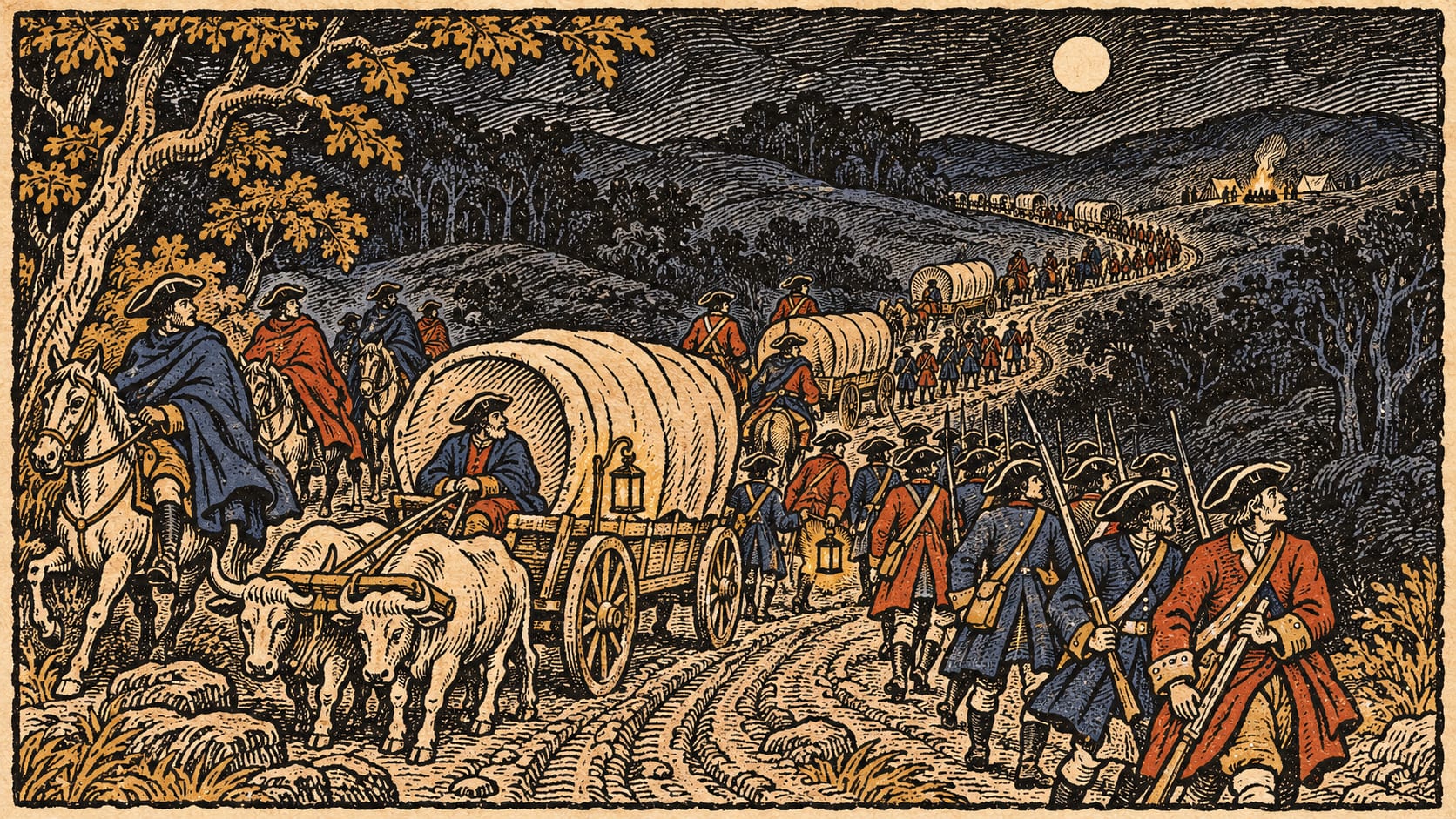
On the night of 21 to 22 September 1788, part of Emperor Joseph II's army in the Banat began shooting at itself. A shout that the Turks were coming ran through the marching columns near Lugoj, and Austrian units fired on one another in the dark.
How many men died that night is not known. The often-repeated figure of 10,000 first appears in Paul Bernard's 1968 biography of Joseph II, nearly two centuries after the night. What happened was a panic and a retreat, with friendly fire, and not a slaughter on that scale.
The famous brandy wagon comes from a history printed in 1847, nearly sixty years later. The Ottoman army was real and close by, and in daylight it did attack the Austrian rearguard.
An emperor, an alliance and a retreat
The war began as Austria's answer to a promise. Joseph II declared war on the Ottoman Empire in February 1788, under his alliance with Catherine II of Russia. By September he was leading the main Austrian army in the Banat himself.
That army was retreating. It was falling back from positions near Slatina toward Karánsebes and Lugoj, while Ottoman forces under Grand Vizier Koca Yusuf Pasha pushed forward. Field Marshal Franz Moritz von Lacy was with the emperor as his senior adviser. Some 1788 accounts start the movement on 20 September. Modern historians put the night panic at 21 to 22 September, and the retreat from Illova toward Karánsebes began before dawn on 21 September.
The mood at headquarters was already dark. In a letter dated 20 September, as printed in the German edition of his correspondence, Joseph wrote: "Nothing more terrible, more unfortunate, indeed more shameful, could truly have happened to us. I feel myself the unhappiest of men, forced to endure the utmost physical and moral torments. But I would rather die under a tree than leave matters in the condition in which I see them here. For the field marshal himself is so desperate that he no longer knows what to do."
The Ottoman threat was real. On 21 September, in daylight, their troops attacked the Austrian rearguard near Karánsebes. That attack is a separate event from the night that followed, and keeping the two apart matters when the numbers come up below.
An army that spoke many languages
Joseph's army was an imperial force, not a nationally uniform Austrian one. Its regiments came from the German-speaking hereditary lands, Hungary, Croatia and Slavonia, the Military Frontier, Transylvania, Italian provinces, Bohemia and Moravia.
In the Banat, Hungarian and Croatian-Slavonian frontier units mattered most. Romanian-speaking soldiers served in frontier formations, including the Wallachian-Illyrian Military Frontier. Italian troops came from Lombardy and nearby Habsburg lands. German was the main command language, and the soldiers' own languages varied widely.
How many soldiers spoke which language in Joseph's field army that night is not established. Regiment, recruiting district and frontier status mattered more than any single language tally for the empire.
Who was on the road
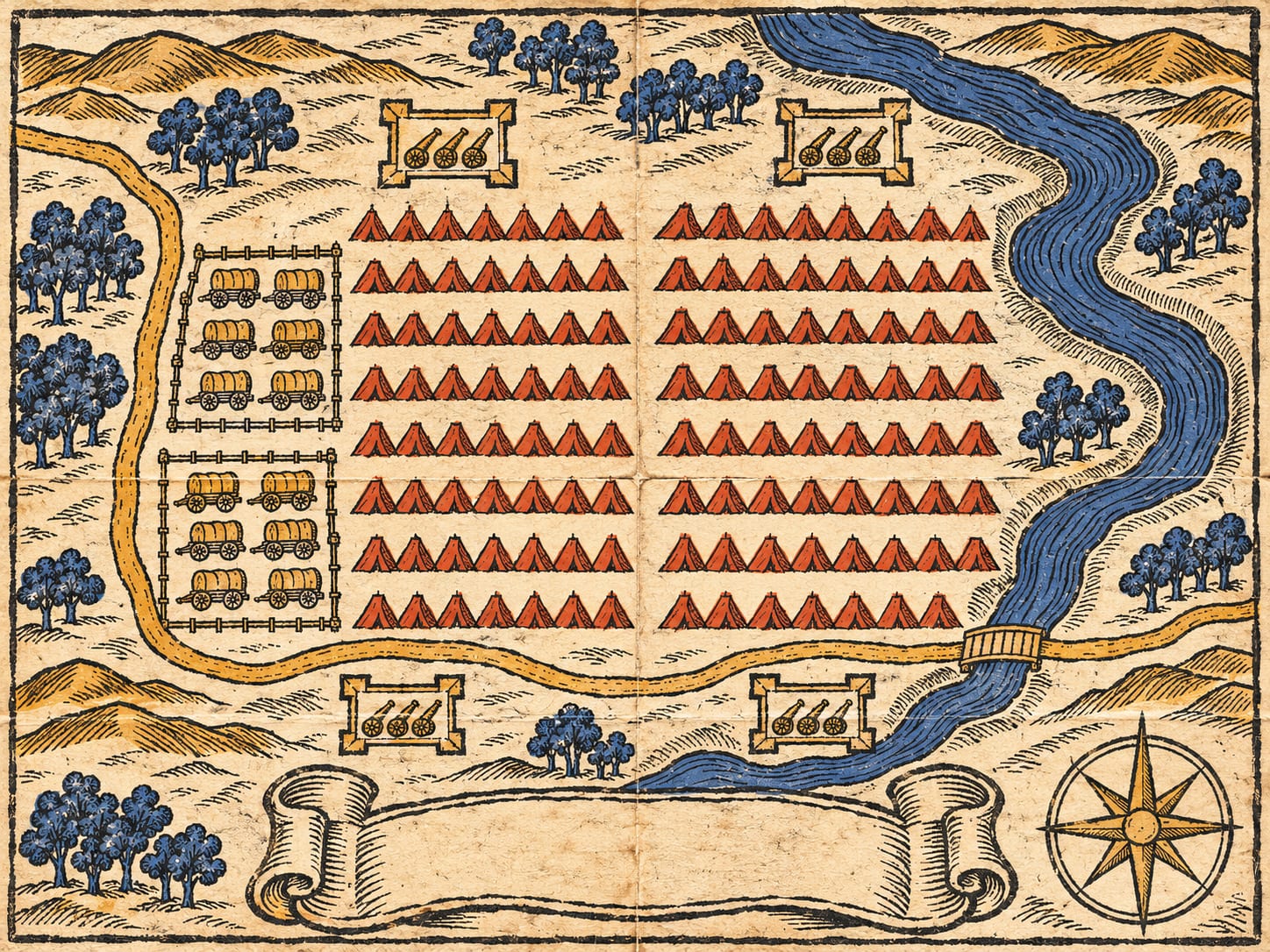
The army marched out of Illova in two columns. A camp report of 23 September, reprinted in the October press, says that a false alarm hit the rearguard of one column, and that the baggage train panicked and abandoned wagons, animals and equipment. It put the rearguard's loss at "150 dead and wounded."
Several named men turn up in the accounts of that day. Count Franz Joseph Kinsky, a cavalry general, organised the rearguard during the fighting near Karánsebes. One battalion of the Nádasdy Infantry Regiment drove Ottoman troops out of the town in close combat. General Wilhelm von Wartensleben covered the withdrawal, and was later ordered toward Mehadia while Joseph moved toward the main army near the Sava and Danube. Major Michael von Melas commanded the Lobkowitz Chevaux-légers, whose regiment took part in the march from Karánsebes to Lugoj.
On the Ottoman side stood Koca Yusuf Pasha, Hasan Pasha, the Serasker of Vidin, and the officers Memiş Pasha and Mavroyani Bey. The accounts name only some of the regiments on the road that night.
The night, as it was written down in 1788
Johann Heinrich Gross wrote up the night for the Real-Zeitung of Erlangen, which printed his report, "Zur Kriegsgeschichte," on 7 October 1788. His account is short. In translation, Gross reported that "At midnight many Wallachians arrived with loud cries, 'The Turks! The Turks!'" and went on: "Frightened by this false alarm, everyone sprang up and thought of escape. A few houses, set on fire by these same Wallachians, increased the terror. The confusion was indescribable."
Then, in the dark, "Our men ran into another regiment." The officers of one regiment shouted "Halt! Halt!" The others believed they heard the Turkish cry "Allah!" They "fired and killed many of their comrades."
The same account put Joseph II in danger of capture and described chaos among wagons, troops and baggage. It gave no reliable count of the dead.
The report carries the cries of "The Turks!" and the "Halt" and "Allah" confusion, which later tellers kept. It does not mention brandy.
What the emperor wrote from Lugoj
On 26 September 1788, from Lugoj, Joseph wrote to Leopold of Tuscany. The letter, kept among the Habsburg family papers in the Austrian State Archives, is in French. It describes panic, disorder and friendly fire. Troops, Joseph said, had "fired on one another," and the panic had spread "six leagues behind." He wrote that "luckily no Turk pursued us, otherwise the whole army would have been lost."
He also counted the cost in things: tents, kettles, baggage and three guns. The letter names no precise number of dead, and it does not mention brandy.
Joseph wrote that no Turk pursued. Ottoman chroniclers describe a pursuit and prisoners.
The brandy wagon arrives in 1847
The retelling that travels furthest adds a drink. Austrian hussars bought or seized a wagon of brandy, refused to share it with the infantry, and a quarrel began. A shot caused panic, someone cried "Turci!" or "The Turks!", and officers shouted in German.
That version appears in Anton Johann Gross-Hoffinger's history of Joseph II, Geschichte Josephs des Zweiten, published in 1847. Oskar Criste's 1904 military history, a fuller narrative of the retreat built on campaign files, carries the brandy cart too. The 1788 report has the cries and the panic but no brandy. The wagon, the quarrel and the drinking are a later telling.
The shout "Zu mir!" belongs to the later telling as well. No early account gives it as a quotation. The night needs no brandy to make sense: a multinational army, darkness, long marching columns, panic and a German command misunderstood are enough.
How many died? Six numbers, six meanings
The numbers attached to Karánsebes describe different things: a daylight skirmish, the missing, the wounded, a whole retreat. Set side by side, they stop looking like one toll.
The 150 belongs to the day, when the Ottomans attacked. The 1,200 wounded spans several days. The 5,000 is an estimate for the whole retreat. None of them is a count of the night alone.
Was it a battle?
The name "Battle of Karánsebes" is the familiar one. For the night, "retreat from Karánsebes" fits better.
The night was a panic among Austrian units, not a clash between two armies. The fighting with the Ottomans was the daylight attack on the Austrian rearguard on 21 September. That night, Austrian units fired on each other.
That does not make the night harmless. A retreat that breaks into friendly fire costs men, wagons and order, whatever it is called.
The Ottoman account of Şebeş
Ottoman writers call the place Şebeş. A modern Turkish study of the campaign tells it as an Ottoman victory. On 21 September 1788, it says, a council in the grand vizier's tent decided to attack the Austrian camp. During the night, Ottoman troops saw the Austrians leaving their positions and moving toward Şebeş. They pursued, pressed the Austrians near the town and captured more than 1,000 soldiers. Hasan Pasha of Vidin commanded, and Memiş Pasha and Mavroyani Bey sent captured weapons and prisoners to Yusuf Pasha. The account adds that many Austrian soldiers died in a fire during the fighting and that survivors fled to Lugoj.
That is a victory narrative, and it does not describe Austrian units firing on each other. It treats the Austrian confusion as an opening that Ottoman troops used. Ottoman campaign histories of the 1787 to 1791 war include Ahmed Resmî's Sefernâme-i serdâr-ı ekrem Yûsuf Paşa and the Târîh-i Edîb.
What came after the night
The army kept going toward Lugoj. Ottoman forces followed and took advantage of the disorder, but their own advance weakened. Rain, disease, poor roads and heavy horse losses slowed them.
The Annual Register for 1788 reported that the Austrians gave up the Karánsebes position and moved toward Lugoj in a retreat that cost an estimated 5,000 men. It also reported that the Ottoman forces later pulled back toward Belgrade as autumn conditions got worse. Joseph's letter from Lugoj of 7 October 1788 says Ottoman forward posts remained near Karánsebes, but their main force had not resumed a major advance. By October the Ottomans had withdrawn toward Mehadia and, later, toward Belgrade.
Joseph II fell ill during the campaign, with fever and other sickness, and left the front for Vienna in late 1788. The campaign brought limited territorial gains and heavy losses from combat, disease and broken supply lines.
Koca Yusuf Pasha did not keep his post for long. He lost political support after Ochakov fell on 17 December 1788, and Sultan Selim III dismissed him on 7 June 1789, after the defeat at Galați. He returned as grand vizier in 1791, taking office at Shumen on 27 February, helped steer the Ottoman war effort toward peace, and was dismissed again on 3 May 1792. He later served as governor of Trabzon and guardian of Anapa, and died suddenly in 1800.
What killed more men than the night
Fever and dysentery did more damage to the army than any panic. T. C. W. Blanning, citing Criste, gives 172,000 Austrian soldiers sick and 33,000 dead from June 1788 to May 1789, deaths that were overwhelmingly from disease, especially malaria and dysentery. That period runs from before Karánsebes to well after it, so it belongs to the whole campaign and not to the night.
The army's own medical returns show how quickly the sickness grew.
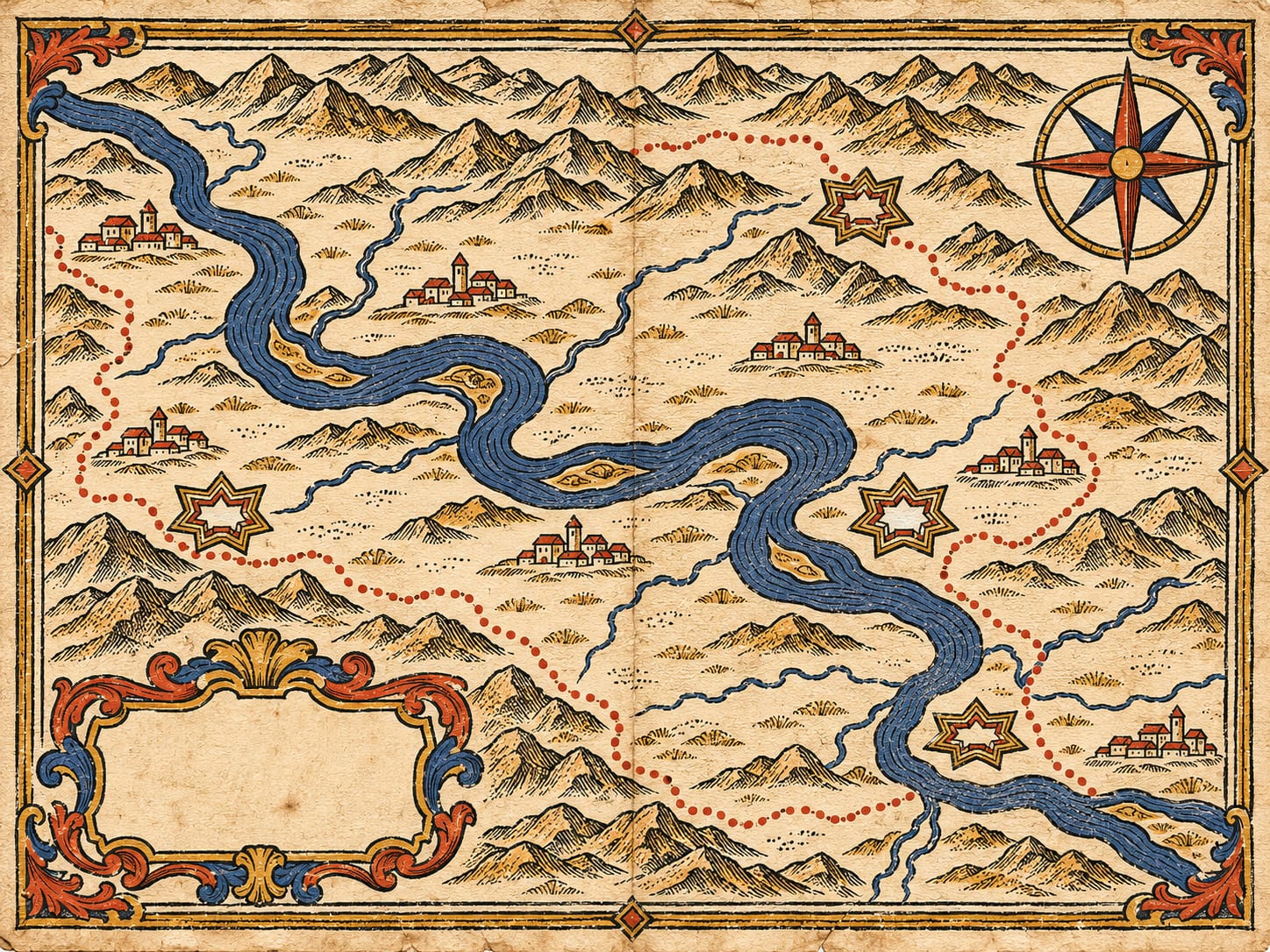
The fortresses at Arad and Temesvár took in the sick, the wounded and the prisoners, and Temesvár served as the main hospital base for the Banat army. In October 1788, one account counted 1,200 wounded brought to Arad "in those days," a number that covers the retreat and the days around it, not the night alone.
Belgrade, Sistova and the end of the war
Austria recovered in 1789. Gideon Ernst von Laudon took command of the main army in July. His bombardment of Belgrade began on 16 September, the assault on 30 September, and the Ottoman garrison capitulated on 8 October 1789. Laudon took Semendria three days later. Prince Friedrich Josias of Saxe-Coburg and Alexander Suvorov beat the Ottoman army at Focșani on 1 August 1789 and at Rymnik on 22 September 1789, and Coburg entered Bucharest on 10 November.
The war ended with the Treaty of Sistova, signed on 4 August 1791 at Svishtov, in modern Bulgaria. Austria gave back most of its conquests and kept Orșova and several nearby places in Croatia.
Papers that survive from that autumn
Several pieces of the story can still be read. Gross's report in the Real-Zeitung covers pages 723 to 729 of the 1788 volume. A book of war letters, Historische Darstellung der österreichisch-russisch-türkischen Kriegsbegebenheiten des Jahrs 1788: In Briefen, was printed in Graz in 1788 and has been digitized by the Bavarian State Library.
The Austrian State Archives hold three camp plans from the campaign. One shows the camp taken near Karánsebes on 21 September 1788. Another shows the camp after the retreat from Karánsebes. A third shows the camp at Lugoj between 24 September and 11 October 1788.
An 1788 war atlas, a Hochenleitter print of the Ottoman main army, and a Dutch print of Joseph II leading his army near Zemun survive from the same year.
In Caransebeș and Lugoj today
The night is remembered under several names: Bătălia de la Caransebeș in Romanian, Rückzug von Karánsebes in German, Karánsebesi csata in Hungarian and Şebeş Muharebesi in Turkish. Local and regional writing ties it to the 1788 war, the burning and damage that Caransebeș suffered, and the retreat toward Lugoj.
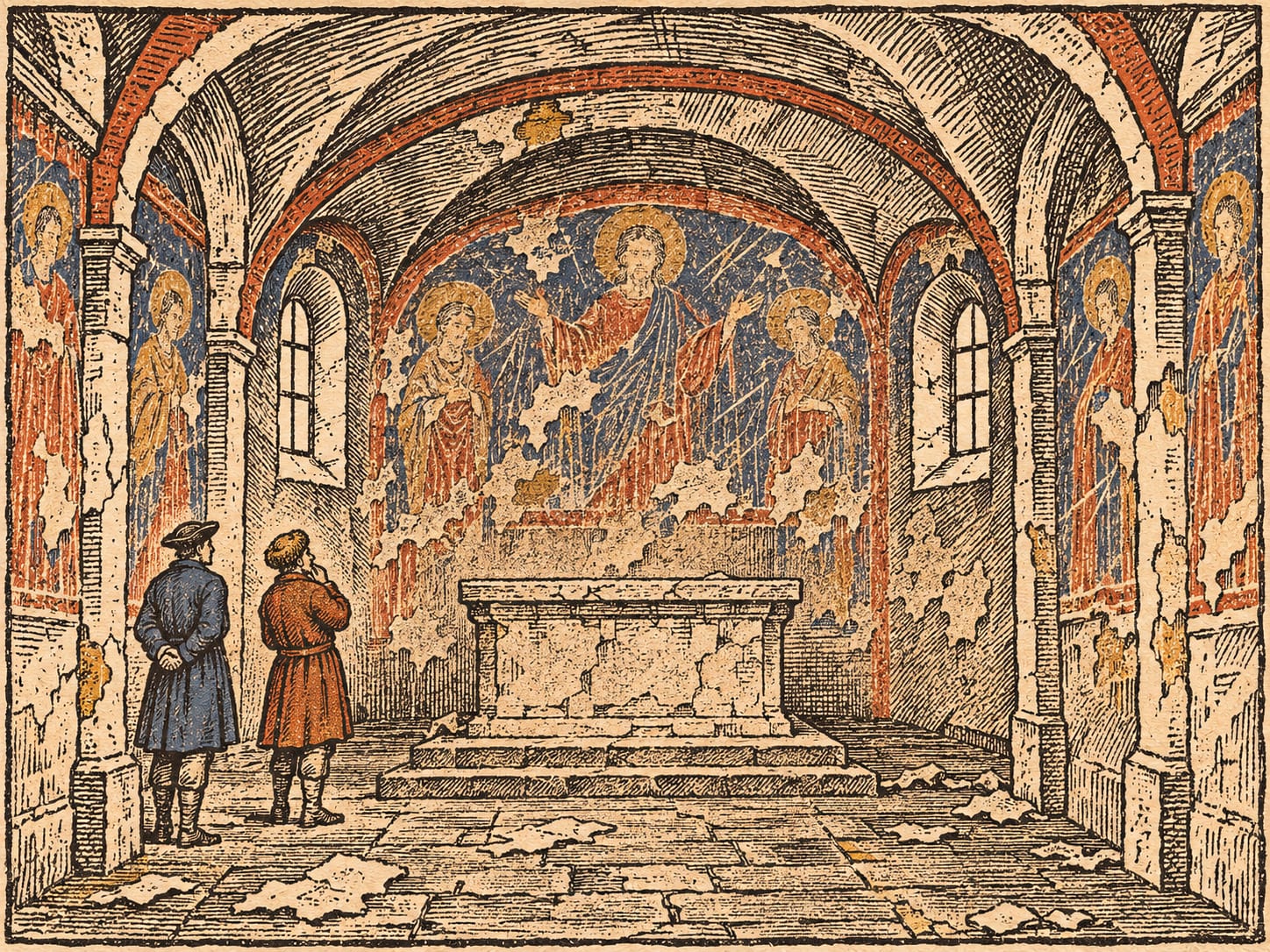
The campaign left marks on the town. The tourist information centre in Caransebeș says Ottoman troops used the Church of Saint John the Baptist as a campaign residence during the 1788 incursion, and that the church lost much of its painting and its altar.
The town museum looks at Caransebeș's long Ottoman and Habsburg past, and the municipal library lists Liviu Groza's Războiul austro-otoman 1788 to 1791, printed in Lugoj in 1998, and his Legenda și istorie în culoarul Timiș-Cerna of 2004. Anyone visiting should check with the Caransebeș museum or library for what is on display.
The Karánsebes campaign, 1788 to 1791
- February 1788
Joseph II declares war on the Ottoman Empire, allied with Catherine II of Russia
- 21 September 1788
Retreat from Illova before dawn; Ottoman troops attack the Austrian rearguard near Karánsebes in daylight
- 21 to 22 September 1788
Panic and friendly fire spread through the Austrian columns at night
- 23 September 1788
An Austrian field report puts about 150 dead and wounded at the daylight action
- 26 September 1788
Joseph writes to Leopold of Tuscany from Lugoj
- 7 October 1788
The Real-Zeitung of Erlangen prints Johann Heinrich Gross's account of the night
- Late 1788
Joseph II, ill, leaves the front for Vienna
- 8 October 1789
Belgrade's Ottoman garrison capitulates to Laudon
- 4 August 1791
The Treaty of Sistova ends the war
- 1847
Gross-Hoffinger's history adds the brandy wagon
- 1968
Paul Bernard's biography gives the figure of 10,000
The night near Karánsebes is a story about an army made of many peoples, a dark road and a word that could not be taken back. The soldiers who fell that night were Joseph II's own men.
Sources
- Matthew Z. Mayer, Joseph II and the Austro-Ottoman War, 1788 to 1791, University of Cambridge repository
- The Annual Register, 1788, account of the Karánsebes retreat and Joseph II's return to Vienna
- Michael Hochedlinger, Austria's Wars of Emergence, 1683 to 1797
- Johann Heinrich Gross, "Zur Kriegsgeschichte," Real-Zeitung, Erlangen, 7 October 1788
- Frankfurter Staats-Ristretto, 10 October 1788, reprint of the camp report of 23 September 1788
- Joseph II to Leopold of Tuscany, correspondence of 1788, Haus-, Hof- und Staatsarchiv, Vienna
- Anton Johann Gross-Hoffinger, Geschichte Josephs des Zweiten, 1847
- Historische Darstellung der österreichisch-russisch-türkischen Kriegsbegebenheiten des Jahrs 1788: In Briefen, Graz, 1788, Bavarian State Library
- Austrian State Archives, camp plans of Karánsebes and Lugoj, 1788
- Oskar Criste, Kriege unter Kaiser Josef II., 1904
- Hungarian Historical Review article on the Habsburg-Ottoman war and frontier forces; Hungarian military history journal, 1942
- TÜRKİYAT article on the Şebeş campaign; "The city of Caransebeș in Ottoman sources," Tibiscum
- Mozart Documents, 1789 campaign chronology, citing T. C. W. Blanning and Criste; Ottoman Archives, Treaty of Ziştovi
- National Museum of Romanian History, Caransebeș archaeological site; Caransebeș tourist information centre; Caransebeș Municipal Library catalogue
- Grupo de Estudios de Historia Militar, article on the Battle of Karánsebes
Watch the full story on the Flashback Fables YouTube channel, and send it to someone who would love it.