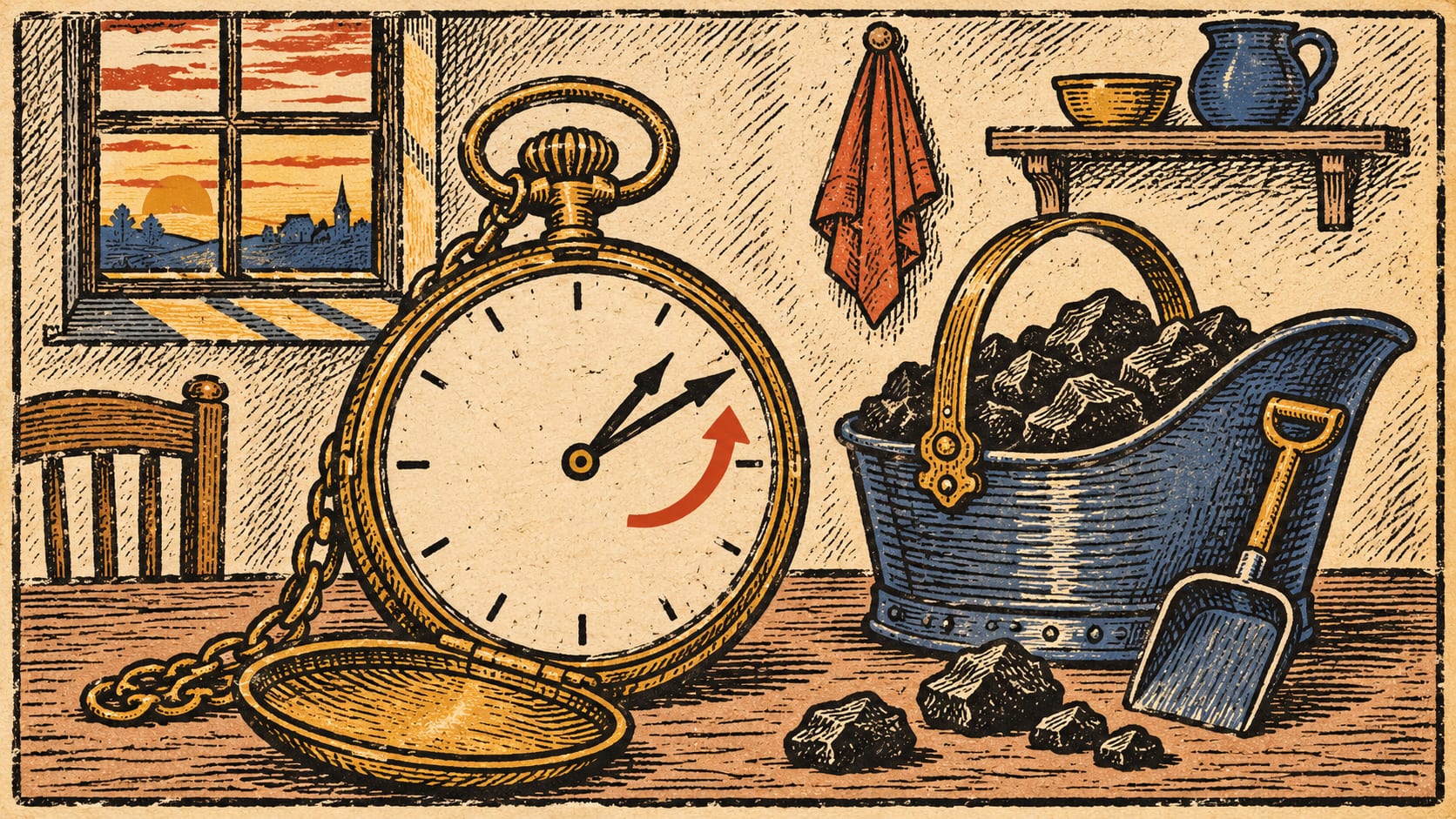
Daylight saving time began as a wartime fuel measure. Germany ordered its clocks forward on 30 April 1916 to save coal and artificial light, and Britain and the United States followed within two years.
The idea was older. Benjamin Franklin joked about waking earlier in 1784, a New Zealand insect collector proposed moving clocks in 1895, and a British builder campaigned for it from 1907. None of them moved a clock. A government at war did.
What came after 1916 was a repeal, a patchwork of local rules, a winter experiment that ended early, and a debate that is still running.
A joke about candles in Paris
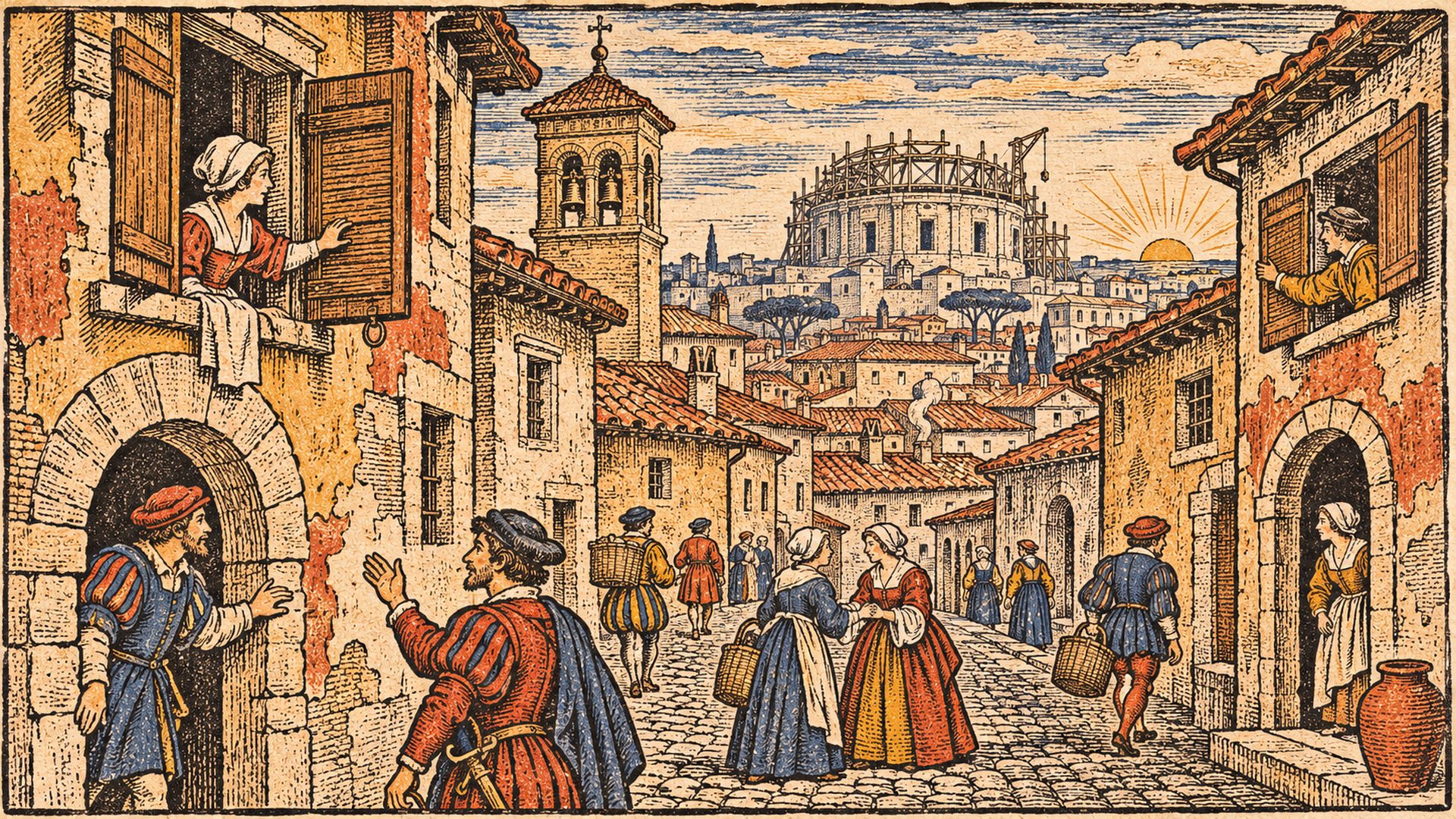
Benjamin Franklin is the name often attached to the idea, and he earns a footnote. In an anonymous letter in the Journal de Paris on 26 April 1784, he suggested that Parisians could save candles by waking earlier. He proposed a tax on window shutters, rationed candles, and cannons fired at sunrise to wake the city. He worked out that French shopkeepers might save one million francs a year on candles.
The letter was satire. It was a joke about sleeping late, not a plan to change clocks, and Franklin never suggested putting them forward in spring and back in autumn. The change that came later was a different thing: a legal decision to make the same hour read differently.
An insect collector and a builder
George Vernon Hudson was a New Zealand postal clerk, entomologist and amateur astronomer. He joined the Wellington Post Office in 1883, aged 16. In 1895 he presented a paper, "On Seasonal Time-Adjustment in Countries South of Lat. 30°", to the Wellington Philosophical Society. He wanted more daylight after work in summer for collecting insects, and he proposed advancing clocks by two hours for the five summer months. In an 1898 follow-up, a newspaper reported his plan as "putting the clocks on two hours at midnight on the 30th September and putting them back again two hours on the 28th February."
Hudson named the costs himself. "Milkmen and others who have to start very early at present would suffer under the proposed arrangement," he acknowledged, "as they would be compelled to begin their duties in the dark of early morning almost the entire year through." He also expected the kerosene, gas and electric lighting companies to "lose heavily" from the lower use of artificial light.
By 1909 he had changed his mind about the size of the shift. Giving evidence to the New Zealand Parliament, he said, "I think one hour is better, because two hours would make the daylight short in the mornings at the beginning and the end of summer." His proposal was not enacted in New Zealand at the time.
William Willett, a London builder, published The Waste of Daylight in July 1907. His plan was gentler: advance the clocks by 80 minutes, in four Sunday steps of 20 minutes each in April, then reverse them over four Sundays in September. He promised "80 minutes more daylight after 6 p.m." in May, June, July and August, with gains for outdoor recreation and lower spending on artificial light.
A bill, a committee and a sundial
Willett's pamphlet drew in Robert Pearce, the Liberal MP for Leek, and Winston Churchill. Pearce brought a Daylight Saving Bill to the House of Commons on 12 February 1908. He quoted Thomas Moore: "Give me back the wild sweetness of morning, its smiles and its tears are worth evening's best light." He also quoted a couplet: "The best of all ways / To lengthen our days / Is to steal a few hours from the night."
The bill passed its second reading and went to a Select Committee. The committee recommended dropping Willett's eight small steps for one hour forward in spring and one hour back in autumn. When Pearce reported to the House in 1909, he said the committee found the aim "desirable," and that it "would benefit the community generally if it could be generally attained." The principal railway officers backed it, and evidence from William Vickery of the London and South-Western Railway put a possible saving for British railway companies at £92,000 a year, excluding Ireland.
Farmers did not agree. In that 1909 debate an MP told the House that the Chambers of Agriculture and the farmers' clubs "are one and all in favour of its rejection." He added, "All farmers and agriculturists already get up as early in the morning as is possible. We do not want the clock so much put on as we want it put back." The bill did not become law.
Willett kept campaigning. He died at Chislehurst on 4 March 1915, aged 58, a year before Britain adopted summer time. A sundial at Petts Wood, set permanently to British Summer Time, stands in woodland bought with local donations and dedicated to him. A local inscription calls him "Originator of the Daylight Saving or Summer Time Act." It is a tribute from neighbours, and the law came a year after his death.
Germany moves its clocks
The German Empire was the first country to introduce daylight saving time as a national measure. On 6 April 1916, Germany's Federal Council ordered clocks advanced from 1 May through 30 September 1916. The change began at 11 p.m. on 30 April, when clocks jumped to midnight and 1 May became a day of 23 hours. The start is dated either 30 April or 1 May, depending on whether the legal change or the opening day is meant. The aim was war economy: less artificial light, and more coal and other fuel left over. A United States diplomat in Berlin sent an English translation of the notice home on 8 April 1916.
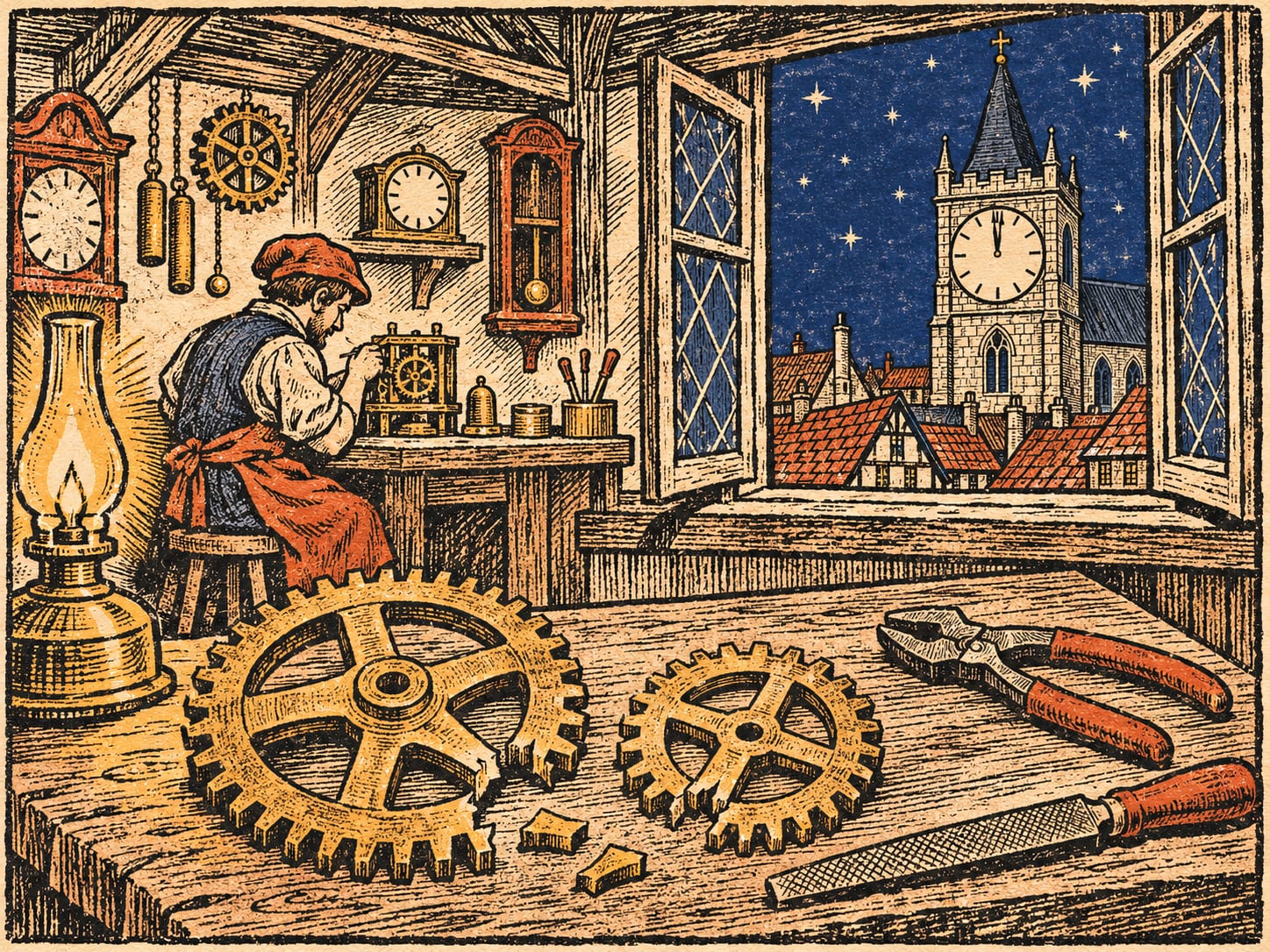
Local papers recorded how it went. The Frankfurter Nachrichten und Intelligenz-Blatt described an hour being taken from the day, though it stressed that people would gain an hour of light in the morning. It reported disorder that morning, with schools and public clocks helping people adjust. In Staufen, the town chronicle wrote: "Die Sommerzeit hat sich glatt eingeführt, nur die neue Kirchenuhr streikt." Summer time had come in smoothly, in other words, except that the new church clock had stopped. A clockmaker broke two gears trying to reset it in the dark, and the local railway opened passenger service without ceremony that morning.
In Silesia, the Schlesische Zeitung described people gathering around a town-hall clock as it moved from 11 p.m. to midnight. Many felt that an hour had truly been lost, though they expected to get it back in autumn. The order came from the Bundesrat and the imperial government.
Austria-Hungary followed shortly afterward. A United States embassy report dated 1 May 1916 stated that the Austrian imperial decree had taken effect.
A smaller experiment came earlier in Ontario. Port Arthur, now part of Thunder Bay, passed a local bylaw in 1908 to move from Central Time to Eastern Time for a two-month trial, and it made the change permanent from 30 April 1909. That was a shift of time zone, not a seasonal clock change, so Port Arthur counts as a local precursor and not a national law.
Britain follows
Britain passed the Summer Time Act 1916. The Summer Time Bill received Royal Assent on 17 May. In the Lords that day, a government speaker conceded that "in the case of agriculture inconvenience may arise ... there are some agricultural operations which cannot be carried on at a very early hour in the morning." In the Commons on 8 May, members described the bill as a wartime economy meant to make better use of daylight, "the economy in fuel and its transport that would be effected by shortening the hours of artificial lighting." Sir Henry Norman argued that the railways could change at once because the government controlled them during the war.
At 2 a.m. Greenwich Mean Time on Sunday 21 May 1916, clocks in Britain and Ireland went forward one hour, and that year's summer time ended on 1 October. The News Letter reported a day of only 23 hours, with government departments and railways changing at 2 a.m. and most people moving their clocks before bed on Saturday night. It said the new system began with "a minimum of trouble and inconvenience," and that there was "very little, if any, confusion." The Newton and Earlestown Guardian said the change passed locally "without causing much inconvenience to anybody," though some people joked or grumbled before they complied.
The United States, and the farmers
The United States passed the Standard Time Act, also called the Calder Act, on 19 March 1918. It set up standard time zones and introduced daylight saving time, which began on 31 March 1918.
The campaign had two faces. Robert Garland, a Pittsburgh industrialist and Republican official, pressed it from Pittsburgh, where the city had tried daylight saving before the federal law.
Marcus M. Marks, president of the Borough of Manhattan from 1914 to 1917 and of the National Daylight Saving Association, wrote to Congress on 28 January 1918 that single-city trials in places like Cleveland and Detroit had been "usually satisfactory," but that the national plan should be "not local but universal" and bring the United States "into harmony with Europe." He also made a point that suits winter: "In the winter there is no daylight by pushing clocks forward, because you lose as much by the darkness in earlier rising as you gain by retiring earlier."
In the House, the main opponent was Representative Otis Wingo of Arkansas, who called the bill "for the relief of the slackers of the Nation who are too lazy to get up early." Representative Richard Parker of New Jersey answered with a factory story. Colgate employees had agreed to start an hour earlier, but the train timetable stopped the change from working. "Everybody must make the change at once," Parker said.
Farm groups stayed opposed. Their argument was that farm work follows sunlight, livestock and market timing, and advancing the clock created no daylight; it shifted an hour from morning to evening and could send farm hands to work by the clock before sunrise.
Nina H. Weaver of Grange No. 957 wrote in a letter printed in the Senate record on 1 August 1919: "The grange, the Dairymen's League, the farm bureau, the horticultural societies, and all farmers' organizations are opposed to the daylight-saving law." John Esch, chairman of the House Commerce Committee, said more than 300 farm publications and every major agricultural organization opposed it, and the committee called the coal saved in 1918 "inconsequential."
Congress passed the repeal in August 1919, and the daylight saving section ended. President Woodrow Wilson vetoed the repeal on 15 August. His message admitted "the very considerable and in some respects very serious inconveniences to which the daylight-saving law subjects the farmers of the country." He held that the country's pressing need was "production, increased and increasing production, in all lines of industry," and that the law "ministers to economy and to efficiency." Congress overrode him. The repeal took effect on 26 October 1919, and daylight saving became a local option until the Second World War.
War Time, then a patchwork
From 9 February 1942 through the final Sunday in September 1945, the United States ran year-round daylight saving time, called War Time. Franklin D. Roosevelt and Congress adopted it as a national-security and energy measure. When it ended, states and towns went back to choosing for themselves.
The patchwork caused real trouble in the 1950s and early 1960s. Transport companies, broadcasters and other businesses had to deal with communities that changed clocks on different dates or not at all. The Interstate Commerce Commission described the result as "growing inconvenience, confusion, and sometimes danger." By 1962 the transportation industry was pressing Congress for national rules.
The Uniform Time Act of 1966 answered with one schedule. States that observed daylight saving had to use the same dates and times: clocks changed at 2 a.m. on the final Sunday in April and went back at 2 a.m. on the final Sunday in October. A state could opt out, but only for the whole state.
The winter experiment of 1974
In December 1973, during the oil crisis, Congress passed the Emergency Daylight Saving Time Energy Conservation Act. It put the country on year-round daylight saving time from 6 January 1974 through 27 April 1975.
That ended early. Winter mornings turned dangerously dark in parts of the country, and the worry centred on children travelling to school before sunrise. In October 1974 Congress amended the law to require standard time from 27 October 1974 through 23 February 1975, and seasonal daylight saving resumed afterward.
The Department of Transportation's final study reported about 1 percent lower electricity use at the changeovers it measured. The evidence was limited, and other effects were hard to separate from the seasons. The study suggested that a longer spring-to-autumn system might bring modest benefits, and it did not show that year-round daylight saving was clearly better.
The Energy Policy Act of 2005 changed the schedule from 2007. Daylight saving now starts on the second Sunday in March and ends on the Sunday that falls between 1 and 7 November.
Arizona, Hawaii and Indiana
The Uniform Time Act let a state exempt itself if the whole state did. Hawaii did so in 1967 and Arizona in 1968. Arizona had observed daylight saving in 1967, then chose permanent standard time, and its main argument was that an extra summer evening hour would stretch daylight into the hottest part of the day. The Navajo Nation inside Arizona observes daylight saving, while the Hopi Reservation, surrounded by Navajo land, does not. American Samoa, Guam, the Northern Mariana Islands, Puerto Rico and the U.S. Virgin Islands also stay on standard time.
Indiana kept a county-by-county patchwork for decades. The state passed a statewide daylight saving requirement in 2005, and on 2 April 2006 every Indiana county began observing it on the federal schedule.
Daylight saving time, 1784 to 2022
- 26 April 1784
Franklin's satirical candle letter appears in the Journal de Paris
- 1895
George Vernon Hudson presents his two-hour proposal in Wellington
- July 1907
William Willett publishes The Waste of Daylight in London
- 12 February 1908
Robert Pearce brings a Daylight Saving Bill to the House of Commons
- 6 April 1916
Germany's Federal Council orders clocks advanced from 1 May
- 21 May 1916
British clocks go forward one hour
- 31 March 1918
Daylight saving begins in the United States
- 20 August 1919
Congress repeals it over President Wilson's veto
- 9 February 1942
War Time begins in the United States
- 6 January 1974
The year-round experiment begins
- 2 April 2006
Every Indiana county begins observing daylight saving
- 15 March 2022
The Senate passes the Sunshine Protection Act by unanimous consent
- 28 October 2022
Mexico publishes its Law of Time Zones
Does it save energy, and what about health?
The results depend on the country, the season and what is measured. In the 1975 federal study, electricity use dropped about 1 percent at the changeover periods it examined, and gasoline use showed no clear change.
Heart attacks and crashes get more attention than power bills. A 2024 review of 12 studies from 10 countries put the risk of a heart attack at 4 percent higher after the spring change, within a range of 2 to 7 percent. After the autumn change the figure was 2 percent higher, within a range that ran from 1 percent lower to 5 percent higher. The studies varied a lot from one to the next.
Crash studies split as well. Florida researchers who looked at 37 years of data found more fatal and night-time crashes after the spring shift. After the autumn shift, several kinds of crash rose and evening rush-hour crashes fell. In Chile, a study of 2002 to 2018 found 2.7 percent fewer car accidents overall under daylight saving, and 6 percent more in the week after the spring change.
Countries that stopped
Russia stopped seasonal clock changes in 2011. Turkey ended daylight saving in 2016 and Namibia in 2017. Jordan, Iran, Fiji and Samoa all ended it in 2022.
Mexico ended daylight saving for most of the country through the Law of Time Zones, published on 28 October 2022. The law set standard time nationwide, except in specified northern-border municipalities, which keep a seasonal schedule to line up with the United States border region.
Europe tried and stalled. On 26 March 2019 the European Parliament voted 410 to 192, with 51 abstentions, to end twice-yearly clock changes, and it proposed that the final changes happen in 2021. The Council of the European Union never agreed a common position, and member states had not settled whether to keep permanent summer time or permanent standard time. The system stays as it was.
Washington tries to stop the clocks
The United States came close to a permanent clock once. On 15 March 2022 the Senate passed the Sunshine Protection Act of 2021, S. 623, after Senator Marco Rubio asked for unanimous consent to take it up, amend it and pass it in one sitting. There was no roll call, so no vote count exists. The bill would have made daylight saving permanent from 5 November 2023. The House received it and took no further action before the end of that Congress.
A similar House bill, H.R. 1279, was introduced on 1 March 2023 by Representative Vern Buchanan with bipartisan cosponsors and sent to the Energy and Commerce Committee. Other bills, including S. 582, proposed the same thing, and none passed both chambers. A state cannot impose permanent daylight saving by itself under the Uniform Time Act. It can choose standard time all year, as Arizona and Hawaii do, but permanent daylight saving needs Congress to change federal law.
Spain, and why the clocks still move
Spain has its own thread. A seasonal clock decree there dates from 1918 and was issued to save coal. Spain used the practice irregularly, dropped it between 1950 and 1973, and brought it back during the 1974 oil crisis. Spanish discussion also points out that Spain keeps Central European Time rather than the time zone its longitude would suggest. Spain remains inside the European Union system, so its clocks still change twice a year.
A measure meant for one war has now outlived it by more than a century, and each pull on it comes from somewhere different. Transport companies wanted one national schedule after the confusion of the 1950s. Farm groups opposed the clocks in 1919. Health and safety studies point in more than one direction. And when the European Parliament voted to end the changes, the member states could not agree which time to keep.
Sources
- "Saving Energy: The Fall Back Position," Library of Congress blog
- Daylight Saving Time, Congressional Research Service reports, including the 2026 report
- William Willett, The Waste of Daylight, 1907
- House of Commons debates on the Daylight Saving Bill, 12 February 1908 and 5 March 1909, UK Parliament Hansard
- National Trust, history of Petts Wood and Hawkwood
- George Vernon Hudson, "On Seasonal Time-Adjustment in Countries South of Lat. 30°," Royal Society of New Zealand; New Zealand Times, 19 October 1898; New Zealand parliamentary evidence, 1909; Alexander Turnbull Library
- "Daylight Saving Time Begins, 1916," U.S. National Archives
- German legal notice of 6 April 1916, Wikisource transcription; Frankfurter Nachrichten und Intelligenz-Blatt, 1 May 1916; Staufen town chronicle; Schlesische Zeitung, 1916
- Summer Time Bill debates, 8 and 15 May and 17 May 1916, UK Parliament Hansard; News Letter and Newton and Earlestown Guardian reports of May 1916
- Congressional Record, 15 March 1918, including Marcus Marks's letter; Congressional Record, 1 August 1919; U.S. House of Representatives history of the 1918 debate
- Woodrow Wilson, veto message of 15 August 1919, American Presidency Project
- U.S. Department of Transportation, 1975 daylight saving study, and U.S. Department of Energy technical review
- Hurst et al., 2024 heart-attack meta-analysis; Molina, Kitali and Alluri, 2023 Florida crash study; Gillmore, 2025 Chile crash study
- Congressional Record, Senate, 15 March 2022; Senate-passed text of S. 623; H.R. 1279 (2023)
- Mexico's Secretariat of Energy, announcement on the end of Horario de Verano
- European Parliament Legislative Observatory and Council of the European Union, pages on seasonal time changes
- RTVE, "Todo sobre el cambio de hora de primavera," and El País, "Breve historia de un siglo cambiando de hora"
Watch the full story on the Flashback Fables YouTube channel, and send it to someone who would love it.