
A tulip bulb that cost as much as a house sounds like a joke. In 1637 the price lists said it was true for one famous variety, the Semper Augustus, quoted at about 5,000 guilders.
Then the market broke, and the story that grew afterwards turned out bigger than the crash. Historian Anne Goldgar counted about 350 people in the trade in the Dutch towns she studied, mostly merchants and skilled craftsmen, and she names no bankruptcy that came from it.
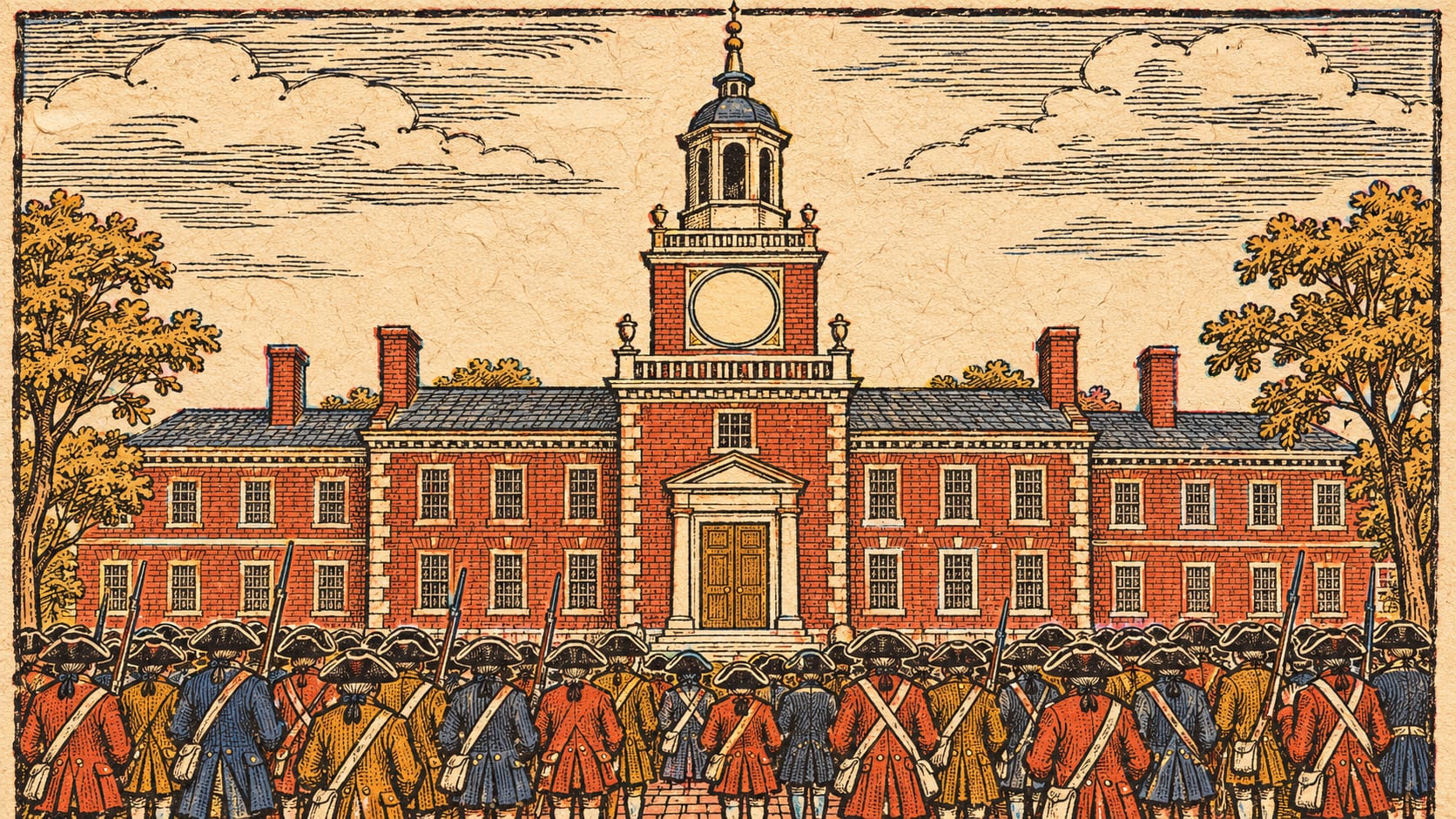
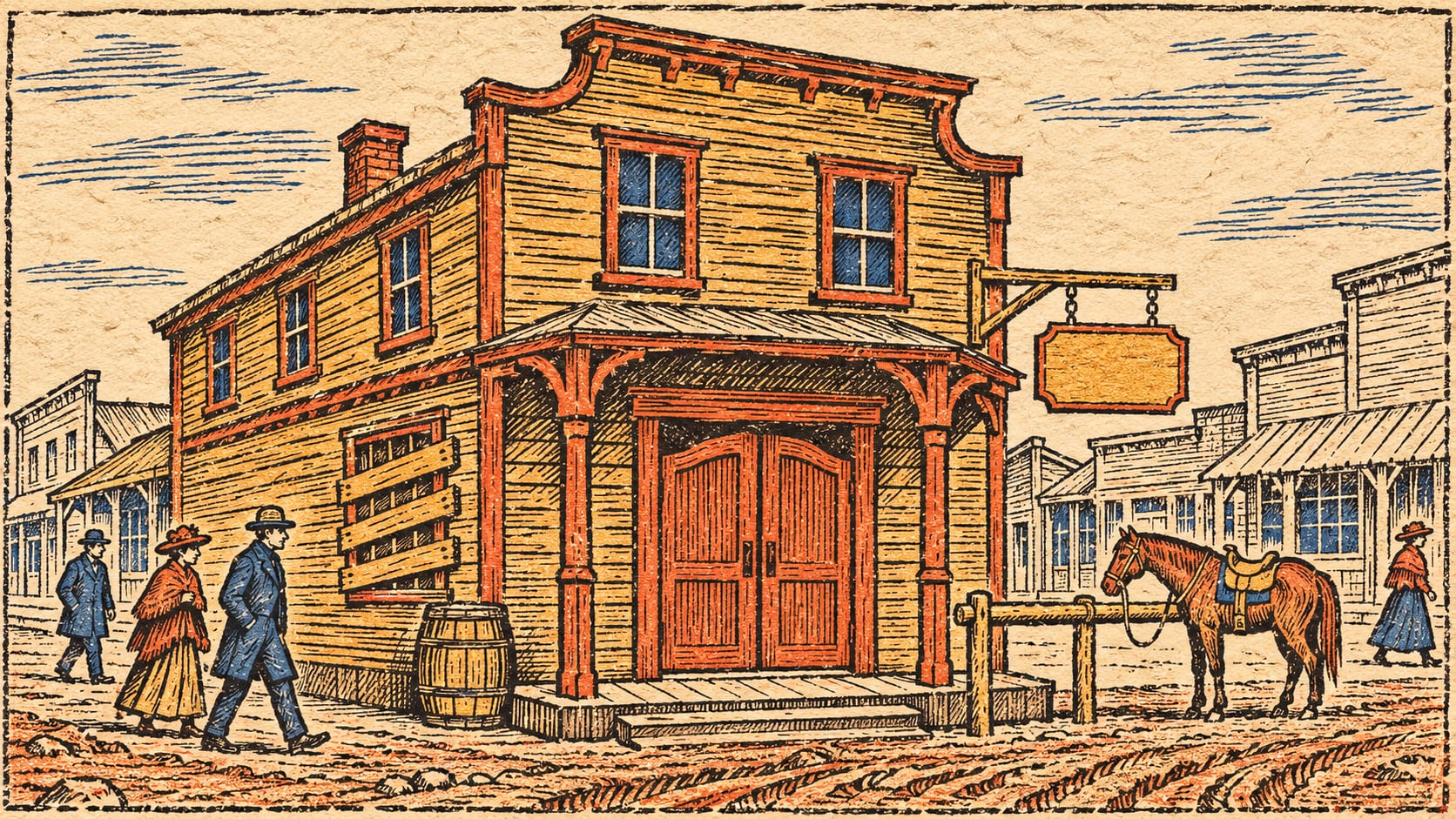
The bulbs were traded in taverns from late 1636. On 3 February 1637, a sale in a Haarlem tavern failed at falling prices, and trading stopped the next day.
Tulips from Leiden, and a flower that was prized for being flawed
Carolus Clusius, also known as Charles de l'Écluse, brought tulip bulbs to Leiden in 1593, when he joined Leiden University's botanical garden, the Hortus Academicus. He arrived on 19 October 1593 and brought a collection with him from Frankfurt. He had already grown tulips in Austria and Frankfurt, and his 1601 botanical work described the flower and its unusual colour patterns.
Tulips were already growing in some private gardens by then, so he did not introduce the flower to the Netherlands single-handed. The garden itself had been founded in 1590 as a medicinal garden for medical students. Its early planting list held 1,585 plants, tulips among them, and a 1610 engraving shows a fence built to keep thieves away from the valuable ones.
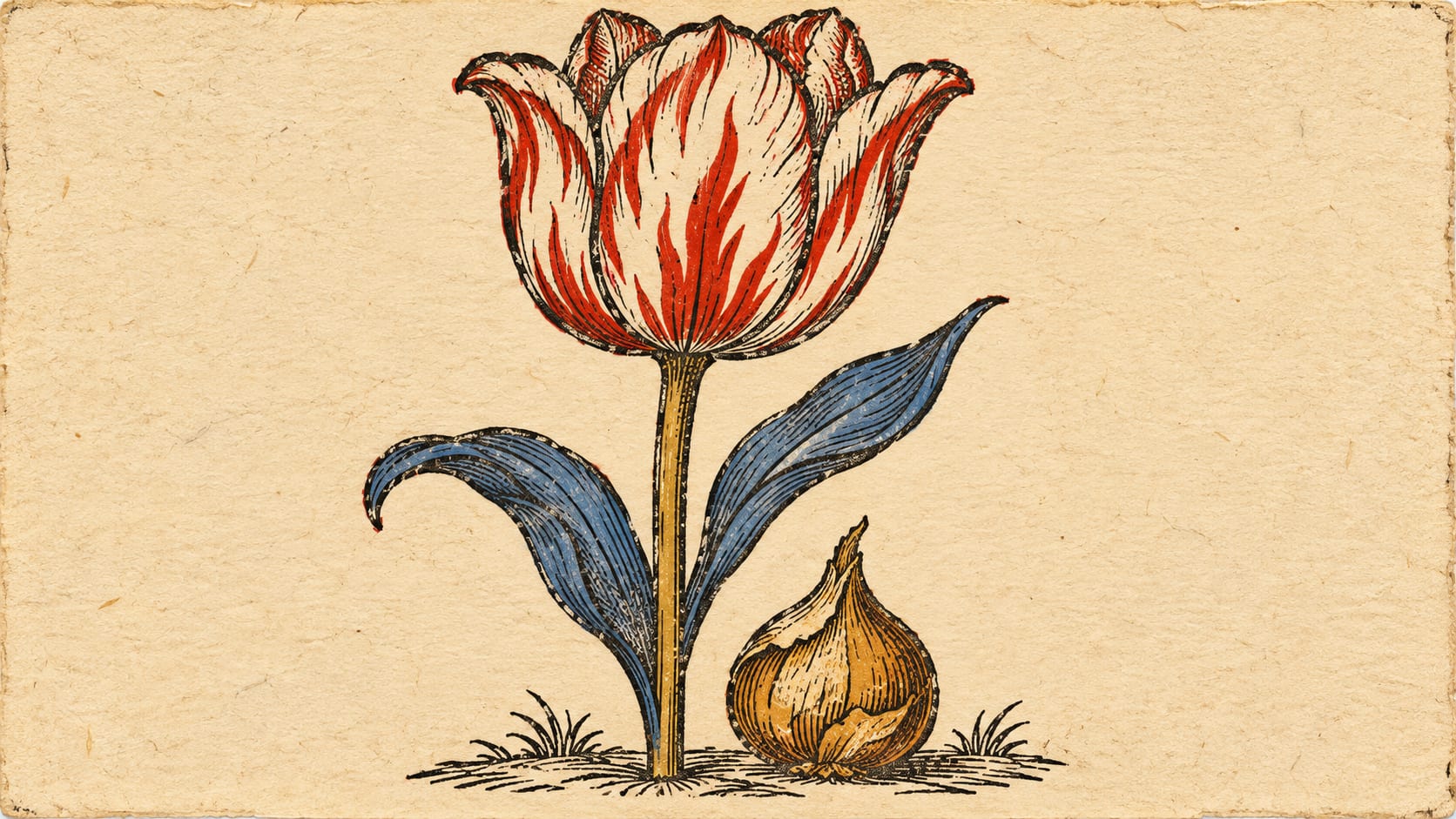
The patterns were the point. Some tulips came up "broken", with streaks, flames and feathers of a contrasting colour. Nobody in the seventeenth century knew why. Later work traced the effect to the tulip-breaking virus, which aphids carry from plant to plant.
Broken tulips were rare, and the bulbs reproduced slowly, so collectors wanted them badly. The beauty came at a cost to the plant. Clusius observed that broken tulips were weakened and often declined after their showy flowers.
Colleges in the tavern
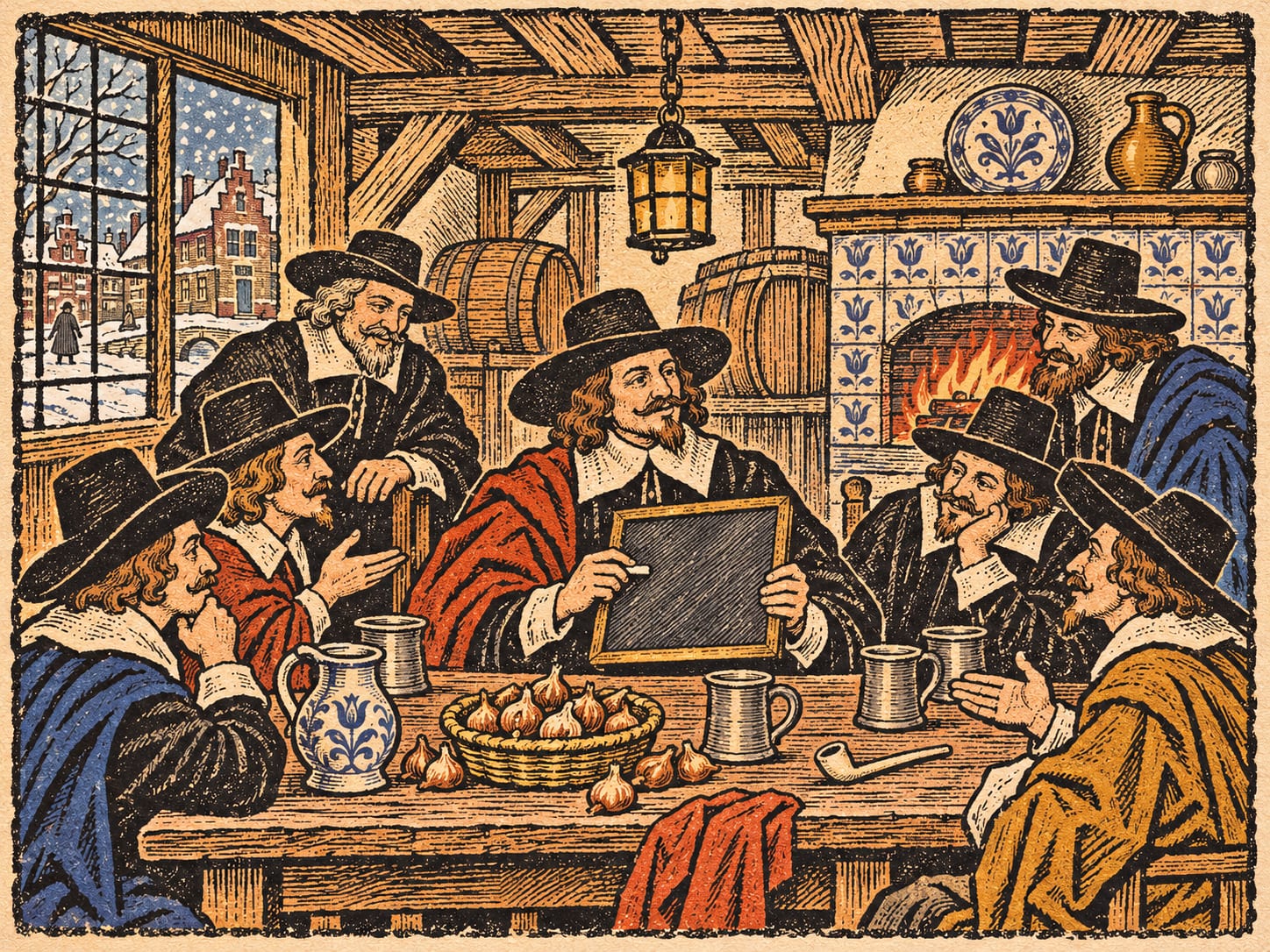
From late 1636, into the winter of 1636 to 1637, tulip trading in Holland moved into contracts that worked like futures. The bulbs sat underground for most of the year, so a buyer and seller agreed a price in winter, and delivery was expected after the flowers bloomed and the bulbs were lifted in spring or early summer. Often no bulb changed hands on the day of the deal.
The deals were made in taverns, at gatherings called colleges. A slate went round the members listing who wanted to buy and who wanted to sell, and members helped settle prices and quantities. A failed negotiation could cost a small payment to the college. A completed deal produced "wine money", which paid for the tavern's expenses and for charity.
Not every contract was the same. Some were unconditional promises to buy. Others let the buyer cancel by paying a percentage of the contract price. That difference sits at the centre of a long argument over whether the market ran on futures, options or both.
A satirical pamphlet printed in Haarlem in 1637 shows how the colleges looked to a contemporary. In the Samen-spraeck tusschen Waermondt ende Gaergoedt, printed by Adriaen Roman, a character named Gaergoedt tells a newcomer, Waermondt: "You must go to an inn. I could name some, though I know few or none where there are no colleges."
Waermondt's name goes on a slate, and boards circulate among the members. In a second method, called trading "in 't Ootje," members bid small sums for the right to buy, and the highest bidder takes it. Waermondt's reaction: "Look at that, is that how it happens? Children could conduct business that way."
The taverns stayed open late, and trading could run on Sundays. Gaergoedt claims he handled about 12,000 guilders and made six or seven small profits. This is satire, a comic dialogue, so the exaggeration is part of the joke, but it gives the practice its vocabulary.
What a rare bulb cost
The figure everyone repeats belongs to the Semper Augustus. One 1637 price tradition puts it at about 5,000 guilders, the number Goldgar uses, and later published accounts give 10,000. These are quoted and asking prices, not proven cash sales, and the two numbers come from different traditions, so they are never the same deal.
Goldgar compares about 5,000 guilders with the price of a well-equipped house. She also lists what 1,000 guilders could buy, among other things a modest house in Haarlem and large quantities of food.
A skilled craftsman earned about 300 guilders a year in the 1630s. A master carpenter in Alkmaar earned a little over one guilder a day, roughly 300 across a year. On that scale, 5,000 guilders is more than sixteen years of a craftsman's pay, and 10,000 is more than thirty.
The common varieties moved even faster. A pound of the plain Switsers sold for 125 guilders on 31 December 1636, and the price climbed to about 1,500 guilders a pound by early February 1637, a twelve-fold rise in five weeks.
The high numbers travelled far. A Spanish report printed in the Gaceta de Madrid on 1 November 1856 repeated 10,000 guilders for the Semper Augustus, 4,600 for a bulb called Schilder and 4,200 for one called Viceroy. It was written more than two centuries after the crash.
3 February 1637 in Haarlem
On Tuesday, 3 February 1637, traders met in a Haarlem tavern. A pound of the common Switsers, also called Croonen, was offered three times and sold at falling prices: 1,250 guilders, then 1,100, then 1,000. The next day trading stopped in the affected market.
That ended confidence in the winter contract market. It did not make every tulip worthless overnight. On 5 February 1637, an auction in Alkmaar held for orphaned children brought in about 90,000 guilders in total.
The auction sold the tulips of Wouter Bartholomeusz Winckel, an Alkmaar innkeeper, through the town's Orphans' Chamber. The buyers' names have not survived. Afterwards Winckel's children's guardians, Jacob van der Meer and Jacob van der Gheest, went after buyers for the money, and their dispute with Willem Lourisz of Heemskerck dragged on.
The people behind the contracts
The trade had names and faces. Dirck Boortens, a Haarlem merchant and cloth bleacher, sold Pieter Gerritsz van Welsen a group of tulips growing in several gardens on 17 March 1637. Among them was an Admirael Liefkens in the garden of Pieter Bol, a commercial grower. The price started at 11,700 guilders and dropped to 11,400 after inspection, to be paid in three instalments between June 1637 and February 1638.
The contract admitted that some of the bulbs had already been sold on to other buyers, who might refuse delivery after the "great and extreme fall." Boortens was protected from claims over bulbs that failed, changed or were stolen. Van Welsen owed about 11,500 guilders, yet still bought a Haarlem house for 810 guilders in 1637. He was back in tulip disputes after the crash.
Others in the trade were growers and florists. Barent Cardoes, who worked for Pieter Bol for many years, represented Haarlem at an Amsterdam meeting of florists in February 1637 and gave expert evidence on tulip growing in May.
Two Haarlem brewers and civic officeholders, Cornelis Guldewagen and Johan de Wael, moved 1,300 bulbs out of the garden of a bankrupt florist, Anthony de Flory of Wassenaar, in early February 1637. The bulbs were unhealthy, and their claim over them was still open in 1639.
In Alkmaar, the Latin School rector Wilhelmus Tiberius bought tulips from Jan Hendricxsz Admirael in 1636 and never collected or paid for them after they flowered. In July 1637 Admirael sent a notarial warning that the bulbs were still in the ground and could rot. Four arbiters were appointed to settle it: Wouter Hermansz, Gerrit Woutersz, Simon van Poelenburch and Willem Willemsz.
What the authorities did
Haarlem's magistrates acted early. On 7 March 1637 the burgomasters and council resolved to suppress satirical pamphlets and songs about the tulip trade. Haarlem's small-claims court, the Kleine Bank, had handled many tulip disputes before the crash, but from 10 February to 24 April 1637 the cases vanished from its books. In May and June the judges kept postponing them until a general rule could be found.
The States of Holland asked the Hof van Holland, the provincial court, for advice on 11 April 1637. The Hof replied on 25 April and turned down Haarlem's preferred course of cancelling every deal made since the planting season of autumn 1636. It asked the towns for more information and told local authorities to reconcile the parties. Growers could keep or resell bulbs at the risk of buyers who defaulted.
On 27 April 1637 the States of Holland adopted that approach. Existing contracts formally stayed in force. The towns were told to bring buyers and sellers "into accord and unity," with lawsuits only if everything else failed. The resolution set up no general cancellation or compensation scheme.
On 1 May 1637 Haarlem barred notaries and attorneys from drawing up or serving protests about the flower trade, which worked as a pause on ordinary enforcement. In January 1638 the city created a five-member commission to hear tulip disputes and encourage settlements. On 28 May 1638 the magistrates gave its decisions binding force and fixed the cancellation fee, the rouwkoop, at 3.5 percent of the original contract price.
Cases followed. Jacques Bertens bought a Manassier tulip from Salomon Seys for 710 guilders and sold it to Aert Huybertsz for 850. The commission ordered Bertens to pay Seys 3.5 percent of 710, and the three later made a private settlement at the Coninck van Vranck-rijck inn. Jacobus Grimmaris claimed 9 guilders 10 stuivers from Gerrit Jeroensz on a contract of 271 guilders 10 stuivers.
Some buyers fought on in higher courts. Jan Joosten Plavier of Haarlem and Jacob Jansz de Ridder of Leiden defaulted on a 3,500-guilder tulip purchase from Anthony Beliaert dated 2 February 1637. A Middelburg court ordered payment, and in August 1637 the buyers appealed to the Hoge Raad of Holland and Zeeland.
Tulip mania, from Leiden to the settlement
- 1593
Carolus Clusius brings tulip bulbs to Leiden
- 1601
Clusius's botanical work describes tulips and their colour patterns
- Late 1636
Tulip trading moves into futures-like contracts agreed in tavern colleges
- 31 December 1636
A pound of Switsers sells for 125 guilders
- 2 February 1637
A Haarlem contract prices one pound of Switsers at 1,500 guilders
- 3 February 1637
A pound of Switsers sells at 1,250, then 1,100, then 1,000 guilders in a Haarlem tavern
- 5 February 1637
An Alkmaar auction for orphaned children brings in about 90,000 guilders
- 7 March 1637
Haarlem resolves to suppress satirical pamphlets and songs about the trade
- 17 March 1637
Boortens sells Van Welsen a garden of bulbs for 11,400 guilders
- 27 April 1637
The States of Holland keeps existing contracts in force and orders the towns to reconcile the parties
- 1 May 1637
Haarlem bars notaries and attorneys from serving protests about the flower trade
- 28 May 1638
A Haarlem commission's decisions become binding, with a 3.5 percent cancellation fee
Who lost money
The popular story says huge numbers of Dutch people were ruined and the national economy sank into depression. Goldgar went through the archives of the towns involved and drew a smaller picture.
She counted about 285 people in the trade in Haarlem, about 60 in Amsterdam and about 25 in Enkhuizen, with no complete list for Alkmaar or Hoorn. Only 37 of the people she could identify spent more than 300 guilders on bulbs. They were mainly merchants and skilled craftsmen, tied together by family, profession, neighbourhood or religion.
She names no bankruptcy that can be put down to the tulip crash, and the names people reach for do not hold up. Anthony de Flory was already bankrupt before Guldewagen and De Wael took his bulbs. Francisco Gomes da Costa, a tulip dealer in Vianen, had gone bankrupt in the early 1630s and ran into serious trouble again in 1646, so the crash of 1637 does not explain him either.
The painter Jan van Goyen, who bought and sold tulips, owed Allert Claesz van Ravesteijn 897 guilders for bulbs in 1641, plus a painting valued at 36. He died insolvent in 1656, but Goldgar puts most of his debt down to land speculation. The silversmith Isaac Alingh, who once swapped a tulip for cloth for a suit, was bankrupt by 1640, and nothing shows tulips caused it.
Between October 1637 and the end of 1648 most known Haarlem florists kept their houses. What Goldgar did find was defaults, damaged reputations, broken friendships and quarrels over promised payments. That was real distress for a limited group of people, and it did not bring down the Dutch economy.
Pamphlets, Mackay and the sailor who ate a bulb
Satirical songs, poems, pamphlets and prints appeared during and just after the collapse in 1637. They mocked florists and traders, greed, and the social ambition that came with collecting luxuries. Cornelis van der Woude's Tooneel van Flora, published in Amsterdam in 1637, is one example; it defended the florist trade. Haarlem's printer Adriaen Roman put out the Waermondt and Gaergoedt dialogues the same year, and a third, the Register van de Prijsen der Bloemen, listed flower prices.
In 1841, Charles Mackay gathered that tradition into Extraordinary Popular Delusions and the Madness of Crowds. He told tulip speculation as a mass frenzy that swept up nobles, citizens, farmers, mechanics, sailors, servants and chimney sweeps.
Mackay also repeated the story of a sailor who mistook an expensive bulb for an onion and ate it with a herring. The bulb was said to be worth 3,000 florins. The story goes back to earlier travel writing and anecdotes, and it is a legend, not an event anyone has shown to have happened.
It stuck because the pieces around it were real: the satire, the price lists and the high contracts. What the documents do not show is a whole society ruined.
Was it a bubble?
Economists still argue about it. Peter Garber accepts that tulip prices rose sharply and then fell. His 1990 article explains the episode through market fundamentals, changing varieties, scarcity and comparisons with later flower markets, not through pure irrational mania.
Earl Thompson takes a different line. In his 2007 article, he argues that the apparent bubble was partly an artefact of the political settlement, when ordinary futures contracts were effectively turned into option contracts. On his reading, the prices were not necessarily agreed prices above fundamental value, so the episode did not meet his definition of a bubble.
Goldgar disputes the popular scale of the mania on her own evidence, and still treats the market and its social effects as historically significant.
After the crash
Prices never returned to their winter 1636 to 1637 heights, but tulips kept being grown, collected and traded. Abraham Casteleyn still had a large, carefully catalogued collection in 1644, and the courts were still hearing tulip disputes in 1639, some over deals made after the crash. The Dutch economy kept growing in many sectors.
The business that followed rested on a different foundation. Haarlem and the sandy districts around it became centres of professional bulb growing, and the trade expanded through breeding, catalogues, nurseries and export networks from the seventeenth century into the nineteenth. Keukenhof describes its park as an idea of bulb growers and exporters who wanted a showcase. It opened in 1950 with 60 participating growers.
Where the pictures are today
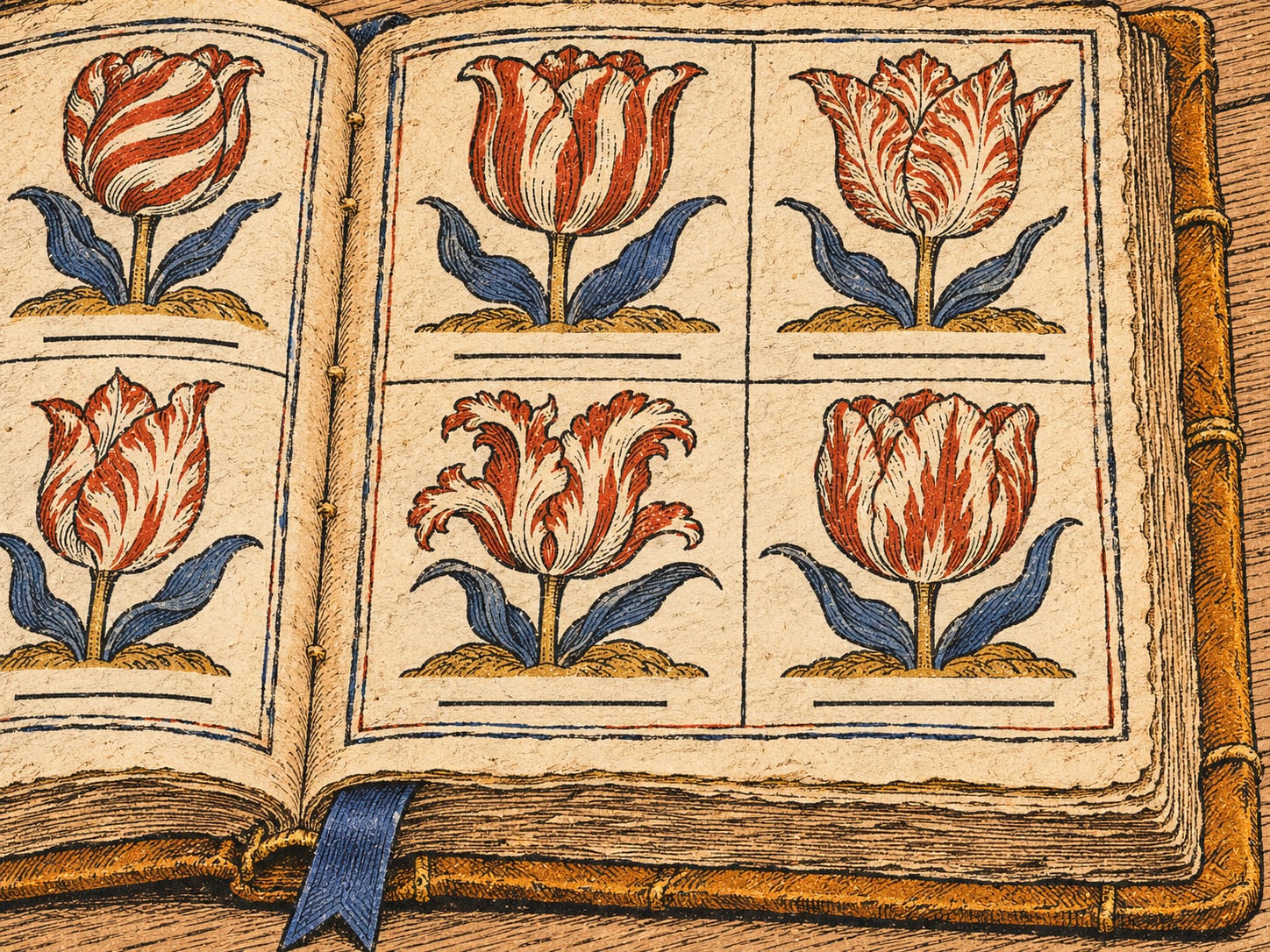
Pieter Cos's tulip book of 1637 is a 75-plate manuscript at Wageningen University and Research, with 54 bound gouaches and drawings of tulips, carnations and other flowers. It gives the flower names, the bulb weights and the prices, which makes it a florist's catalogue as much as an album.
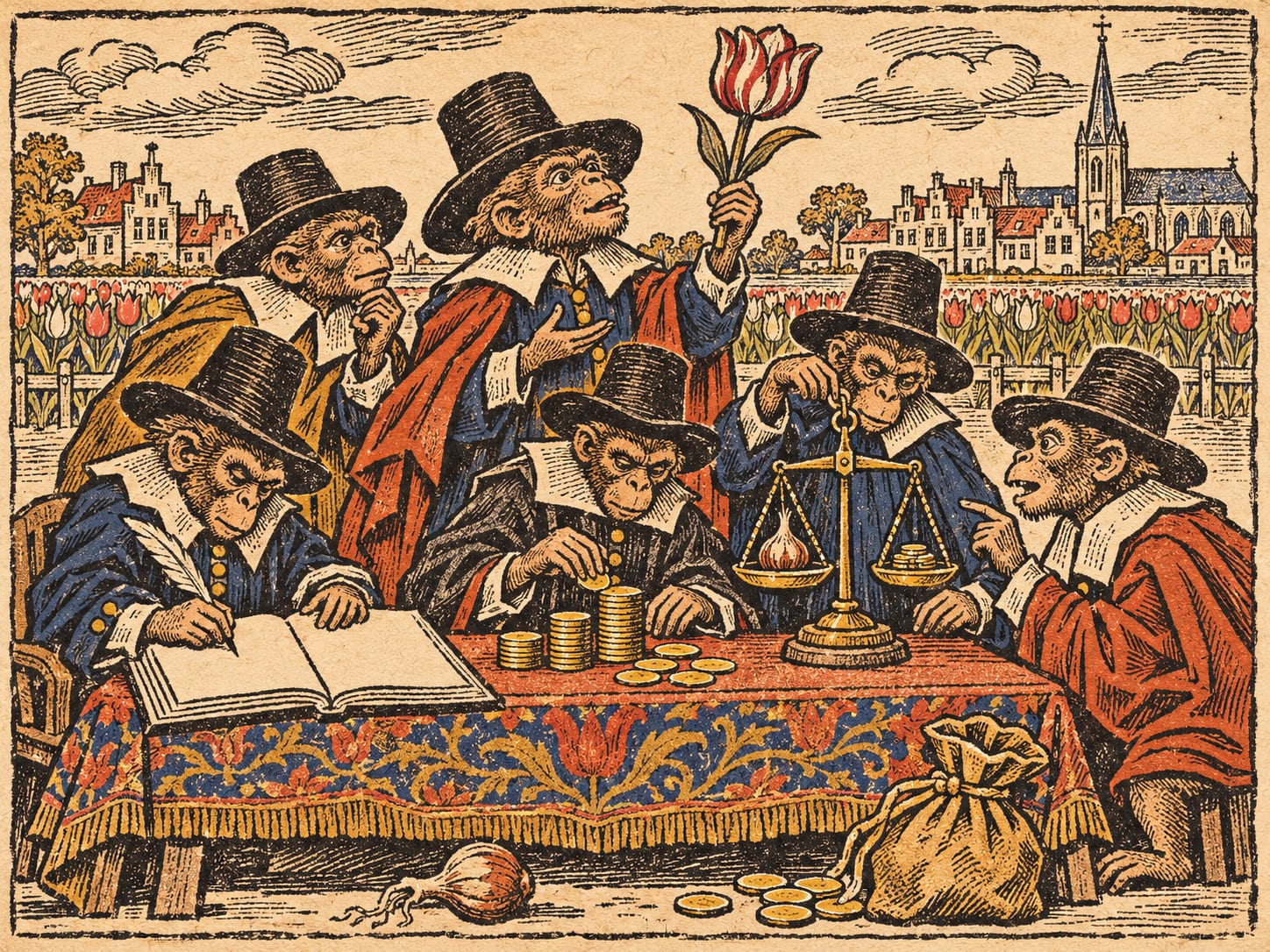
The Frans Hals Museum in Haarlem holds Hendrick Gerritsz Pot's Flora's Wagon of Fools, from about 1637 or 1638, which shows the craze as a procession of folly. It also holds Jan Brueghel the Younger's Satire on Tulip Mania, from about 1640, in which monkeys dressed as Dutch traders buy and sell tulips, count money, quarrel and face the law.
The Rijksmuseum holds a separate tulip book from the Six Collection, with 104 drawings of tulips and carnations, attached price lists and a Semper Augustus. The museum says it may once have belonged to the Amsterdam physician Nicolaes Tulp, but that is only possible, not proven. A museum label naming a painted tulip as a Semper Augustus is an identification, because several red and white broken tulips existed.
What the tulip story leaves behind
The mania left price lists, satirical prints and a tavern sale on 3 February 1637. It also left a question that economists have not settled: whether those prices were madness or the odd result of how the contracts worked.
The bulbs themselves went on blooming. In a few towns, a small group of merchants and craftsmen carried unpaid debts and bruised reputations, and Holland carried on.
Sources
- Fitzwilliam Museum, "Tulipomania"
- Edward Worth Library, "Carolus Clusius"
- Anne Goldgar, "Tulip mania: the classic story of a Dutch financial bubble is mostly wrong"
- Anne Goldgar, Tulipmania, University of Chicago Press
- Ernst Heinrich Krelage, Bloemenspeculatie in Nederland, DBNL
- Pieter Cos tulip book, 1637, Wageningen University and Research
- Peter M. Garber, "Famous First Bubbles," American Economic Association
- Earl A. Thompson, "The tulipmania: Fact or artifact?"
- Charles Mackay, Memoirs of Extraordinary Popular Delusions, 1841
- "Explaining the timing of tulipmania's boom and bust," Cambridge University Press
- University of Leicester Special Collections on the tulip bulb and the ship's crew
- Gaceta de Madrid, 1 November 1856
- Sautyn Kluit's 1866 discussion of the 1637 pamphlets, Jaarboek van de Maatschappij der Nederlandse Letterkunde
- Hortus botanicus Leiden, "Carolus Clusius" and the Clusius Garden
- Keukenhof history guide
- Frans Hals Museum, Hendrick Gerritsz Pot, Flora's Wagon of Fools
- Rijksmuseum, Six Collection tulip book
- National Archives of the Netherlands, Hof van Holland records
Watch the full story on the Flashback Fables YouTube channel, and send it to someone who would love it.