Washington DC is not a state because the Constitution gave Congress a federal district to rule, and a mutiny in Philadelphia in 1783 sharpened the argument for one.
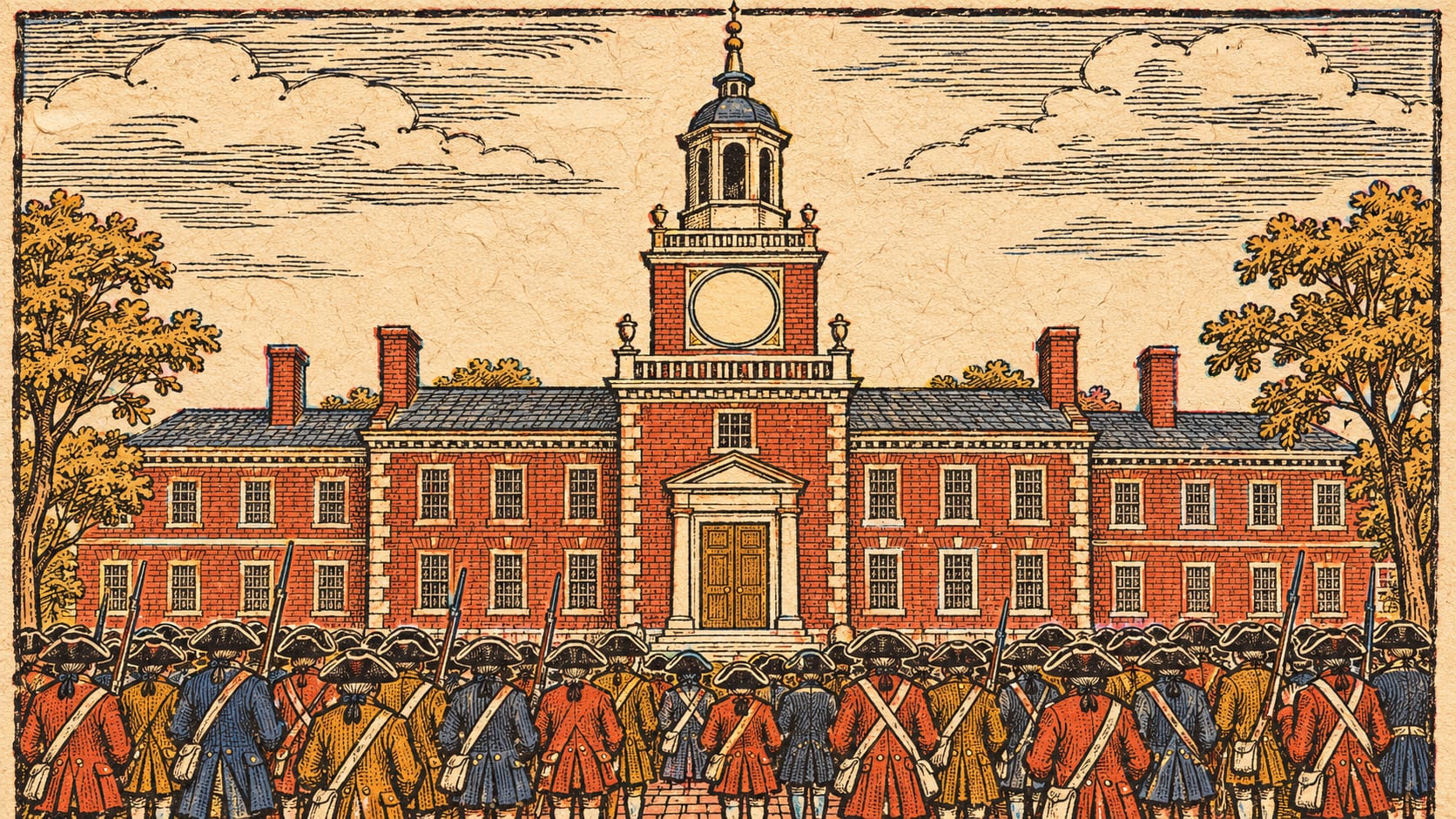
That year, soldiers demanding unpaid wages surrounded Congress at the Pennsylvania State House. Congress asked Pennsylvania's executive council for protection, and the state authorities did not provide any that worked.
Today the people who live in the District vote for president and elect a mayor and council, but they have no voting senator and no voting representative in Congress. The story of how that happened runs from the 1783 mutiny to House votes in 2020 and 2021.
The mutiny at the State House
About 400 to 500 soldiers were involved in June 1783. Elias Boudinot, the president of Congress, wrote to George Washington on 21 June that the soldiers "very unexpectedly appeared before, and surrounded, the State House with fixed Bayonets."
They demanded that Pennsylvania's Supreme Executive Council let them "choose their own Officers", saying their former officers had deserted them. If the demand was not met within twenty minutes, Boudinot wrote, they threatened to "turn in an enraged Soldiery on the Council."
The council met inside while the soldiers stood outside. Its president, John Dickinson, explained that he could not safely call out the local militia, because "without some outrages on persons or property, the temper of the militia could not be relied on." Congress asked Major General Arthur St. Clair to persuade the soldiers to go back to their barracks. Alexander Hamilton proposed that St. Clair act "in concert with the Executive Council of the State." William Reed proposed assuring the soldiers that Congress meant to do them justice.
The soldiers used no violence, though some "wantonly pointed their Muskets to the Windows of the Hall of Congress." Congress then authorized a committee to confer again with the council. If the council could not manage "prompt & adequate exertions for suppressing the mutiny & supporting the Public authority," Boudinot could summon Congress to Trenton or Princeton in New Jersey.
What Congress did after the mutiny
Congress left Philadelphia and moved to Princeton, New Jersey. The episode strengthened the case that the national government needed exclusive authority and security at its permanent seat.
By 26 June, Boudinot reported that many of the soldiers had laid down their arms. Congress's later proceedings named Captain William Carberry and Lieutenant Sullivan as leaders who had "fled from justice", and sergeants Christian Nagle and John Morrison of the Third Pennsylvania Regiment were among those prosecuted. In September 1783 Congress described the mutineers as "seduced and stimulated by the arts and practices" of Carberry and Sullivan.
The mutiny led straight to Congress's decision to seek protection outside Pennsylvania. It was one reason for the constitutional arrangement that followed, and the Constitution itself never mentions it.
Ten miles square, and Congress in charge
Article I, Section 8, Clause 17 gives Congress power "to exercise exclusive Legislation in all Cases whatsoever" over a district no larger than ten miles square. The district becomes the seat of the government when a state cedes the land and Congress accepts it.
The clause created a federal district outside the control of any state. Congress, not a state legislature, would write its laws.
James Madison defended it in Federalist No. 43, published in January 1788 under the name Publius. Without such a district, he wrote, "not only the public authority might be insulted and its proceedings interrupted with impunity; but a dependence of the members of the general government on the State comprehending the seat of the government, for protection in the exercise of their duty, might bring on the national councils an imputation of awe or influence".
Madison also promised that residents would not be forgotten. They would have had their voice in electing the government that ruled them, and "a municipal legislature for local purposes, derived from their own suffrages, will of course be allowed them." That was an argument for ratification. The Constitution does not guarantee residents a vote in Congress or any set form of local government.
A bargain over debts and a capital
The Residence Act of 16 July 1790 named the Potomac River region as the future permanent seat of the federal government. It allowed a district not larger than ten miles square, lying between the Eastern Branch and Connogochegue, and required the government to move from Philadelphia in 1800.
The capital's location was tied to money. In a memorandum dated 1790, Thomas Jefferson wrote that Alexander Hamilton had told him New England regarded federal assumption of state debts as something it "would make it a sine qua non of a continuance of the Union." The Potomac, Jefferson recorded, could satisfy Southern interests. On 4 July 1790, he wrote to Francis Eppes that rejecting the debt plan outright would be "tantamount to a dissolution of the government."
The National Archives tells it as a deal: Madison and Jefferson supported assumption, or stopped fighting it, in exchange for the Potomac. Other historians point out that Washington already had the power under the Residence Act to pick the site, and that the Residence Act and the assumption laws were separate. The exact terms of the bargain are disputed, and it was written down later, not in a signed contract.
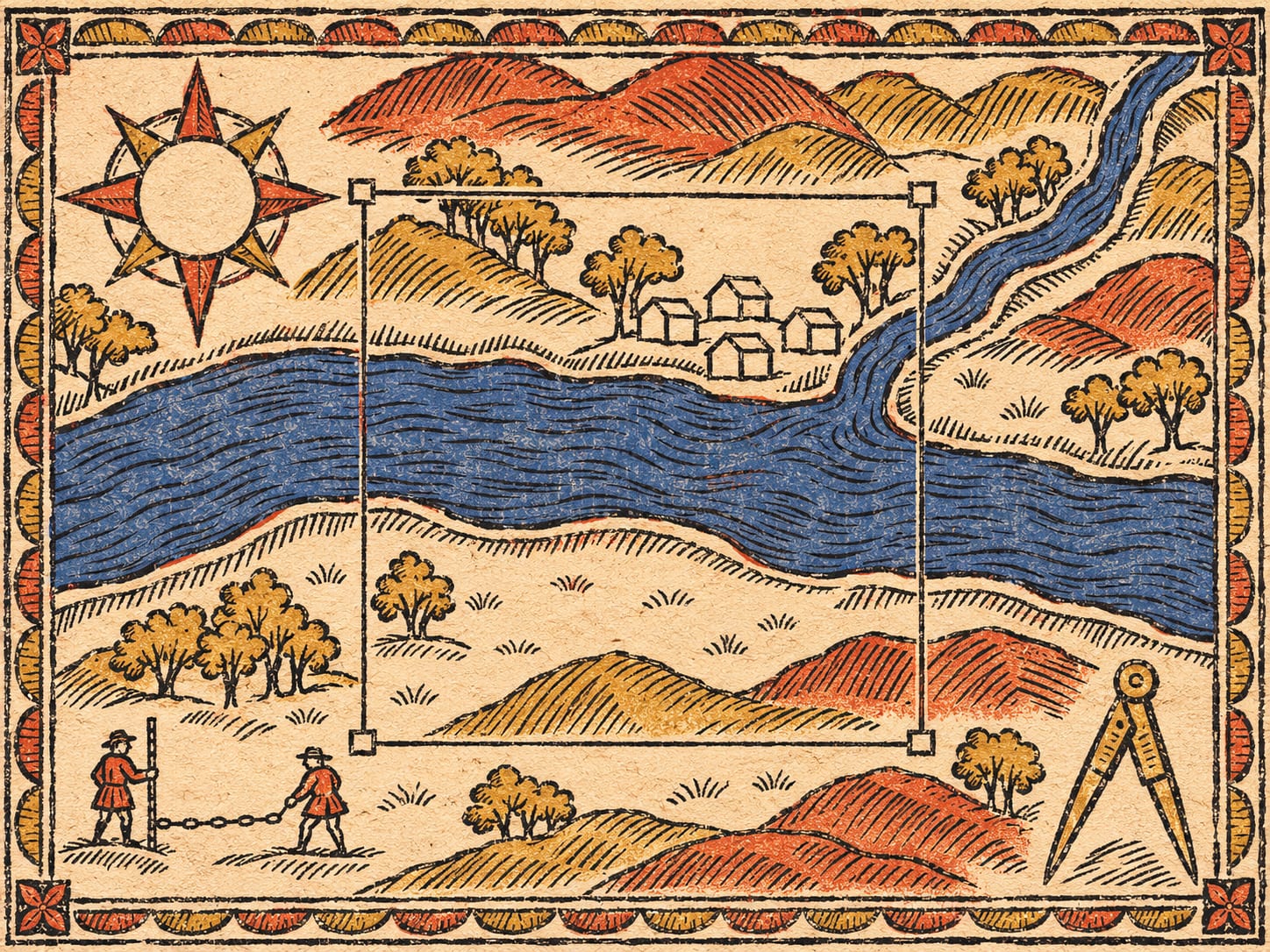
President George Washington chose the site. After surveys near Georgetown and the Anacostia River, he settled on the meeting point of the Potomac and Anacostia rivers. He appointed commissioners to survey and prepare the federal city.
Land from Maryland and Virginia
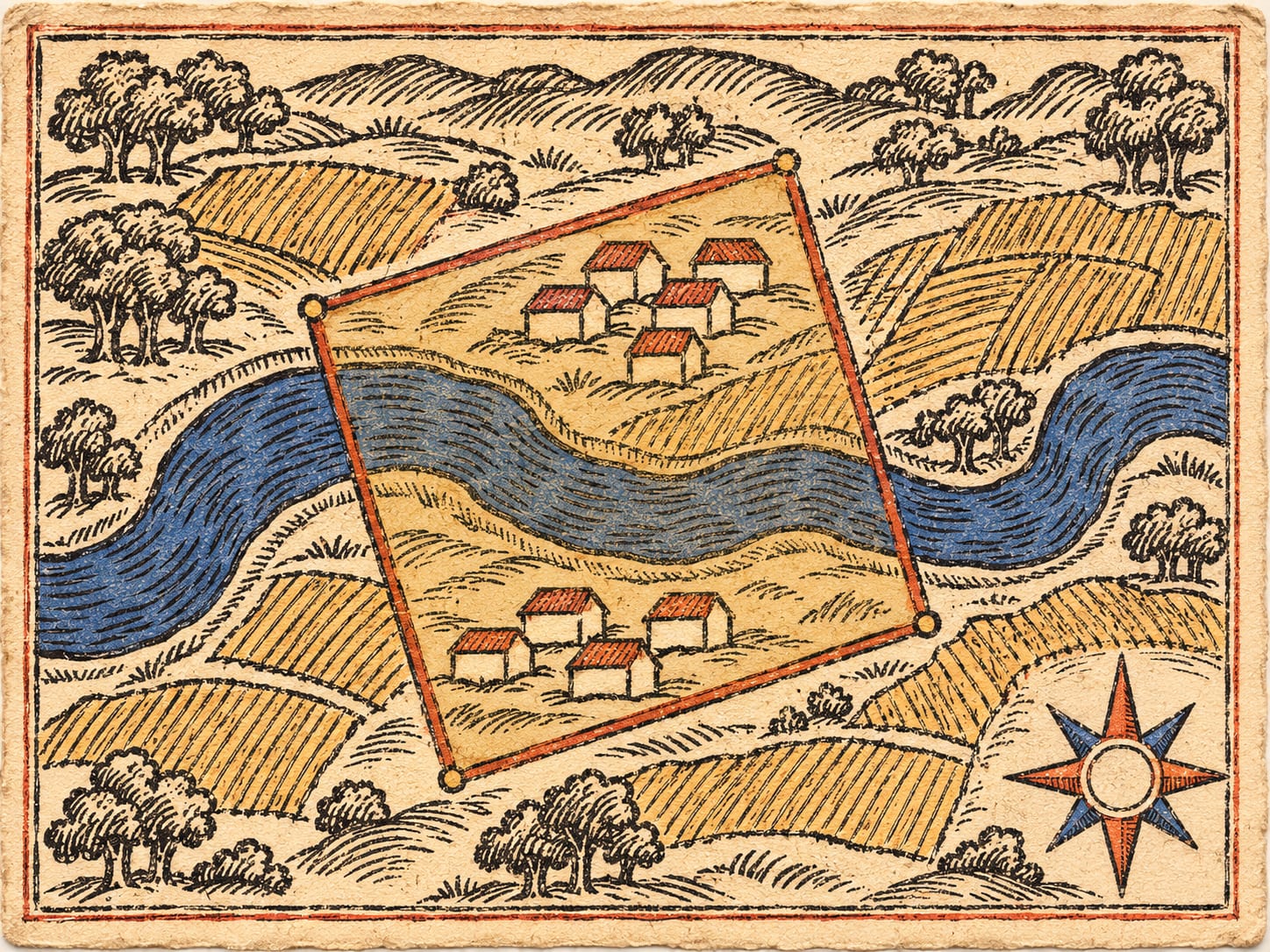
Maryland and Virginia ceded the land, and Congress accepted it. The 1791 boundary took in Georgetown and ran toward the Anacostia River on the Maryland side. From Virginia came land that included Alexandria and Alexandria County.
The District originally lay on both sides of the Potomac.
The Organic Act of 1801 and the votes residents lost
The Organic Act of 27 February 1801 organized the District into Washington County, east of the Potomac, and Alexandria County, west of it. It set up a federal district court and kept the existing laws of Maryland and Virginia in force in the parts each state had ceded.
It did not give residents a vote in Congress. Before the government moved, they had voted as Marylanders or Virginians. After the transfer they no longer voted as residents of those states, and Congress became responsible for the District under the District Clause.
Not everyone took it quietly. On 26 January 1801, "Sundry Freeholders and Inhabitants of the Town of Alexandria, in the District of Columbia" sent Congress a memorial objecting to what federal jurisdiction would cost them, including the loss of their old tie to Virginia's political system. Georgetown and Alexandria kept their own municipal corporations. The District as a whole had no voting member of Congress, and no elected government for the whole District at all from 1800 to 1871.
Alexandria goes home in 1846
On 9 July 1846, Congress returned the Virginia portion, including Alexandria County and the town of Alexandria, to Virginia. Alexandria's complaints drove the campaign. Residents said Congress had neglected the town, that they had little say over federal decisions, and that the canal and port economy had suffered. Lewis McKenzie revived the effort in the 1840s.
A congressional report recorded the local vote, and the result surprises. In Alexandria County, including the town, 310 votes favored retrocession and 419 opposed "any change." All but one vote opposed having a congressional delegate, and all but one opposed a local legislature. Property assessments split the same way: those against change were assessed at $1,486,400, those for retrocession at $408,706.
Congress passed the act anyway. Representative Robert C. Winthrop of Massachusetts, chairman of the House Committee for the District of Columbia, sponsored it, and Representative George C. Dromgoole of Virginia was a leading supporter. President James K. Polk issued the proclamation completing the transfer on 7 September 1846. What remained of the District lay on land that Maryland ceded, including Washington, Georgetown and Washington County.
A governor, a debt and three commissioners
The Organic Act of 21 February 1871 merged Washington City, Georgetown and Washington County into one District government. It had a governor and council appointed by the president, an elected House of Delegates and a Board of Public Works.
Alexander Robey Shepherd became its central figure. President Ulysses S. Grant appointed him governor in 1873, after he had served on the Board of Public Works. Shepherd drove a huge program of street grading, paving and sewer building that modernized much of Washington. It also piled up debt and brought charges of corruption.
Congress abolished the territorial government by the act of 20 June 1874, after investigations, and replaced the governor and legislature with three commissioners appointed by the president. The Organic Act of 11 June 1878 made that system permanent and split the cost of running the District between the federal government and the District. For nearly a century, the District had no elected citywide government.
Electors, but no senators
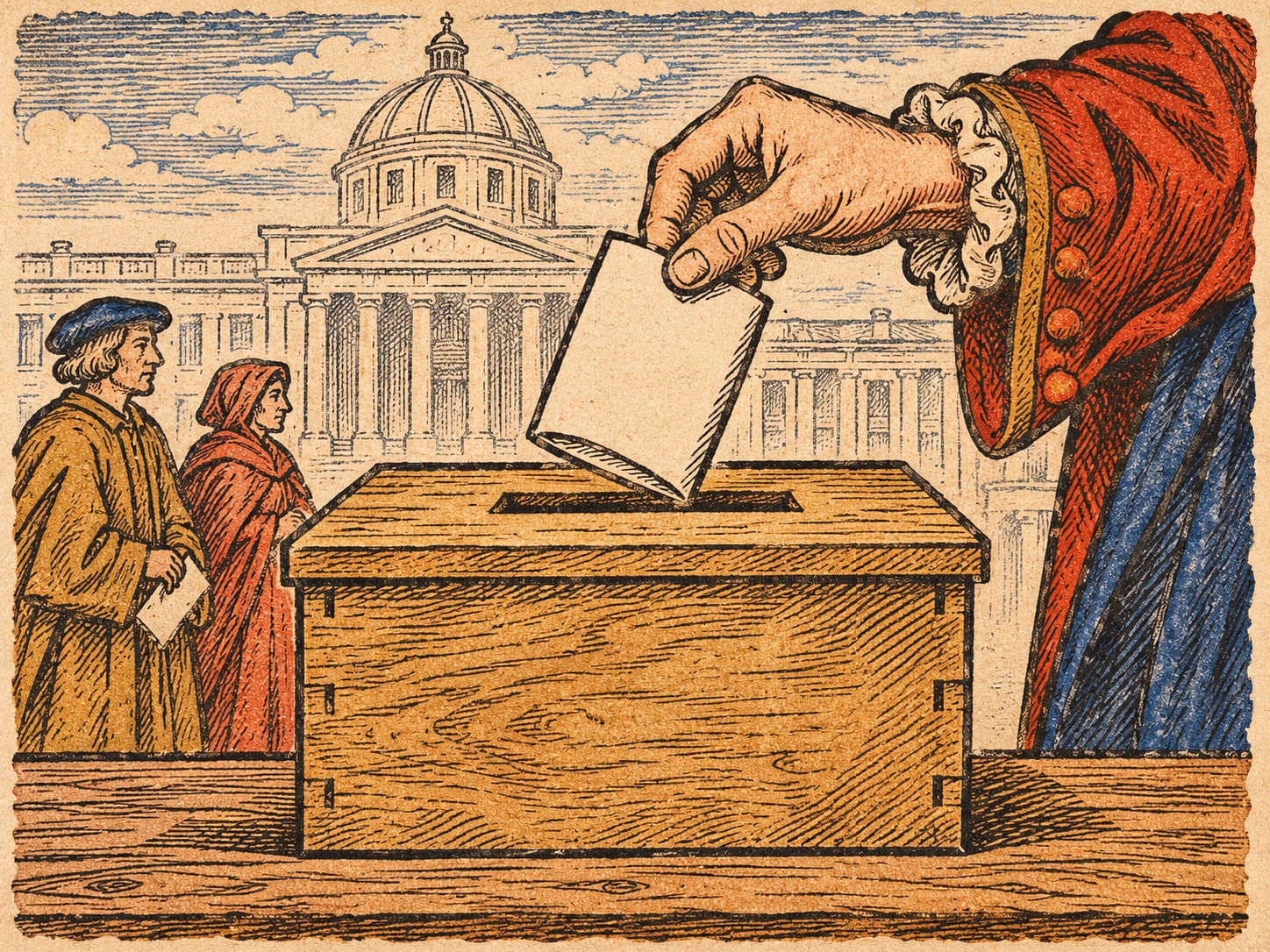
The Twenty-Third Amendment came from Representative John McCormack of Massachusetts and Senator Estes Kefauver of Tennessee. Congress proposed it on 16 June 1960, and it was ratified on 29 March 1961. It says the District "shall appoint in such manner as the Congress may direct" electors "equal to the whole number of Senators and Representatives in Congress to which the District would be entitled if it were a State, but in no event more than the least populous State." The District has three electoral votes.
The amendment did not give DC voting senators or a voting representative in the House. In the 1964 presidential election, the District cast 198,597 votes for electors: 169,796 for Lyndon B. Johnson and 28,801 for Barry Goldwater.
Congress passed the District of Columbia Delegate Act in 1970, with Representative Charles C. Diggs Jr. as its leading sponsor. President Richard Nixon signed it on 22 September 1970. It created one nonvoting House delegate, and District voters elected Walter E. Fauntroy in 1971. He was sworn in on 19 April 1971 as the first delegate under the modern delegate system.
A mayor and council, under Congress
The District of Columbia Self-Government and Governmental Reorganization Act, called the Home Rule Act, became law on 24 December 1973. It created an elected mayor and an elected council.
Congress kept its constitutional authority over the District, and District laws are still subject to congressional review. So, why does Congress still control a District with its own mayor and council? The Constitution's District Clause and the Home Rule Act together leave the final say with Congress.
The 1978 amendment that fell short
Congress tried to fix the vote without making DC a state. Representative Don Edwards of California, who chaired the House Judiciary Subcommittee on Civil and Constitutional Rights, introduced H.J. Res. 554 in 1977. The proposed District of Columbia Voting Rights Amendment would have treated the District as though it were a state for representation in Congress, presidential elections and the amendment process. It would have brought representation in both the House and the Senate without making DC a state.
The House passed it on 2 March 1978 and the Senate on 22 August 1978. Three-fourths of the states, 38, had to ratify it within seven years.
Supporters said District residents were American citizens who paid federal taxes, served in the armed forces and lived under federal laws without voting in Congress. On 17 August 1978, Senator Thomas Eagleton asked "whether the 700,000 people who live in our National Capital have the same right of representation in Congress as do all other American citizens." He added: "I believe they are entitled to the same rights as all other Americans." Congress would keep its power over District laws and the budget, he said.
Opponents said the amendment changed the constitutional status of the federal district and that Congress should keep direct control of the national seat. Senator Orrin Hatch called it an amendment that gave the District the practical status of a state without admitting it as one.
Sixteen states ratified. Michigan, New Jersey and Ohio did in 1978; Connecticut, Massachusetts, Minnesota and Wisconsin in 1979; Hawaii and Maryland in 1980; Delaware, Iowa and Louisiana in 1984; and Maine, Oregon, Rhode Island and West Virginia in 1985. The seven years ran out on 22 August 1985, with 38 states needed.
The failure left residents with presidential electors but no voting representation in the Senate or House.
The 2016 referendum and the House bills
In November 2016, DC voters approved an advisory referendum supporting statehood, with 86 percent in favor. It backed a proposed constitution, proposed boundaries and a petition to Congress. It did not make DC a state, because only Congress admits new states.
On 26 June 2020, the House passed H.R. 51, the Washington, D.C. Admission Act, by 232 votes to 180. It was the first time either chamber of Congress had passed a bill to admit part of the District as a state. The Senate held no vote before that Congress ended.
Representative Eleanor Holmes Norton introduced a new H.R. 51 on 4 January 2021, and the House passed it on 22 April 2021, by 216 votes to 208. The bill would admit most of the present District as the State of Washington, Douglass Commonwealth, and leave a smaller federal capital district around the principal government buildings.
Supporters said statehood would bring full congressional representation and local control. Opponents raised constitutional questions, said the capital should stay under congressional authority and pointed to retrocession or a constitutional amendment instead.
Since 2021
The Senate did not pass the 2021 bill. It ran into the Senate's procedural hurdles, including the chance of a filibuster, and died when the 117th Congress ended.
New bills followed. Norton introduced H.R. 51 again on 9 January 2023, and Senator Thomas Carper introduced a companion, S. 51, on 24 January 2023. Neither became law. On 9 January 2025, Senator Mazie Hirono of Hawaii introduced S. 51 in the 119th Congress, another Washington, D.C. Admission Act.
As of late November 2026, no Admission Act has become law. The 2021 bill remains a House-passed bill that failed in the 117th Congress, and the later ones are proposals.
Could DC simply rejoin Maryland?
Virginia took back its share in 1846. Could Maryland take back the rest? That is called retrocession, and it would need action by Congress and would raise political and constitutional questions.
For now the District stays a federal district, with three electoral votes, an elected mayor and council, and Congress holding the final say.
How the District came to be
- June 1783
Soldiers demanding unpaid wages surround Congress at the Pennsylvania State House, and Congress moves to Princeton
- 16 July 1790
The Residence Act names the Potomac region as the future seat of government
- 27 February 1801
The Organic Act organizes the District into Washington County and Alexandria County
- 9 July 1846
Congress returns the Virginia portion, including Alexandria, to Virginia
- 21 February 1871
The Organic Act merges Washington City, Georgetown and Washington County into one government
- 20 June 1874
Congress abolishes the territorial government and installs three commissioners
- 29 March 1961
The Twenty-Third Amendment is ratified, giving the District presidential electors
- 22 September 1970
The Delegate Act is signed, creating a nonvoting House delegate
- 24 December 1973
The Home Rule Act creates an elected mayor and council
- 1985
The DC Voting Rights Amendment fails with 16 of 38 needed states
- 22 April 2021
The House passes the DC statehood bill H.R. 51 for a second time
Sources
- Constitution of the United States, Article I, Section 8, National Archives
- "District of Columbia history" and "Compromise of 1790," National Archives
- "1783 to 1784 timeline," Library of Congress; Journals of the Continental Congress, 21 June 1783 and September 1783
- Elias Boudinot to George Washington, 21 and 26 June 1783, Founders Online
- "The Philadelphia mutiny," House History, Office of the Historian
- Federalist Nos. 41 to 50, Library of Congress; Madison's notes on the Constitutional Convention
- Thomas Jefferson, memorandum on the Compromise of 1790, and letter to Francis Eppes, 4 July 1790
- Organic Act of 1801, 2 Stat. 103, GovInfo; House Report 110-52 on District voting rights
- House Report 22-337, 1846 retrocession; "The History of Alexandria," City of Alexandria
- "Records of the Government of the District of Columbia," National Archives
- "Governing the District of Columbia" and "District of Columbia Voting Representation," Congressional Research Service
- "DC Statehood: Constitutional Considerations," Congressional Research Service
- Twenty-Third Amendment, National Archives and Senate; official 1964 election statistics, Clerk of the House
- District of Columbia Delegate Act, Congressional Record, 1970; "Walter Fauntroy," House History
- "Unratified Amendments: DC Voting Rights," National Archives; Congressional Record, August 1978
- H.R. 51 roll call votes of 2020 and 2021, Office of the Clerk of the U.S. House
- H.R. 51 and S. 51 bill texts, 117th to 119th Congresses, GovInfo
- District of Columbia statehood referendum information, Government of the District of Columbia
Watch the full story on the Flashback Fables YouTube channel, and send it to someone who would love it.