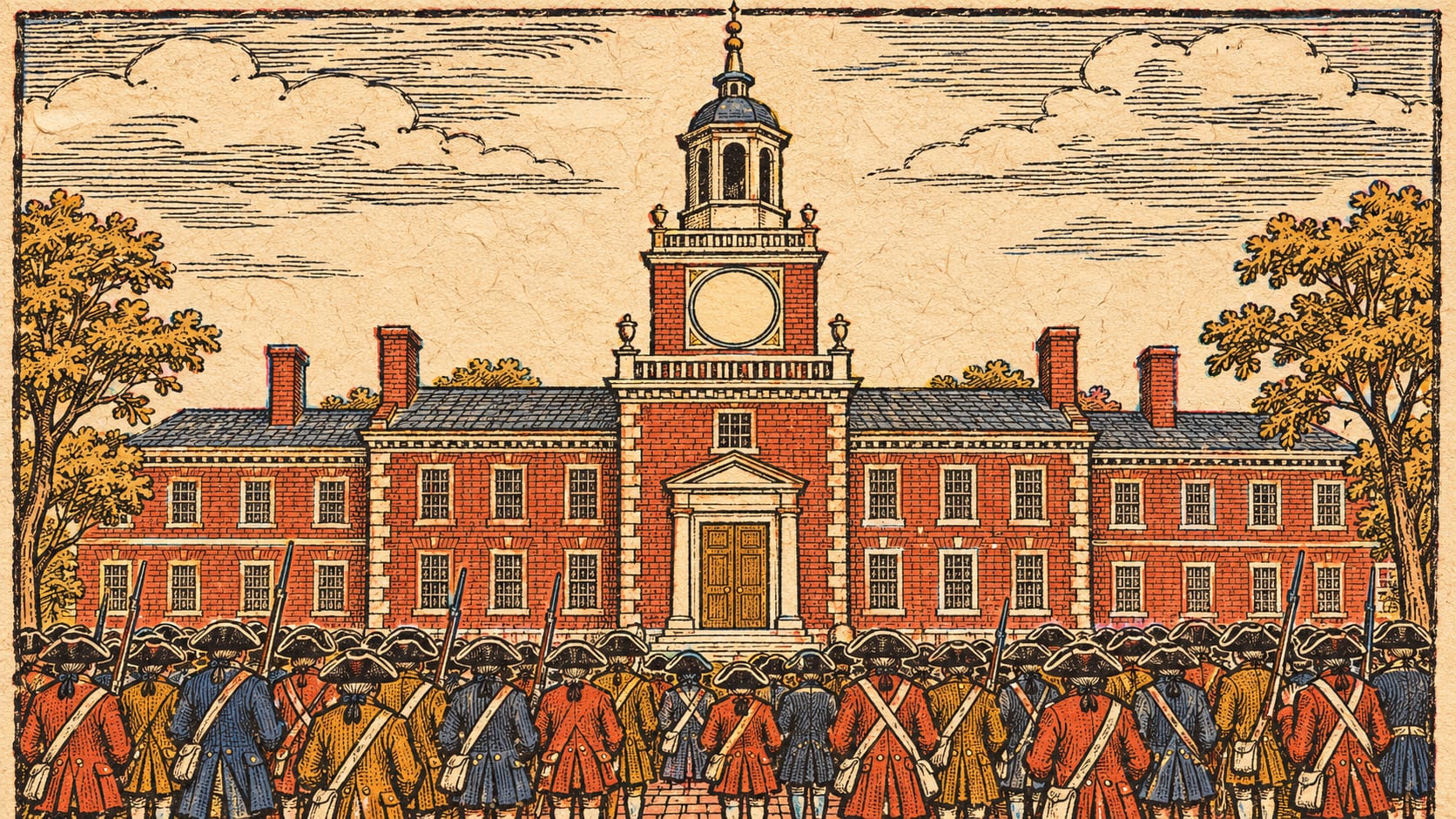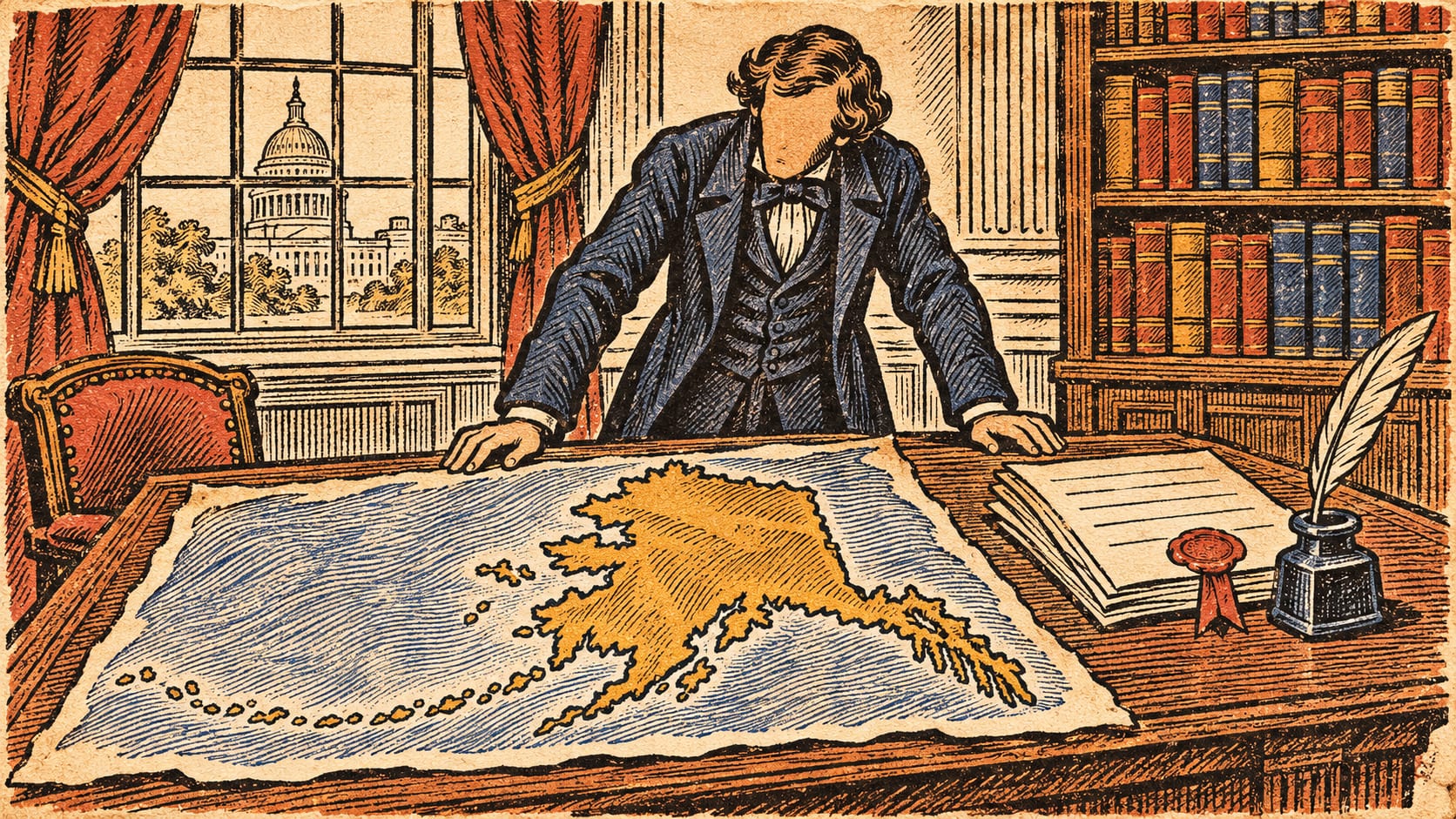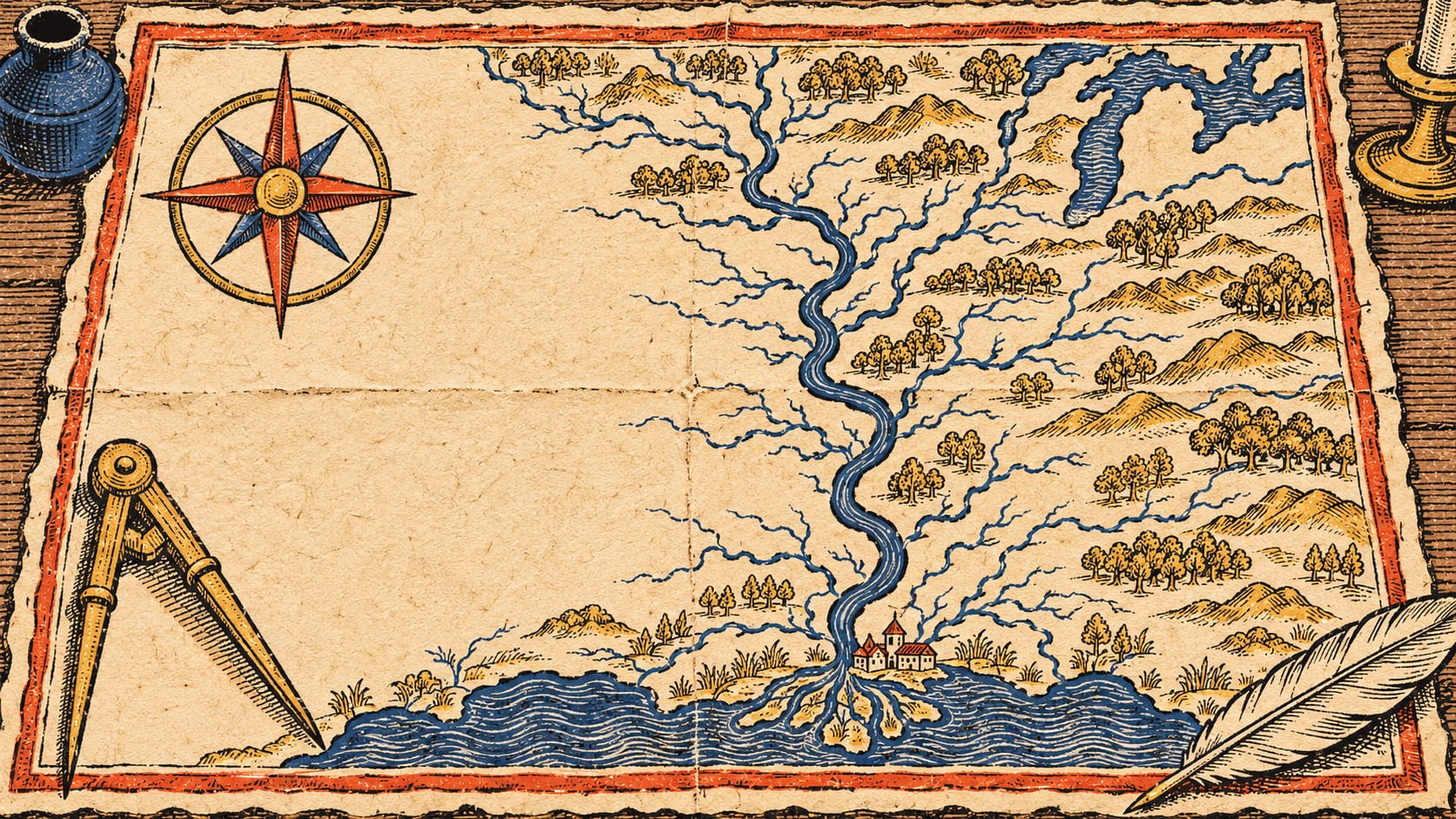
Thomas Jefferson sent two envoys to Paris to buy a port city. Napoleon offered them a country.
The treaty is dated 30 April 1803. France handed its claim to Louisiana, the territory west of the Mississippi River together with New Orleans, to the United States for $15 million. A failed army in the Caribbean, a coming war with Britain and Napoleon's need for money lay behind the sale.
The land was not empty. The Osage, Kansa, Quapaw, Pawnee, Wichita, Caddo and many other nations lived there, and what France sold was its own claim to it.
What Jefferson sent his envoys to buy
Jefferson sent Robert R. Livingston, the U.S. minister to France, to negotiate for New Orleans. James Monroe joined him as minister plenipotentiary and special envoy. Across the table sat François Barbé-Marbois, France's minister of the public treasury.
Jefferson wanted New Orleans and possibly West Florida, and he had authority to spend up to $10 million. The port mattered because control of New Orleans and the Mississippi River affected how farm goods from the American interior moved to market.
Then the French offer grew from a city to a whole territory, far beyond Jefferson's original instructions.
The offer in Paris
On 11 April 1803, Livingston wrote to Secretary of State James Madison that Charles Maurice de Talleyrand had asked, out of the blue, whether the United States wanted all of Louisiana. Livingston wrote that he told him no: "our wishes extended only to New Orleans & the Floridas." Talleyrand replied that if France gave up New Orleans, the rest would be of little value, and that he "would wish to know 'what we would give for the whole.'" The letter is held by the Library of Congress in the James Monroe Papers.
Livingston and Monroe had no instructions for this. On 14 May 1803, they explained to Madison why they had gone ahead anyway. Monroe wrote that the offer could disappear before word came back from Washington, since a message took roughly two months each way. He also let his irritation show in the same letter: "the most difficult vexations and embarrassing part of my labors has been with my associate." Both men signed the treaty, but they were not a perfectly united team, and part of the quarrel was over credit.
On 2 May 1803, Livingston had put the moment in plainer terms: "We have lived long, but this is the noblest work of our whole lives."
Why Napoleon sold
Napoleon had a plan for a North American empire, with Saint-Domingue as its Caribbean base. The Haitian Revolution destroyed that plan. French troops sent to put down the revolution were devastated by yellow fever, and without the Caribbean base Louisiana mattered less.
War with Britain threatened again, and Napoleon needed money for his campaigns in Europe. So, he offered the whole of Louisiana to the United States for $15 million.
Barbé-Marbois gave a fuller scene in a memoir he published in 1829, twenty-six years later. He placed it on 10 April 1803, after Napoleon attended Easter services. Napoleon summoned Barbé-Marbois and Denis Decrès, the minister of the navy. As Barbé-Marbois remembered it, Napoleon said France could not defend Louisiana, and that selling it would pay for the war in Europe and keep the territory out of British hands. The exact wording is a later recollection. The reasons behind it match the wider story: France had lost the fight for Saint-Domingue, the peace with Britain had broken down, and Napoleon needed funds.
What the treaty said and what it cost
The Treaty of Cession transferred France's claim to Louisiana to the United States in perpetuity and in full sovereignty. It covered the territory west of the Mississippi River and the port of New Orleans. It also spoke to the people who lived there, promising protection of property, liberty and religion, and saying the inhabitants would be incorporated into the United States and admitted to citizenship as soon as possible under constitutional principles.
The treaty and two related conventions set out the money.
The territory covered about 828,000 square miles, roughly 530 million acres. Divide $15 million by that and the price comes to about 2.8 cents an acre, usually rounded to about 3 cents. Other counts round it to roughly 4 cents, using a different area or rounding.
How the money moved
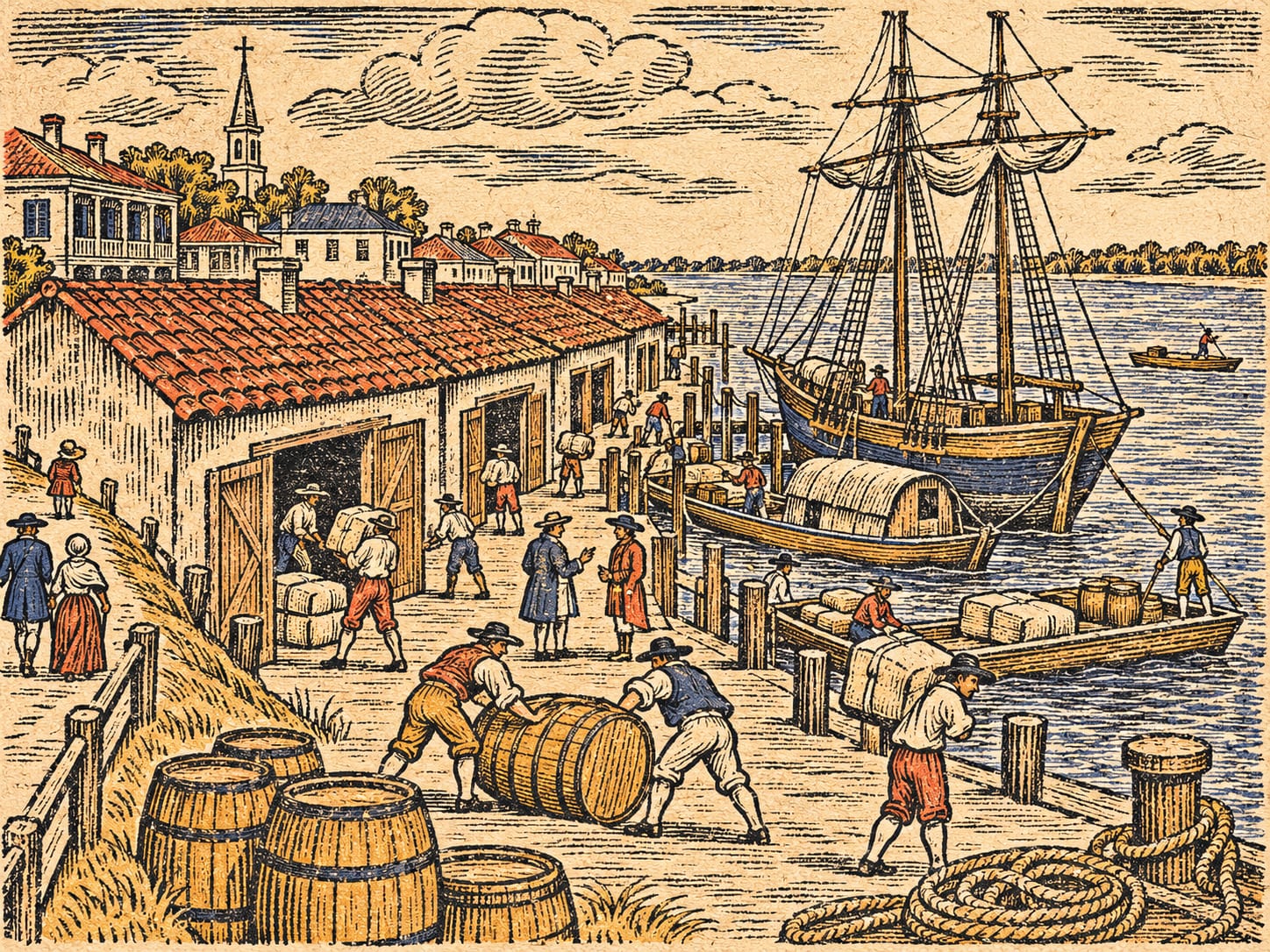
No ship carried $15 million in coin. The $11.25 million for France was paid in United States government bonds, and two banking houses handled them: Baring and Company of London, represented by Alexander Baring, and Hope and Company of Amsterdam, represented by Pierre César Labouchère. Sir Francis Baring was the senior partner of the London firm, and Henry Hope was a leading partner in Amsterdam.
The firms bought the bonds from France for 52 million francs, a discount of 13.3 percent from their face value. The plan called for an initial payment of 6 million francs and then twenty-three monthly payments of 2 million. Napoleon wanted his money faster than that, and in July 1803 the banks advanced France 10 million francs before the bond schedule began.
The bonds themselves moved on their own timetable. The initial batch was handed to Alexander Baring in Washington on 16 January 1804, and the scheduled payment reached France in March 1804. In April 1804, the remaining payments were squeezed into a much shorter period, and the bankers received an extra discount. The bonds paid 6 percent interest, payable in Amsterdam, London or Paris, and they were sold on the European markets, mainly in London and Amsterdam.
Why the date reads two ways
The treaty gives its date in the language of the French Republic: "the tenth day of Floreal in the eleventh year of the French Republic," followed by "30th April 1803." The French Republican date, 10 Floréal, Year XI, matches 30 April 1803 in the Gregorian calendar. French officials in Paris were still counting by the Republican calendar in 1803, so the Paris dates in this story are the Gregorian ones that the Americans and the treaty text used.
Some French references give 3 May 1803, which is 13 Floréal, Year XI. The treaty text in the National Archives gives the signing date as 30 April 1803.
Two more dates followed. The U.S. Senate ratified the treaty on 20 October 1803. The formal transfer at New Orleans took place on 20 December 1803.
Jefferson's doubt
Jefferson did not think the Constitution clearly allowed the president, or a treaty, to add new territory. On 12 August 1803 he wrote to John Breckinridge that he had considered proposing a constitutional amendment stating that Louisiana had become part of the United States.
He dropped the amendment. The deal was popular, Napoleon threatened to withdraw the offer, and ratification had to be finished quickly. Jefferson went ahead through the treaty power with the approval of Congress, and the constitutional question stayed unsettled in the text of the Constitution.
On 20 October 1803, the Senate approved the treaty and the two related conventions by 24 votes to 7. The seven who voted no were Federalists, and they objected that the Constitution did not specifically authorise acquiring foreign territory.
Spain's objection
Louisiana had not always been France's to sell. Spain had returned it to France under the Treaty of San Ildefonso, and Spain objected to the sale, saying it broke an earlier agreement that restricted passing Louisiana to a third country. In Spain, the sale is remembered as part of Napoleon's wider plans for Louisiana and Haiti, and alongside the later U.S. expansion toward Texas and Florida.
The objection did not stop the handover from Spain to France. On 30 November 1803, the Spanish commissioners Manuel de Salcedo and the Marquis de Casa Calvo carried it out under an order from the Spanish crown dated 15 October 1802. The transfer act says they "did put the said French commissioner, citizen Laussat, in possession of the colony of Louisiana and its dependencies, as also of the city and island of New Orleans."
What Spain kept disputing was the size of the sale. Its diplomats contested France's title and the American claim to West Florida and the land between the Mississippi and Perdido rivers. Casa Calvo went on defending Spanish claims in letters to William C. C. Claiborne and other officials.
Who lived in New Orleans and Lower Louisiana
The population counts for these years come from different compilations, and none is a single census of 1803. Spanish authorities counted 5,497 people in New Orleans in 1791, and 1,789 of them were enslaved people. For Lower Louisiana, a Spanish count of 1785 and a later figure from 1800 give a sense of the colony's size.
Lower Louisiana, in other words, held more enslaved people than free ones. A table for 1805 puts New Orleans at about 3,551 white residents, 1,566 free people of color and 3,105 enslaved people, but that comes after the transfer and does not describe the city in 1803. The residents of the colony included French-speaking Creoles, Spanish officials, free people of color, enslaved people, merchants, planters and refugees from Saint-Domingue, and their interests were not the same.
Who already lived there
The territory held the homelands and hunting grounds of the Osage, the Kansa or Kaw, the Quapaw, the Pawnee, the Wichita, the Caddo and numerous other nations. In Louisiana itself, the National Park Service describes tens of thousands of Indigenous residents and at least 22 languages at the time of European colonization.
The treaty moved France's claim to the United States. It was not a treaty with the Indigenous nations. Under the European doctrine colonial powers used, Indigenous peoples kept what was called native title, which meant rights of occupancy and use, not ownership as European law counted it.
Two flag ceremonies
The transfer happened twice. On 30 November 1803, Pierre Clément de Laussat received Louisiana from the Spanish commissioners at New Orleans. The transfer record says they "solemnly delivered to him the keys of this place," and released from their oath to the Spanish king any inhabitants who chose to stay in French service.
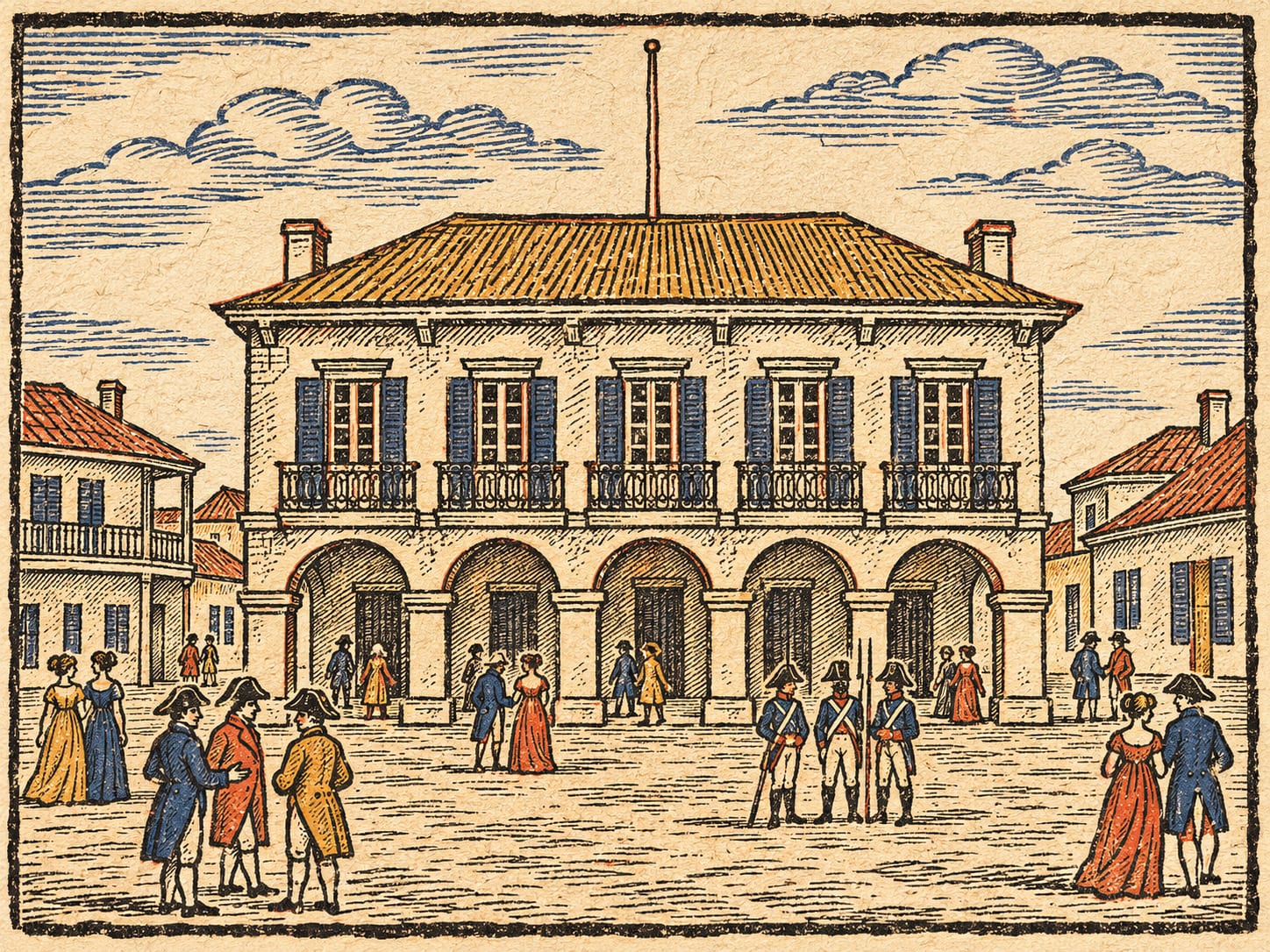
On 20 December 1803, William C. C. Claiborne and General James Wilkinson received the territory from Laussat at the Cabildo in New Orleans. The well-known picture of the flag-raising is a later painting, not something drawn or photographed on the day. Wilkinson issued General Orders for the transfer.
Claiborne's proclamation said: "The Government heretofore exercised in the said Province of Louisiana, as well under the authority of Spain as under that of the French Republic, has ceased; and that of the United States is established." It promised that the inhabitants "shall be maintained and protected in their liberty, their property, and the religion which they profess."
Reactions were not uniform. Claiborne reported the city tranquil, and he also worried about armed Black and mixed-race militia units and the chance of disorder.
Citizens, slavery and statehood
The treaty promised that the people of Louisiana would be admitted to citizenship as soon as possible. What came next was slower. The Act of 26 March 1804 divided the acquired land into the Territory of Orleans and the District of Louisiana. It set up a territorial government with federally appointed officials at the top, and it put off statehood.
The act applied federal limits on bringing enslaved people into the territory, but it did not abolish slavery in the Territory of Orleans. It protected land grants made under Spanish law to actual settlers before 20 December 1803, within statutory limits. Congress admitted Louisiana as a state on 30 April 1812. Enslaved people were not made citizens by the treaty or by the act.
The Osage and Kansa treaties
After the purchase, the United States signed separate treaties with the nations on the land, and they show that France had not sold Indigenous title.
The Treaty with the Osage was concluded at Fort Clark on 10 November 1808. Peter Chouteau signed for the United States as agent, acting under authority from Meriwether Lewis, and chiefs and warriors of the Great and Little Osage signed for their nations. The treaty ceded Osage claims to land east of a line running south from the headwaters of the Kansas River through the Rock Saline, including lands in Missouri and Arkansas and territory north of the Arkansas River. It defines the land by boundaries, and later estimates put the cession at roughly 52 million acres. In return it promised a fort, a trading store, a blacksmith, farm equipment, mills, protection, and continued access to hunting, fishing and gathering.
The Kansa signed at St. Louis on 3 June 1825, and at Sora Kanzas Creek on 16 August 1825 they agreed to let the Santa Fe road cross their country. Benjamin H. Reeves, George Champlin Sibley and Thomas Mather signed with Kansa leaders. These documents dealt with boundaries, roads, annuities and reservations, and they were not one sale of a fixed number of acres.
The effects reached across generations: land loss, forced relocation, pressure on traditional ways of life and the creation of reservations. More than 5,000 Osage were later removed westward after Missouri became a state. The Kansa were forced to move to what became Oklahoma. Quapaw and Osage land cessions later helped open territory for the relocation of other eastern nations.
Jefferson's plan for land west of the river
Jefferson's surviving words connect the purchase to a plan for Native land. On 27 February 1803, while the Paris talks were under way, he wrote to William Henry Harrison: "We wish to purchase and settle the country on the Missisipi from it's mouth to it's Northern regions." In the same letter he described exchanging land: "The exchange of lands is the best arrangement for both parties." His draft constitutional amendment of 1803 proposed "to exchange the Indian right of occupancy in portions where the U.S. have full rights for lands possessed by Indians within the U.S. on the East side of the Mississippi."
The purchase, then, was tied to a federal plan to acquire Native land and move nations west of the Mississippi, and not only to the transfer of European claims.
Lewis and Clark, and what can be seen
Jefferson then sent Lewis and Clark into the new territory. Their expedition meant exploring and mapping it, meeting Indigenous nations, and learning its geography, trade routes and limits.
The main public site tied to the purchase is the Cabildo in Jackson Square, New Orleans, where the 20 December 1803 ceremony took place. Beside it stand the St. Louis Cathedral and the Presbytère. The Old Ursuline Convent and the Historic New Orleans Collection hold other Louisiana colonial history, and Fort Osage National Historic Landmark in Missouri is linked with the 1808 Osage treaty. The original Louisiana Purchase Treaty is held at the National Archives in Washington.
Louisiana, 1803 and after
- 11 April 1803
Livingston reports that Talleyrand has asked what the United States would give for the whole of Louisiana
- 30 April 1803
The treaty is dated in Paris, giving France's claim to Louisiana to the United States
- 12 August 1803
Jefferson writes to John Breckinridge about a constitutional amendment
- 20 October 1803
The Senate approves the treaty and two conventions, 24 to 7
- 30 November 1803
Spain hands Louisiana to France at New Orleans
- 20 December 1803
The formal transfer to the United States takes place at the Cabildo in New Orleans
- 16 January 1804
The initial batch of bonds is handed to Alexander Baring in Washington
- 26 March 1804
Congress divides the land into the Territory of Orleans and the District of Louisiana
- 10 November 1808
The Osage treaty is concluded at Fort Clark
- 30 April 1812
Louisiana is admitted as a state
France sold a claim for about three cents an acre. For the nations who lived on the land, the treaties and the removals came after.
Sources
- Louisiana Purchase Treaty and "Agreement to Pay France," National Archives
- "Louisiana Purchase," Milestones, U.S. Office of the Historian
- "Senate Approves Louisiana Purchase Treaty," U.S. Senate Historical Office, and the Senate consent resolution, National Archives
- Thomas Jefferson to John Breckinridge, 12 August 1803, Teaching American History reproduction with Founders Online citation
- Thomas Jefferson to William Henry Harrison, 27 February 1803, Encyclopedia Virginia
- "Before Lewis and Clark," Louisiana Purchase digital collections, and the legislative timeline, Library of Congress; letters of Livingston and Monroe, James Monroe Papers
- The Louisiana Purchase exhibition and papers, Baring Archive; power of attorney to Alexander Baring, National Archives
- Government record of the transfer of 30 November 1803, and Claiborne's proclamation of 20 December 1803, National Archives
- Act of 26 March 1804, United States Statutes at Large; Louisiana Purchase population history, U.S. Census Bureau
- Treaty with the Osage, 1808, and Treaty with the Kansa, 1825, Oklahoma State University Digital Collections
- "Lewis and Clark Enter into Louisiana Purchase," "The Osage," "Tallgrass Prairie Native Peoples" and "Native Americans in Louisiana," National Park Service
- The Cabildo, Louisiana State Museum
- Chronology of Napoleon's life and reign, Napoleon.org
- Publicaciones Dieciochistas, Universidad de Salamanca
Watch the full story on the Flashback Fables YouTube channel, and send it to someone who would love it.