
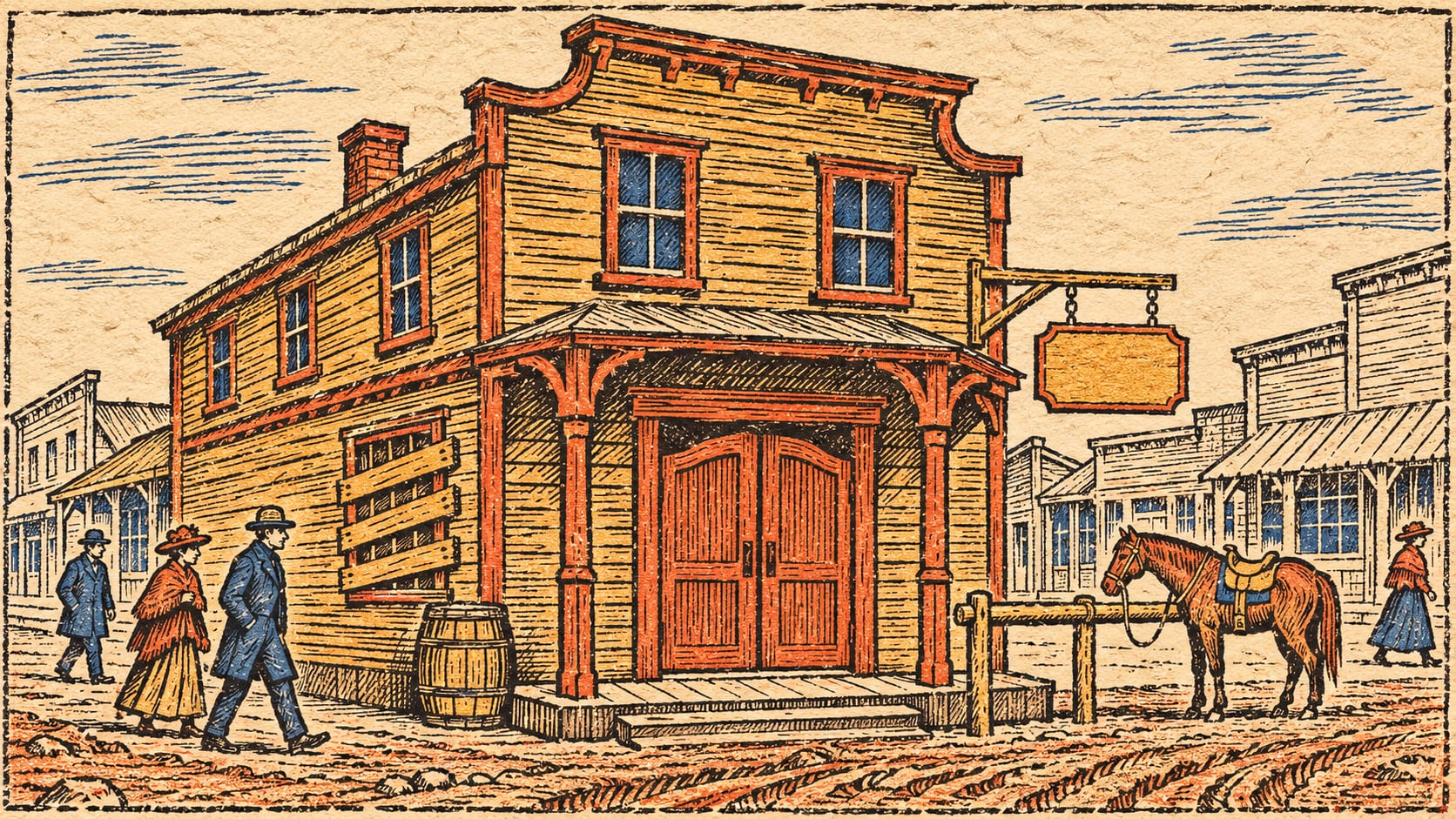
National Prohibition began at midnight on 17 January 1920, after a campaign that started in 1826 as a pledge to give up ardent spirits and ended as an amendment to the Constitution.
The ban was meant to end drinking. It cut drinking hard at first, and then drinking came back. Economists Jeffrey Miron and Jeffrey Zwiebel put consumption at about 30 percent of its old level in the early years, rising to roughly 60 to 70 percent.
Behind the ban stood women's groups, a professional lobby, a world war and a new income tax.
A pledge, then a movement
The American Temperance Society formed in 1826. It began by opposing "ardent spirits" and later promoted total abstinence. By 1855, at least 14 states had adopted prohibition laws in some form, though many weakened or repealed them later.
After the Civil War the cause revived. Industrial cities were growing, saloons were multiplying, and people worried about workplace safety and domestic violence. Evangelical reform and women's activism fed the movement.
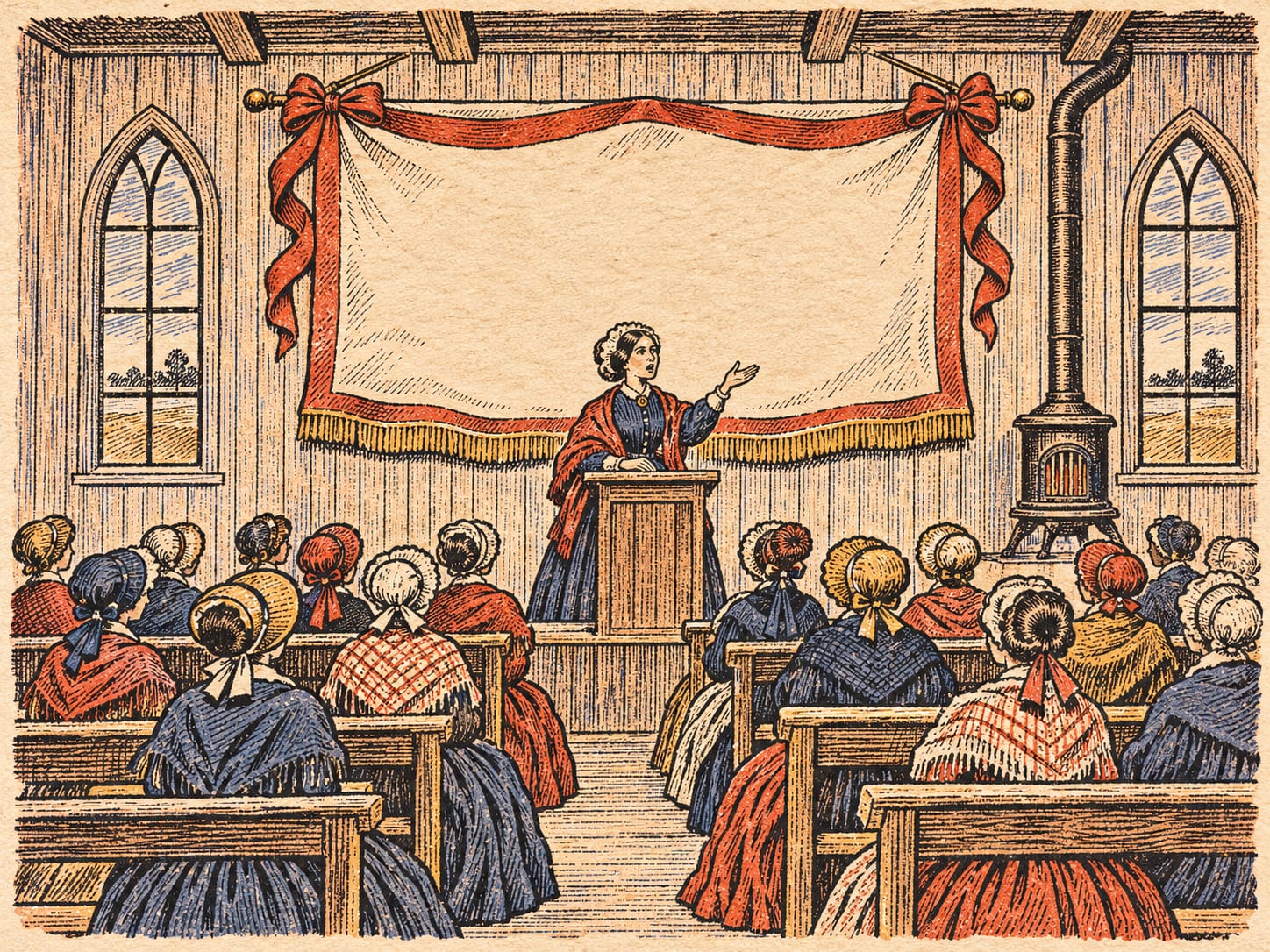
The Woman's Christian Temperance Union was founded in Cleveland in 1874. Under Frances Willard it combined education, lobbying, school programs, women's rights and local campaigns against saloons.
A hatchet in Kansas
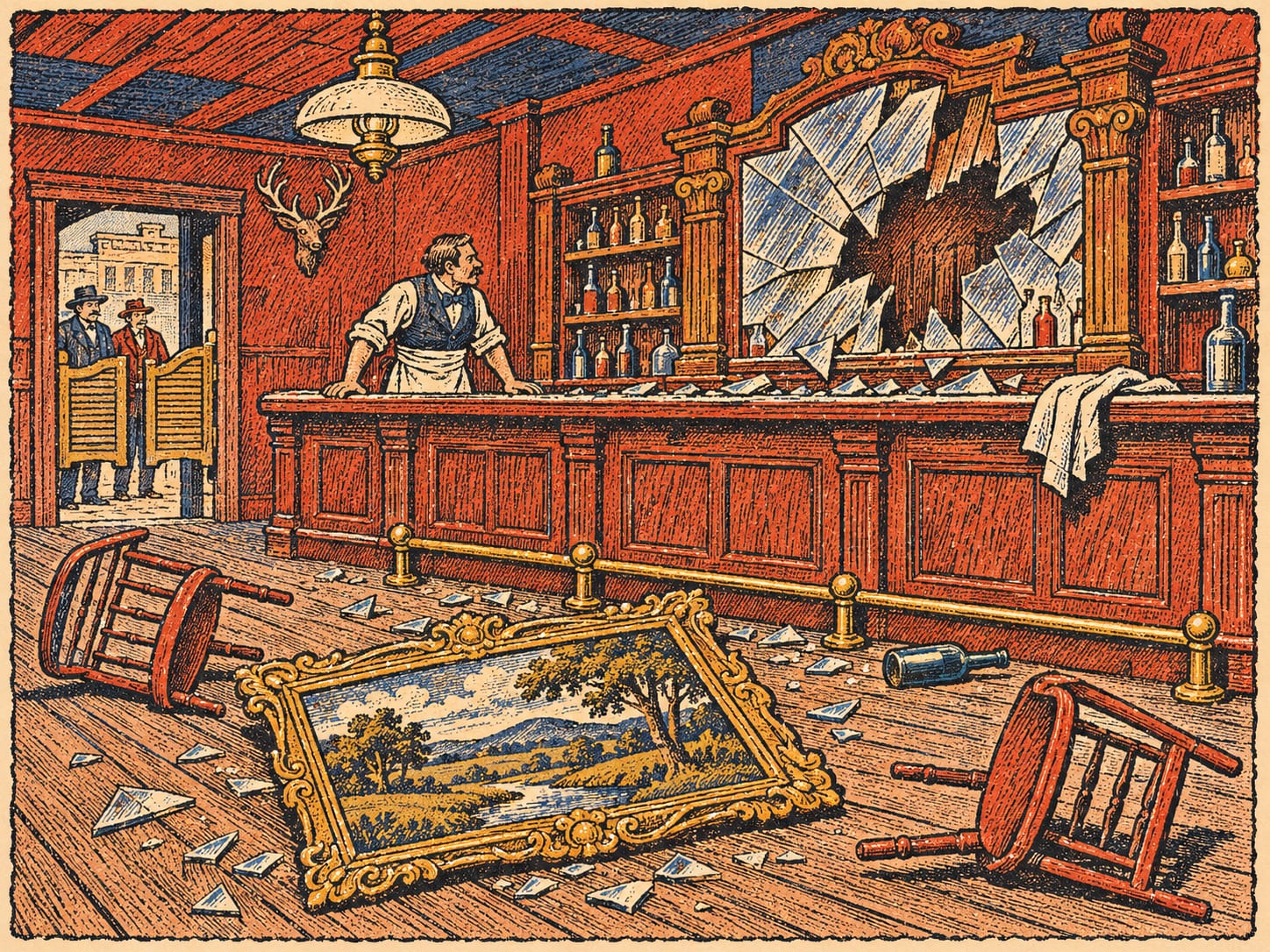
Carrie Nation gave the cause its loudest image. On 31 May 1900 she destroyed saloons in Kiowa, Kansas. On 27 December 1900 she went to jail after smashing a painting and a mirror in a Wichita saloon. A lecture tour began in Des Moines, Iowa, on 9 February 1901, and by 1903 she had largely stopped the physical attacks and travelled as a temperance lecturer.
In her autobiography she wrote that she heard a religious direction to go to Kiowa: "Go to Kiowa, and" ... "I'll stand by you." She understood it as God's order to "break, or smash the saloons."
She also kept count of her jail time. Her list ran from Wichita three times and Topeka seven times to Coney Island, Los Angeles, San Francisco, Scranton, Bayonne, Pittsburgh, Philadelphia and Cape Breton, and she ended it with "making a total of twenty three times." That is her own count, not an audited arrest total.
She recorded her arrests in her own words. Of an arrest in Wheeling, West Virginia, in the winter of 1902, she wrote that it came "for going in a saloon and telling the man he was in a business that would send him to hell as well as others." In Bayonne, New Jersey, in the summer of 1903, an officer told her, "I will arrest you if you do not move on." She answered, "You do not wish this poor man to have one warning word to keep him out of a drunkards hell."
The lobby that got the amendment
Howard Hyde Russell founded the Anti-Saloon League in Oberlin, Ohio, in 1893. It became a highly effective professional lobbying organization. Under Wayne B. Wheeler it worked through Protestant churches and both major political parties, and it targeted local, state and federal lawmakers.
Wheeler kept "the card-index system of keeping tabs on public officials and of rallying supporters when needed," as the Westerville Public Library describes his method. He beat an unfriendly state senator through personal organizing, and he later prosecuted more than 2,000 dry-law cases. The League asked candidates to say publicly whether they were wet or dry, backed the dry ones and rallied voters against the rest. Wheeler described its 1916 effort as a barrage "such as candidates for Congress had never seen before."
Paper carried the message. The League's American Issue Publishing Company reported 6,383,049 copies in 1913, 13,669,885 in 1914 and 15,975,480 in 1916, and 15,469,569 in 1918. By its own reckoning the League held about 22,000 mass meetings through 1925, reached more than five million people and raised more than $18 million in subscriptions.
The WCTU helped build public support and state restrictions. The Anti-Saloon League was the organization most responsible for proposing and ratifying the Eighteenth Amendment.
Maine and the early dry states
On 2 June 1851, Maine passed a statewide prohibition law, banning the manufacture and sale of intoxicating beverages. Maine repealed it in 1856 and enacted it again in modified form. Maine, Kansas and North Dakota kept statewide prohibition into the early twentieth century.
A second wave came in the Progressive Era. By April 1917, 26 of the 48 states had statewide or substantial prohibition restrictions, and an estimated 55 million people lived under them.
"Dry" did not always mean the same rules. Some states banned manufacture and sale but allowed limited possession, and many otherwise "wet" states let counties and towns choose local prohibition.
War, beer and the income tax
The First World War turned alcohol into a question of national efficiency, food conservation, military discipline and patriotism. Wartime measures limited the grain used for alcohol and restricted alcohol near military facilities.
Anti-German feeling helped the dry side, because many major American breweries were tied to German-American owners and names. The Anti-Saloon League used wartime nationalism to paint German-American brewers and beer culture as disloyal. That was one political argument, not the whole cause. The campaign had been organized for decades before the United States entered the war.
Money mattered as well. The Sixteenth Amendment, ratified on 3 February 1913, gave Congress clear authority to levy an income tax. Before it, federal revenue leaned heavily on customs duties and alcohol taxes. With income tax coming in, the government no longer had to depend so much on liquor excise taxes, and the liquor tax revenue a ban would cost stood less in the way.
The votes in Congress
The Senate approved the prohibition amendment on 1 August 1917 by 65 votes to 20, with 11 senators not voting. The House approved it on 17 December 1917 by 287 to 100, with 40 representatives not voting. Congress completed passage and sent the resolution to the states on 18 December 1917.
The amendment banned the manufacture, sale and transportation of intoxicating liquor for beverage purposes, including imports and exports. It gave Congress and the states concurrent power to enforce it, and it needed ratification by three-fourths of the states within seven years.
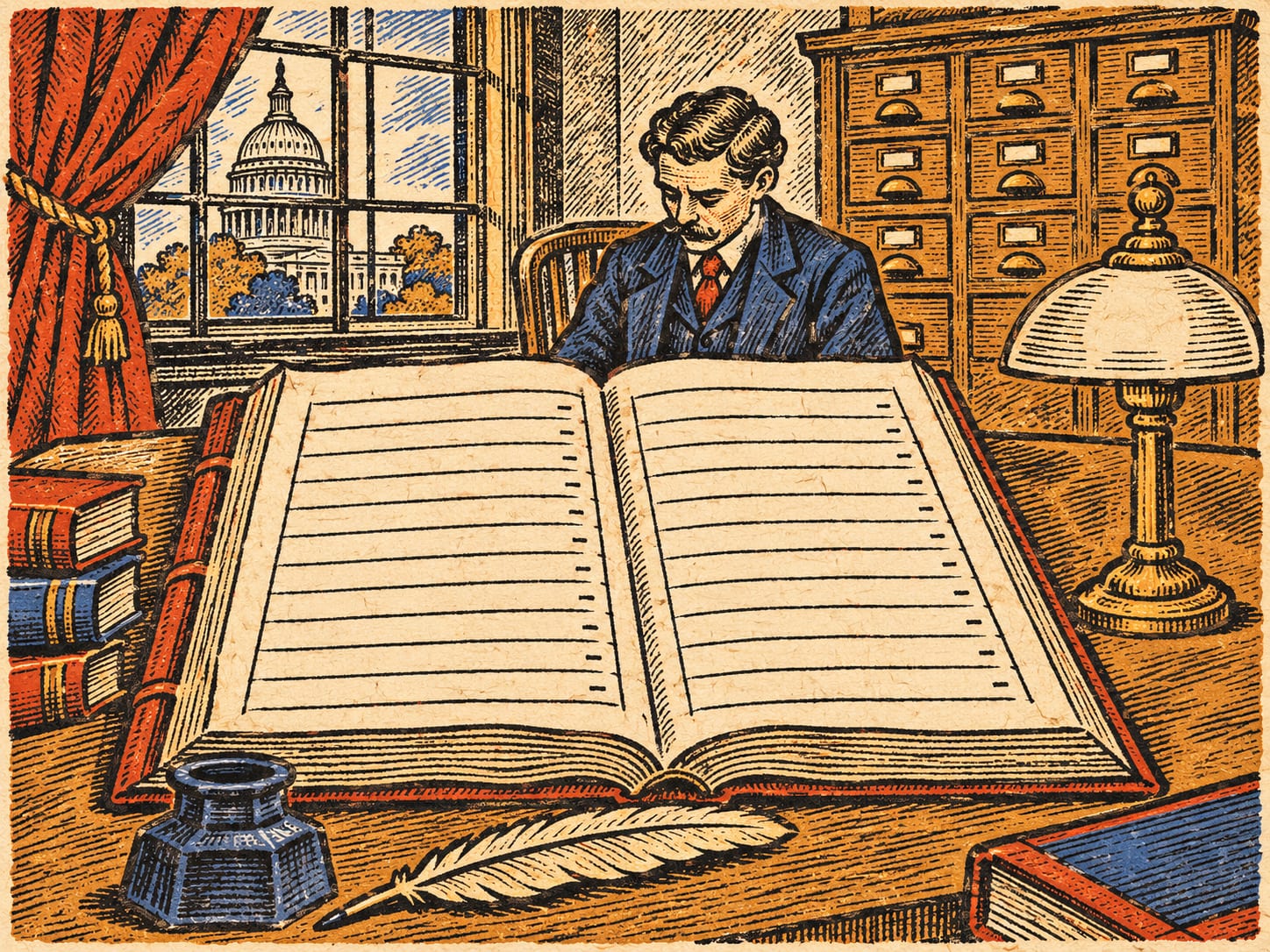
Nebraska became the 36th state to ratify on 16 January 1919, reaching the three-fourths mark. The amendment took effect one year later, at midnight on 17 January 1920.
What the Volstead Act said
The National Prohibition Act, called the Volstead Act, became law on 28 October 1919. Congress passed it over President Woodrow Wilson's veto.
Wilson's message was dated 27 October 1919, and his objection was narrow. The bill tied enforcement of the new constitutional ban to the continuation of wartime prohibition. "One part of the act under consideration seeks to enforce wartime prohibition," he wrote. "The other provides for the enforcement which was made necessary by the adoption of the constitutional amendment." The wartime part, he argued, dealt with an emergency "whose objects have been satisfied in the demobilization of the army and navy." He added that "in all matters having to do with the personal habits and customs of large numbers of our people we must be certain that the established processes of legal change are followed."
The House overrode the veto on 27 October by 175 to 55, with 198 members not voting. The Senate followed on 28 October by 65 to 20. In the debate, Representative Edward Pou of North Carolina said of the President, "He can not be touched by this law." Representative Champ Clark proposed testing whether 2.75 percent beer was intoxicating by sending each member a quart and making him drink it within 30 minutes. Andrew Volstead answered for the bill: "The American people have said that they do not want any liquor sold, and they have said it emphatically by passing almost unanimously the constitutional amendment."
The law defined intoxicating liquor as alcohol, brandy, whisky, rum, gin, beer, ale, porter, wine and other spirituous, vinous, malt or fermented liquids of one-half of 1 percent alcohol by volume or more, when fit for beverage use.
It carried exceptions under regulation. A physician could prescribe medicinal liquor, and the patient needed a permit to obtain it. Sacramental wine could be made, sold, moved and used for religious purposes under the rules. Alcohol could be produced or held for scientific, industrial, mechanical and other lawful nonbeverage uses. Properly made dealcoholized wine and some beverages under one-half of 1 percent were exempt if they met labeling and production rules.
The constitutional text banned manufacture, sale and transportation for beverage purposes. It did not simply say that every act of drinking was illegal.
Did it work?
Drinking fell sharply at the start, then recovered. The National Archives reports a 30 percent fall in consumption, a 50 percent fall in hard liquor by the United States Brewers' Association's figure, and fewer drunkenness arrests. Those figures describe the early years, not 1920 to 1933 as a whole.
Miron and Zwiebel built their estimates from mortality, mental-health and crime statistics rather than direct sales. They found that consumption rose from about 30 percent back to roughly 60 to 70 percent of its old level during the following years.
Bootlegging, illegal distilling, speakeasies, smuggling, bribery and corruption spread. Alcohol stayed profitable while its production and sale were illegal, and organized crime grew into a national market that linked gangs in different cities and gave them money for weapons and political influence.
Prohibition did not cause every rise in crime. National crime data from those years are incomplete, and many things moved the numbers. What holds is that Prohibition cut drinking at first, did not end it, and opened highly profitable illegal markets that strengthened organized crime.
Enforcement, and the case of Al Capone
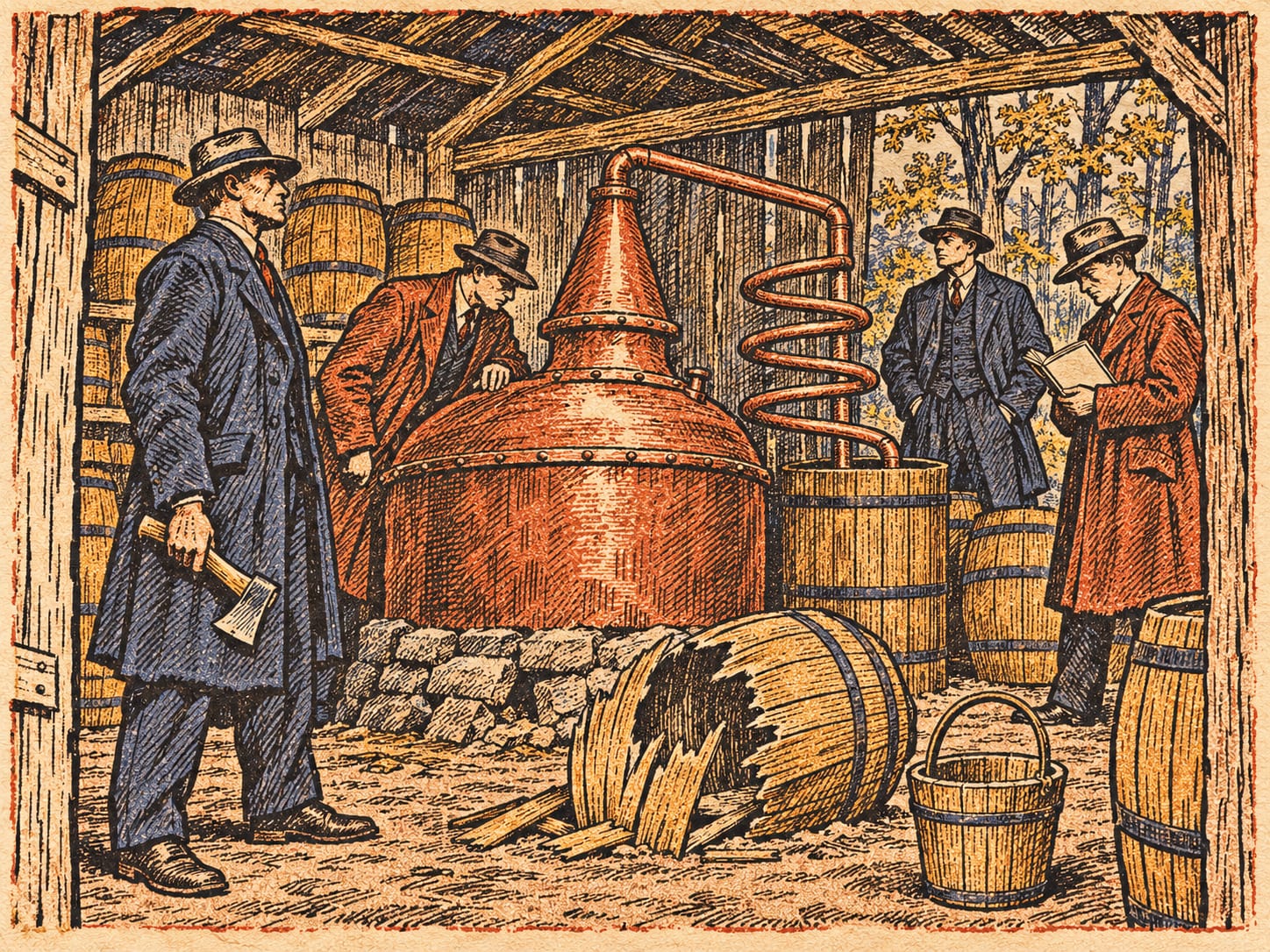
The Volstead Act gave enforcement to the Treasury Department's Bureau of Internal Revenue, later tied to the Prohibition Unit. Federal agents went after illegal breweries, distilleries, shipments, speakeasies and crime networks. State and local enforcement varied widely: some governments cooperated, and others lacked money, staff or will.
Raids, seizures, arrests, prosecutions, border patrols and corruption investigations followed. The size of the country, the length of its borders and coastlines, and steady demand made full enforcement impossible.
Al Capone built a major criminal organization in Chicago on bootlegging, gambling, prostitution, bribery, narcotics, protection rackets and violence. Federal authorities struggled to convict him for bootlegging or murder. The case that worked was income-tax evasion.
A federal court convicted him on 18 October 1931 and sentenced him on 24 November 1931 to 11 years in federal prison. He was fined $50,000, charged $7,692 in court costs and ordered to pay more than $215,000 in back taxes plus interest. He served time in the federal penitentiaries in Atlanta and Alcatraz. An Internal Revenue Service investigation produced the tax conviction, not the publicity later given to Eliot Ness.
Izzy and Moe in New York
Isidor "Izzy" Einstein, a former postal clerk, and Moe Smith, a cigar-store owner, worked as undercover agents for the Federal Prohibition Unit in New York from 1920 to 1925. They used disguises, false names, props, several languages and a device that let Einstein collect liquor as evidence without swallowing it.
Einstein's memoir supplies the numbers that the Smithsonian and the ATF repeat: 4,932 arrests of bartenders, bootleggers and speakeasy owners, about five million bottles of liquor seized, a reported conviction rate of 95 percent and about 100 raids a week at the peak. His line at each arrest was "There's sad news here. You're under arrest." The ATF says he was let go because he "had become too vaudevillian." Einstein wrote that a Washington official told him, "You are merely a subordinate, not the whole show." He and Smith were among 35 agents dismissed in November 1925.
What the courts and prosecutors faced
Mabel Walker Willebrandt, Assistant Attorney General from 1921 to 1929, supervised federal Prohibition prosecutions. She said the work had to be divided by size: "That is the kind of case the federal government must be responsible for, but the hip-pocket variety of cases must be left to the police courts." She blamed politics for thin ranks, saying that the appointment of prohibition agents "has been controlled by the politicians."
Prohibition cases made up nearly two-thirds of federal criminal cases from 1921 through 1933, the Federal Judicial Center counts. Terminated federal Prohibition cases ran at 5,095 in fiscal 1920, 21,297 in 1921 and 28,743 in 1922. They averaged 47,495 a year from 1923 through 1928 and 59,821 a year from 1929 through 1933. All federal criminal cases rose from about 17,000 in 1917 to 76,000 in 1925 and 92,000 in 1932.
One Seattle case reached the Supreme Court. Roy Olmstead was a former Seattle police officer who pleaded guilty to bootlegging in 1920 and then built a large smuggling business that brought liquor in from Canada. Federal agents tapped the telephones at his home and office in 1924, without entering either place. On 4 June 1928, by 5 votes to 4, the Court held that this broke neither the Fourth nor the Fifth Amendment. Chief Justice William Howard Taft wrote for the majority that "There was no searching. There was no seizure."
Justice Louis Brandeis dissented, joined by Justice Holmes. He wrote that "Discovery and invention have made it possible for the Government, by means far more effective than stretching upon the rack, to obtain disclosure in court of what is whispered in the closet."
How Prohibition ended
Congress proposed the Twenty-First Amendment on 20 February 1933. Unlike most amendments, it went to state ratifying conventions instead of state legislatures.
It repealed the Eighteenth Amendment and kept each state's power to ban or regulate alcohol inside its borders. Section 2 barred carrying alcohol into a state in violation of that state's own laws. Utah became the 36th state to ratify, on 5 December 1933. The Twenty-First is the only amendment that repeals another.
Several pressures pushed repeal: organized crime and violence, wide disregard of the law, uneven enforcement, the political work of repeal groups, the Great Depression, lost alcohol tax revenue and the hope of jobs and industrial recovery. The Cullen-Harrison Act had already allowed low-alcohol beer and wine in March 1933, but only the Twenty-First Amendment ended the constitutional ban.
Eleven commissioners and a change of mind
On 7 January 1931 the National Commission on Law Observance and Enforcement, chaired by George W. Wickersham, issued its report. Its eleven members agreed on one conclusion: "There is yet no adequate observance or enforcement." They also agreed that "No improvement in machinery will avail without cooperation from the States."
Their separate statements split. Four wanted more time. Wickersham wrote, "I believe that there should be further trial." Seven wanted change. Newton D. Baker wrote, "The eighteenth amendment should be repealed and the whole question remitted to the States." Monte M. Lemann refused to sign the joint report at all, and wrote, "I see no alternative but repeal of the amendment."
Outside the commission, women led the repeal campaign. Pauline Sabin, a New York Republican organizer, had backed Prohibition at the start and changed her mind after concluding that it encouraged corruption, disrespect for law and unregulated drinking.
She founded the Women's Organization for National Prohibition Reform in 1929. The Museum of the City of New York says she organized it after Ella Boole of the WCTU claimed to speak for "the women of America." In April 1931 Sabin called for "an army of women so great that its backing will give courage to the most weak-kneed and hypocritical Congressman to vote as he drinks." By the end, the organization reported 1.5 million members, and it wanted state regulation, not a return to the old saloon.
John D. Rockefeller Jr., a lifelong teetotaler and supporter of Prohibition, changed publicly in June 1932. His open letter to Nicholas Murray Butler, published on 7 June, argued that the Eighteenth Amendment had bred disrespect for law and more organized crime. The Department of Justice replied on 23 June that he had based his conclusions "to some extent upon misinformation."
Prohibition in the United States
- 1826
The American Temperance Society forms
- 2 June 1851
Maine passes a statewide prohibition law
- 1874
The Woman's Christian Temperance Union is founded in Cleveland
- 1893
The Anti-Saloon League is founded in Oberlin, Ohio
- 31 May 1900
Carrie Nation destroys saloons in Kiowa, Kansas
- 17 December 1917
The House approves the Eighteenth Amendment, 287 to 100
- 16 January 1919
Nebraska becomes the 36th state to ratify
- 27 October 1919
Wilson's veto message; the House overrides it the same day
- 28 October 1919
The Volstead Act becomes law over Wilson's veto
- 17 January 1920
National Prohibition takes effect
- 4 June 1928
The Supreme Court decides Olmstead v. United States, 5 to 4
- 7 January 1931
The Wickersham Commission issues its report
- 24 November 1931
Al Capone is sentenced to 11 years
- 7 June 1932
Rockefeller's open letter on the Eighteenth Amendment is published
- 20 February 1933
Congress proposes the Twenty-First Amendment
- 5 December 1933
Utah ratifies, completing repeal
What is left today
The enforcement machinery lived on under new names. The Treasury's Prohibition Unit became the Bureau of Prohibition, and in 1930 enforcement moved to the Department of Justice. After repeal the duties passed to the Alcohol Tax Unit of the Bureau of Internal Revenue, which in time became part of the structure that grew into today's Bureau of Alcohol, Tobacco, Firearms and Explosives. The National Archives keeps the case files of the Seattle Bureau of Prohibition office, which worked from 1927 to 1933 across Washington, Oregon, Idaho, Montana and Wyoming, including telephone-tap transcripts.
State liquor boards are the other lasting change. After repeal the states took back the power to regulate alcohol, and boards such as the New York State Liquor Authority, the Pennsylvania Liquor Control Board and the Ohio Division of Liquor Control remain. The choice in 1933 was regulated legal sales, not a return to the unrestricted saloon trade.
Visitors can still stand where it happened. The Westerville History Museum and Anti-Saloon League Museum in Ohio holds the League's publications, correspondence and photographs. The Museum of the City of New York shows "Protesting Prohibition," covering 1914 to 1933, with material on saloons, speakeasies and the women who campaigned for repeal. The Mob Museum in Las Vegas has a basement speakeasy exhibit that comes with museum admission.
Other countries tried it too
The United States was not alone. Finland's Prohibition Act took effect on 1 June 1919 and banned drinks over 2 percent alcohol by volume. Smuggling and illegal sales went on, and in 1932 Finland replaced the ban with a state alcohol monopoly.
Norway banned fortified wine from 1919 to 1923 and liquor from 1919 to 1927. Several Canadian provinces adopted prohibition measures, with wartime rules that varied by province instead of one national constitutional ban. Mexico had partial or local limits but nothing like the nationwide 1920 to 1933 American system.
In Spanish the American period is called la Ley Seca, or la prohibición, and Ley Seca is the best-known label.
It took one amendment to start Prohibition and another to end it, from 17 January 1920 until Utah ratified on 5 December 1933.
Sources
- Congressional Research Service, history of temperance movements
- Library of Congress, "Prohibition Begins," its guide to the Eighteenth Amendment, and its Carrie Nation guide
- Carrie Nation, The Use and Need of the Life of Carrie A. Nation
- Westerville Public Library, Wayne Wheeler pages, and Twenty Eventful Years, Anti-Saloon League Collection
- National Archives, "The Volstead Act," and the text of Amendments 11 to 27
- Woodrow Wilson, veto message of 27 October 1919, American Presidency Project; U.S. Senate and U.S. House history of the override
- U.S. House of Representatives, "About Prohibition"
- Statutes at Large, National Prohibition Act, 28 October 1919
- Cornell Legal Information Institute, early federal and state prohibition laws
- Jeffrey Miron and Jeffrey Zwiebel, "Alcohol Consumption During Prohibition," National Bureau of Economic Research
- FBI histories, "The FBI and the American Gangster" and "Al Capone"
- National Archives, "Al Capone's Guilty Verdict"
- ATF, "Prohibition Unit, Bureau of Internal Revenue," and its profile of Isador "Izzy" Einstein; Smithsonian Magazine, "Prohibition's Premier Hooch Hounds"
- Federal Judicial Center, "Prohibition in the Federal Courts"
- Olmstead v. United States, 277 U.S. 438 (1928)
- Wickersham Commission report of 7 January 1931 and Congressional Record, 1931
- Museum of the City of New York, "The New York Women Who Dismantled Prohibition" and "Protesting Prohibition"; Congressional Record, 1932, Rockefeller letter and Department of Justice reply
- National Archives, Records of the Bureau of Prohibition, Seattle
- Internal Revenue Service history timeline
- El País, "La nueva movida"; European Commission report on alcohol policies in EU member states and Norway
Watch the full story on the Flashback Fables YouTube channel, and send it to someone who would love it.