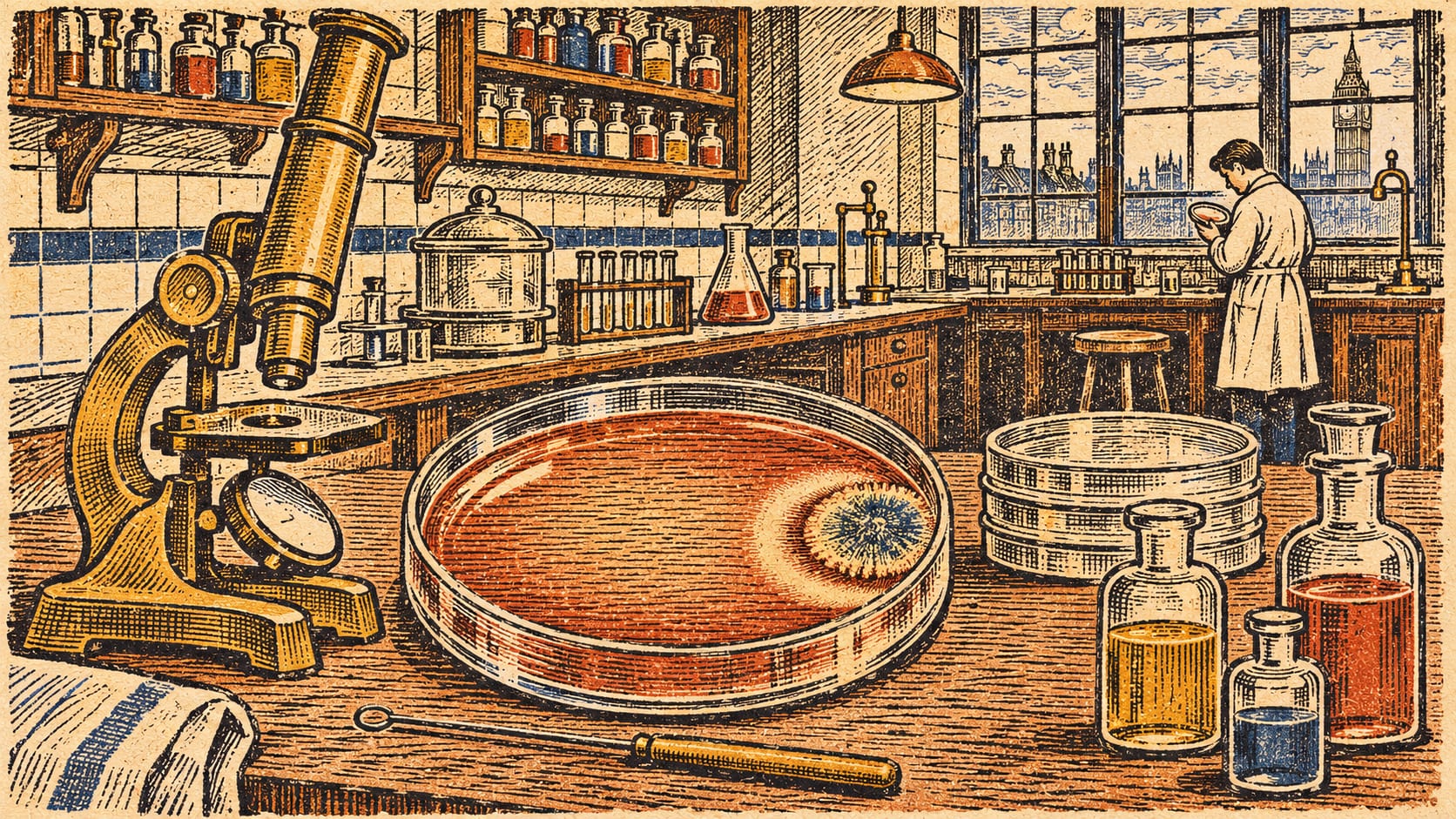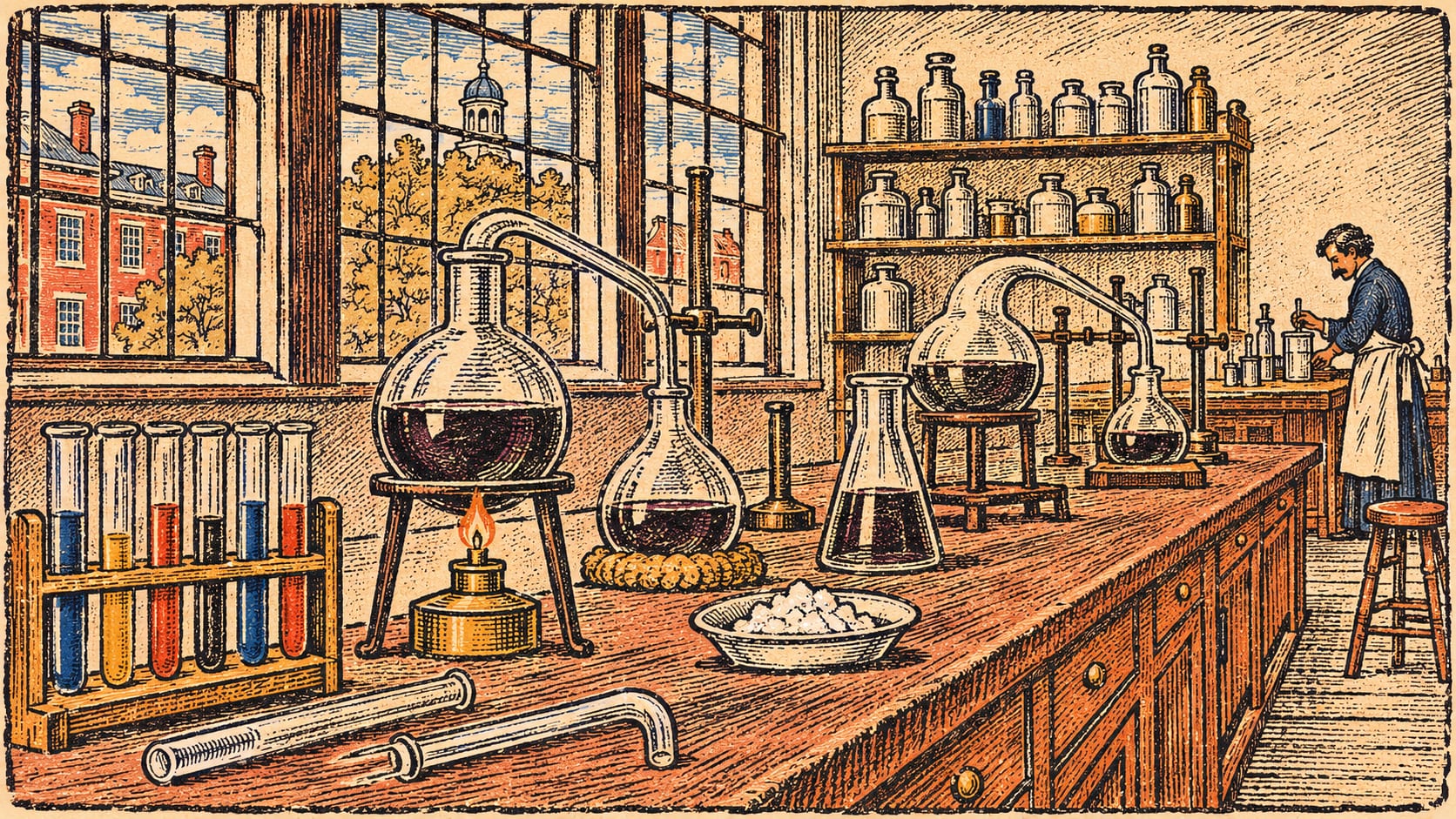
Saccharin was found by accident, when a chemist noticed sweetness where there should have been none. In 1879, Constantin Fahlberg was working in Ira Remsen's chemistry laboratory at Johns Hopkins University on coal-tar compounds when he noticed an unusually sweet taste on food he handled.
Fahlberg traced the taste to a new compound, later named saccharin. He and Remsen published the chemistry together that year. Fahlberg then patented a way to make it in his own name, and Remsen received no commercial benefit.
The compound went on to fill sugar-short kitchens in two world wars and to sweeten diet drinks. It also carried a cancer warning label in the United States from 1977 and came off the government's list of carcinogens in 2000.
A sweet taste in a Johns Hopkins laboratory
Fahlberg was studying derivatives of coal tar, especially a compound called ortho-toluenesulfonamide. After a day of laboratory work, he noticed a strong sweetness on food he handled. Contamination from his work was the cause, and he traced the taste to a substance made by oxidizing that compound. Chemists call it benzoic sulfimide. It was later named saccharin.
The work took place in Remsen's laboratory, and both men were involved in the science. Remsen directed the Johns Hopkins laboratory and had done earlier work on related sulfobenzoic compounds. Fahlberg made the key observation of sweetness.
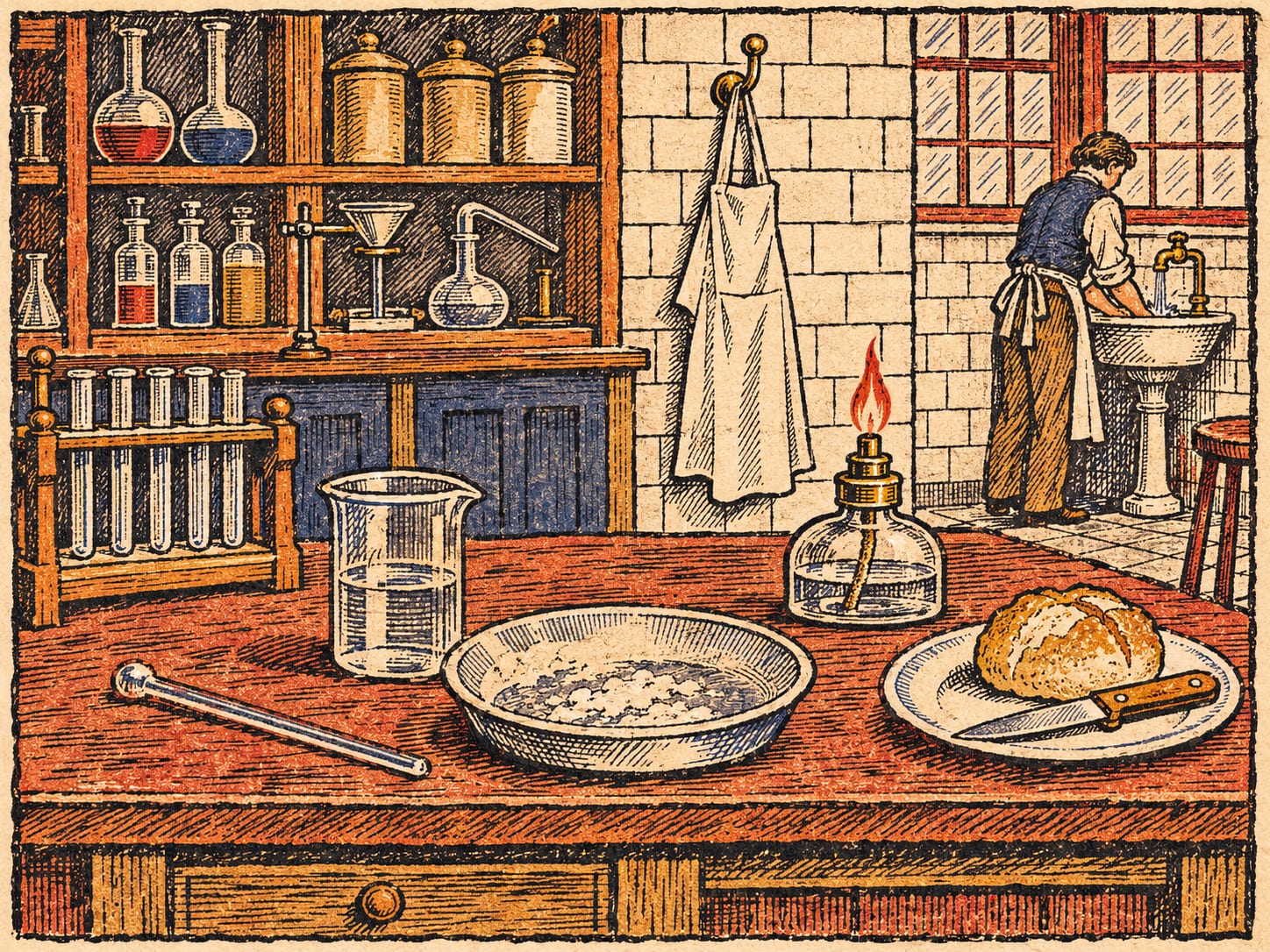
Fahlberg told the dinner scene himself, in an 1886 interview printed in Items of Interest from a conversation with the American Analyst. "How did I discover saccharin?" he said. "Well, it was partly by accident and partly by study." He described eating bread after working without washing his hands, finding the bread unusually sweet, and then tasting his fingers and the contents of the laboratory vessels.
"It flashed on me that I was the cause of the singular universal sweetness," he said, "and I accordingly tasted the end of my thumb, and found it surpassed any confectionery I had ever eaten." He then identified an impure solution of saccharin and worked out its composition and how to make it. The tasting scene rests on his own telling, and the details change in later retellings.
Two names on one paper
The finding reached print in 1879. Constantin Fahlberg and Ira Remsen published "Ueber die Oxydation des Orthotoluolsulfamids" in the Berichte der Deutschen Chemischen Gesellschaft, volume 12, pages 469 to 473, with Fahlberg's name listed ahead of Remsen's. It described oxidizing ortho-toluenesulfonamide and the compound that resulted. The paper did not yet use the commercial name saccharin.
A related account followed in the American Chemical Journal in 1880. Its authors called the substance benzoic sulfinide, also known as anhydrosulfaminebenzoic acid. Both papers reported how to prepare the compound and what its properties were, including its very sweet taste.
Both names sit on the 1879 paper. The credit dispute that came later did not start in the laboratory. It started when Fahlberg claimed the discovery as his alone and patented a manufacturing process under his own name.
Fahlberg leaves Baltimore and takes out a patent
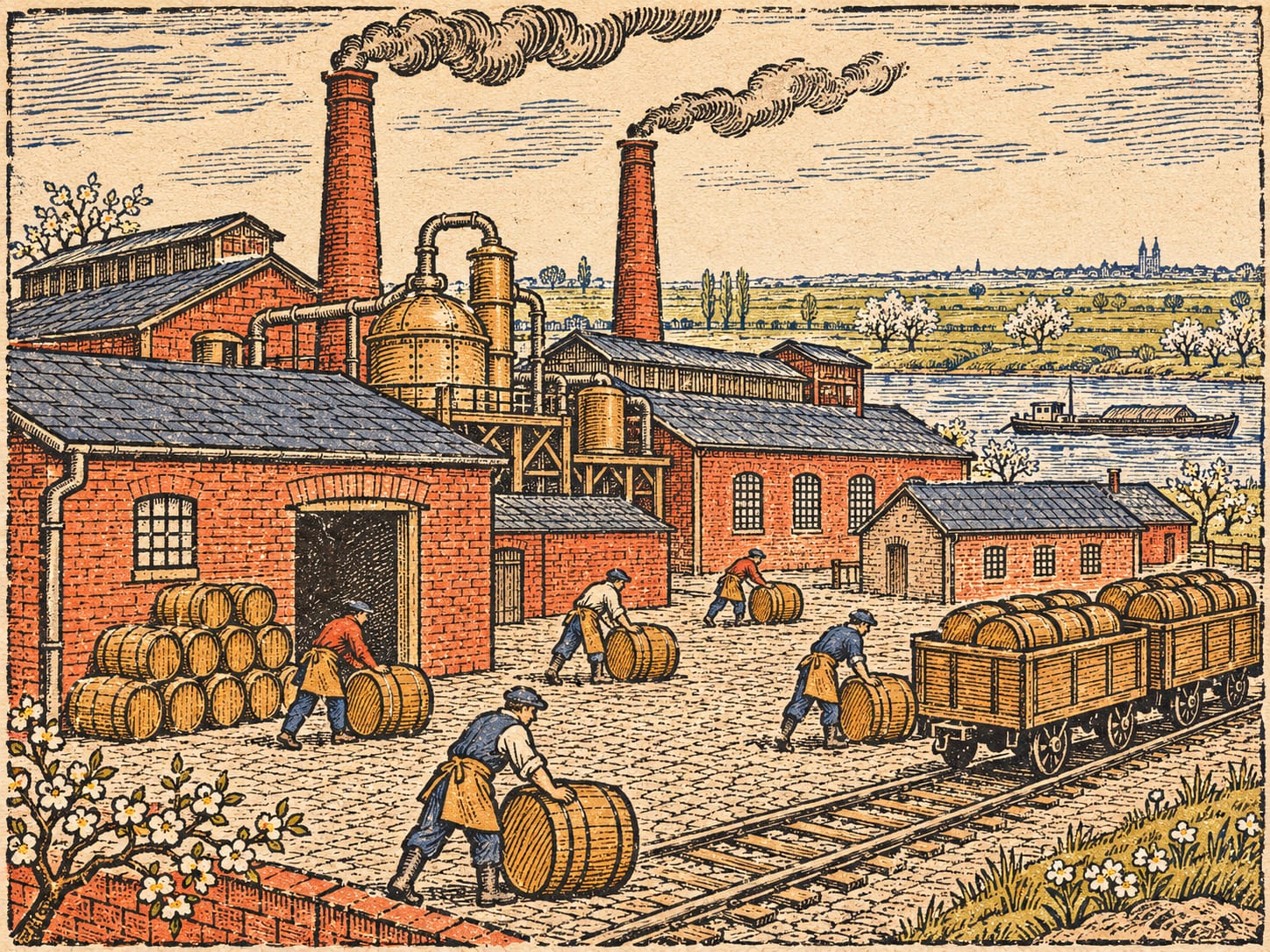
After leaving Johns Hopkins, Fahlberg went after commercial production. He worked at Gray's Ferry Chemical Works in Philadelphia, then moved to New York City and set up a small experimental plant. A later account says that by the autumn of 1884 he had installed boilers, engines and other equipment and was turning out about five kilograms of saccharin a day.
He applied for a United States patent on 7 August 1884, and it was issued on 2 June 1885. Half the interest went to his uncle and business partner, Adolph List of Leipzig, a technician with whom Fahlberg had developed the commercial use of saccharin after visits to Leipzig in 1882 and 1884. A German patent for the process, No. 35211, dates from 1884.
Fahlberg, List & Co. was founded in April 1886, with a factory at Salbke, near Magdeburg. By then the elder List had died, and his son Adolph Moritz List, born 12 November 1861, took his place in the partnership. The Magdeburg factory began production on 9 March 1887. A United States patent, No. 564,784, "Process of Making Saccharin," names Fahlberg as the inventor and gives his address at Salbke-Westerhüsen near Magdeburg.
Fahlberg's patents covered improved ways of making the compound, not just the original observation. That helps explain how both men could have a real claim: Remsen's laboratory and the shared paper stood behind the science, and Fahlberg's factory stood behind the product.
Why Remsen did not sue
Remsen objected to Fahlberg's use of the label "Fahlberg's saccharin" and to his claims of sole discovery. He received nothing from the commercial side.
His contemporaries took the dispute seriously. Alfred Dohme carried letters from Remsen to German chemists, among them August Kekulé, Adolf von Baeyer, Victor Meyer, Wilhelm Ostwald and Emil Fischer. They reportedly advised Remsen to claim patent rights and sue, because the original research problem had been his.
Remsen refused, saying he would not "soil" his hands with industry and business. A 1985 Maryland Historical Magazine article preserves two later remarks, both taken from earlier biographical material. In a letter to Sir William Ramsay, Remsen wrote: "Fahlberg is a scoundrel." Shortly before he resigned from Johns Hopkins, he reportedly told a student: "I did not want his money, but I feel that I ought to have received a little credit for the discovery."
Two men, two accounts, 1886 and 1887
Fahlberg gave his version in 1886. Remsen gave his in a letter to the New York Times, reprinted in the Engineering and Mining Journal on 19 February 1887.
Remsen wrote that Fahlberg "was working here about six or seven years ago as an advanced student. At his request I assigned a problem to him for original investigation. This investigation he afterward carried on under my guidance." He added that he had published the results with Fahlberg's name beside his own. Then he drew the line: "Fahlberg carried out my directions and deserves credit for this, and for this alone. He did not make the discovery and would never have made it if he had been left to his own resources."
Fahlberg's story begins with bread and an unwashed thumb. Remsen's begins with a problem handed to a student. Both accounts come from the men themselves, and the division of credit between them has stayed disputed ever since.
The fair summary is not that Fahlberg alone invented saccharin. Two names stand on the paper, and the quarrel that followed was over priority, patents and commercial credit.
What became of Fahlberg and his factory
When the Salbke works opened, Fahlberg told an interviewer that the German company had capital of 2,000,000 marks and that its product sold for $10 to $12 a pound. That is the company's capital and price, not Fahlberg's own fortune.
He became wealthy all the same. The 1985 article says he lived for many years in a castle on the Rhine, and a local history places a large Fahlberg residence in Nassau, where his family moved in 1902. His wife was Fernanda Wall, and their daughter Constanze was born in 1888. Fahlberg left the company's board in 1905, and illness ended his active management in 1906, after which August Klages took over the scientific and managerial work. Fahlberg died in Nassau on 15 August 1910 and was buried in the Südfriedhof in Magdeburg.
The company outlived him by decades. In 1902 it became a joint-stock company, Saccharin-Fabrik Aktiengesellschaft, formerly Fahlberg, List & Co., and it grew into sulfuric acid, pharmaceuticals, dyes, pesticides, disinfectants and fertilizers. During the Second World War it took armaments contracts and used forced labor. The Soviet Military Administration seized it on 30 October 1945. As VEB Fahlberg-List it ran under East German state ownership until 1994, and its remaining chemical operations were wound up in 1995.
Most of the original site was demolished. A protected administration building at Alt Salbke 63, built in 1894 in a late-classical style, still stands beside the street. Fahlberg's former residence at Alt Salbke 49 was demolished in 2008, along with the neighboring servants' house.
What became of Remsen
Remsen stayed at Johns Hopkins. He was professor of chemistry from 1876 to 1913 and director of the chemical laboratory from 1876 to 1908. In 1901 he became the university's second president, succeeding Daniel Coit Gilman, and ill health forced him to resign the presidency in 1912. He was elected to the National Academy of Sciences in 1882 and later led the American Chemical Society, in 1902, and the National Academy, from 1907 to 1913. He received the Willard Gibbs Medal in 1914 and the inaugural Priestley Medal in 1923.
His view of saccharin never changed. In testimony later reproduced in Harvey Wiley's 1929 book, he said: "The substance was discovered in the laboratory under my direction in an investigation carried out way back, over 30 years ago."
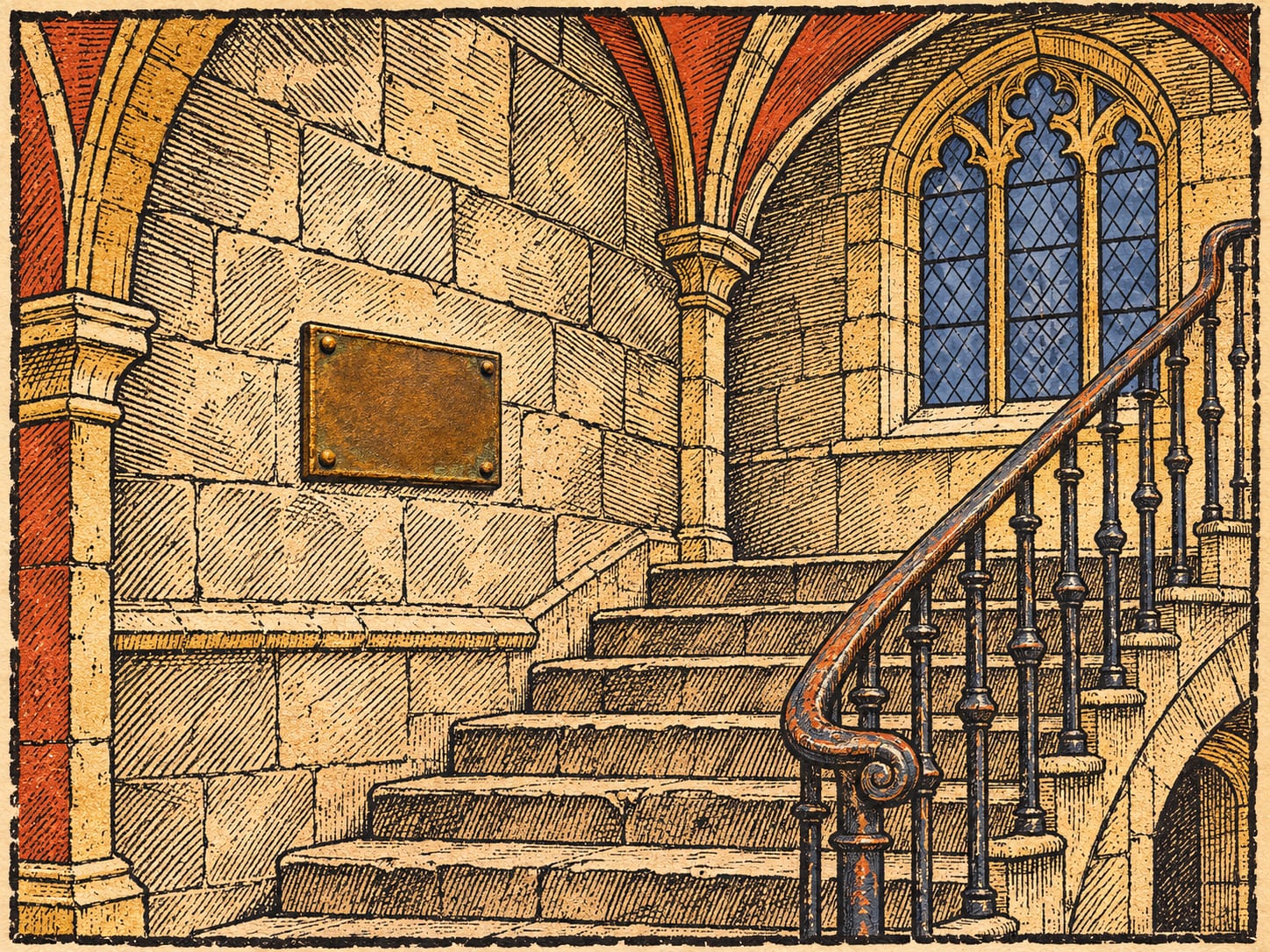
Remsen died in Carmel, California, on 4 March 1927. His ashes are behind a plaque in the west stairwell of Remsen Hall, the chemistry building on the Homewood campus named for him. A recreated version of his early laboratory is displayed at the Smithsonian's National Museum of American History.
Sugar shortages and diet drinks
Saccharin's second life began with war. During the First World War, sugar shortages and higher prices made saccharin commercially important. In the United States, Monsanto, then a major saccharin producer, advertised that saccharin could help conserve sugar and cut costs. In Europe, sugar rationing and short supplies pushed saccharin into drinks and other products.
A 1919 Chicago Department of Health publication, The Sugar Shortage and Substitutes for Sugar, now held by the John Crerar Library, documents that shortage.
Sugar ran short again in the Second World War. In Britain, wartime rules controlled sugar and saccharin levels in soft drinks, and saccharin production and use rose because sugar was scarce.
In the 1950s and 1960s, saccharin went into low-calorie products and diet drinks, often blended with cyclamate to soften saccharin's bitter aftertaste. As dieting grew and low-calorie drinks were marketed, artificial sweeteners moved from specialist products toward the mass market.
Wiley, Roosevelt and a board Remsen chaired
Harvey Wiley opposed saccharin in ordinary food, because it gave sweetness without food value and could stand in for sugar. The Bureau of Chemistry at the United States Department of Agriculture looked into it under the Pure Food and Drugs Act of 1906, which took effect on 1 January 1907.
In 1909 the Secretary of Agriculture created the Referee Board of Consulting Scientific Experts, and Remsen chaired it. Its other members included Russell H. Chittenden, John H. Long, Alonzo E. Taylor and Christian Archibald Herter, later replaced by Theobald Smith. Wiley later reported that the board concluded daily amounts below 0.3 gram did no harm, while larger amounts did. Remsen told the Moss Committee that saccharin was not a food but a sweetening agent, and to a slight extent a preservative.
Wiley's 1929 book also tells of a White House conversation. Wiley said he told President Theodore Roosevelt that saccharin was injurious to health. Roosevelt replied, "Dr. Rixey gives it to me every day." When Wiley repeated himself, Roosevelt answered: "Anybody who says saccharin is injurious to health is an idiot." The words are Wiley's later recollection of the talk, not a line from a Roosevelt speech or letter.
The 1977 warning label and the 2000 change
Canadian studies reported more bladder tumors in rats fed high doses of saccharin, especially in long feeding experiments. Regulators in 1977 also noted uncertainty about impurities, including ortho-toluenesulfonamide, and about how the animal results applied to people.
On 9 March 1977, the Food and Drug Administration announced it would move to ban saccharin, and the proposed rule appeared in the Federal Register on 15 April. People answered fast. More than one million letters went to Congress, the FDA and President Jimmy Carter between March and December 1977.
Senator Edward Kennedy, who chaired the Senate subcommittee on health, and Senator Thomas Eagleton were among the sponsors of the legislation that answered the ban. In the House, Representatives Paul Rogers and Tim Carter carried the main bill. It asked for more study, warning labels and an 18-month pause on FDA action based on the evidence already in hand.
The law required a warning that saccharin had been determined to cause cancer in laboratory animals. Congress renewed the pause on a ban again and again, and the warning requirement was eventually repealed after later scientific reviews.
The National Toxicology Program listed saccharin in 1981 as "reasonably anticipated to be a human carcinogen." In 2000, the program removed saccharin from its Report on Carcinogens. The stated reason was evidence that the way saccharin caused bladder tumors in rats does not apply to humans.
Three more sweet accidents
Saccharin was not the only sweetener to turn up by accident. Three later ones have their own stories.
The sucralose tale is often told with a play on the words "test" and "taste." What is documented is the 1976 finding of the sweetness and the development that followed.
Saccharin, from laboratory to warning label
- 1879
Fahlberg and Remsen publish the oxidation of ortho-toluenesulfonamide, and the sweet compound that comes from it
- 1880
The American Chemical Journal carries a related account of benzoic sulfinide
- 7 August 1884
Fahlberg applies for his patent
- 2 June 1885
The patent is issued, with half the interest assigned to Adolph List
- April 1886
Fahlberg, List & Co. is founded
- 19 February 1887
Remsen's letter to the New York Times is reprinted in the Engineering and Mining Journal
- 9 March 1887
The Magdeburg factory begins production
- 1 January 1907
The Pure Food and Drugs Act of 1906 takes effect
- 1909
The Referee Board, chaired by Remsen, is created
- 15 August 1910
Fahlberg dies in Nassau
- 9 March 1977
The FDA announces it will move to ban saccharin
- 23 November 1977
President Carter signs the act requiring a warning label
- 1981
The National Toxicology Program lists saccharin as "reasonably anticipated to be a human carcinogen"
- 2000
The program removes saccharin from its Report on Carcinogens
Sources
- "The Pursuit of Sweet," Science History Institute
- "Ira Remsen and Chemistry Graduate Education," American Chemical Society
- Ira Remsen photograph collection, Science History Institute archives
- Constantin Fahlberg and Ira Remsen, "Ueber die Oxydation des Orthotoluolsulfamids," Berichte der Deutschen Chemischen Gesellschaft, 1879
- American Chemical Journal, volume 2, 1880
- "Saccharine," Maryland Historical Magazine, 1985
- Remsen letter reprinted in the Engineering and Mining Journal, 19 February 1887
- Fahlberg interview, Items of Interest, volume 8, 1886
- Constantin Fahlberg and Adolph Moritz List biographies, Otto-von-Guericke University Magdeburg; Constantin Fahlberg, Deutsche Biographie
- United States Patent No. 564,784, "Process of Making Saccharin"
- Ira Remsen papers, MS-0039, Johns Hopkins University Libraries; Ira Remsen biographical memoir, National Academy of Sciences
- Landesarchiv Sachsen-Anhalt, Fahlberg-List collections I 53 and I 54
- Harvey Wiley, History of a Crime Against the Food Law, 1929; "Harvey Wiley," Food and Drug Administration
- "A Tale of Sweet Nothings," American Chemical Society; House hearing on the saccharin moratorium, 27 June 1977; Congressional Record, September and October 1977
- "The Sugar Shortage and Substitutes for Sugar," University of Chicago Library, "Sweet Home Chicago" exhibit
- Wartime soft-drink regulation study, University of Liverpool repository
- Federal Register, 7 January 1977 and 15 April 1977
- "Artificial Sweeteners and Cancer," National Cancer Institute
- "Saccharin and its salts," National Library of Medicine
- Noyes Laboratory landmark, American Chemical Society; aspartame entry, National Library of Medicine; "The development and applications of sucralose," PubMed
Watch the full story on the Flashback Fables YouTube channel, and send it to someone who would love it.