
No single person invented the pacemaker. Between 1932 and 1960, doctors and engineers built it in steps, and each one handed the next a piece that was still missing.
Albert Hyman built a hand-cranked machine in 1932. Paul Zoll kept patients alive with an external one in 1952. Earl Bakken made a battery-powered one a patient could wear in 1957, and on 8 October 1958 a Swedish team placed a fully implanted pacemaker inside Arne Larsson.
Larsson's first device failed within hours, after about three in most accounts. He went on to live until 28 December 2001, aged 86.
A needle and a hand crank, 1932
Albert S. Hyman gave the machine its name. In 1932 he developed an external device wound by a spring and turned by hand. Its generator sent electrical impulses through a bipolar needle electrode pushed between the ribs into the right atrium of the heart. It could deliver 30, 60 or 120 impulses a minute.
Hyman called it an "artificial pacemaker." He built it with his brother Charles, an engineer, and he meant it mainly for hearts that had stopped suddenly, including those of stillborn infants, not for chronic heart block.
His paper appeared in the Archives of Internal Medicine in August 1932. It gave no detailed human cases, only the line that "the number of patients successfully treated is still very small." Later historians read that silence as caution about professional hostility, bad publicity and doubts that anyone should interfere with the heart's own rhythm.
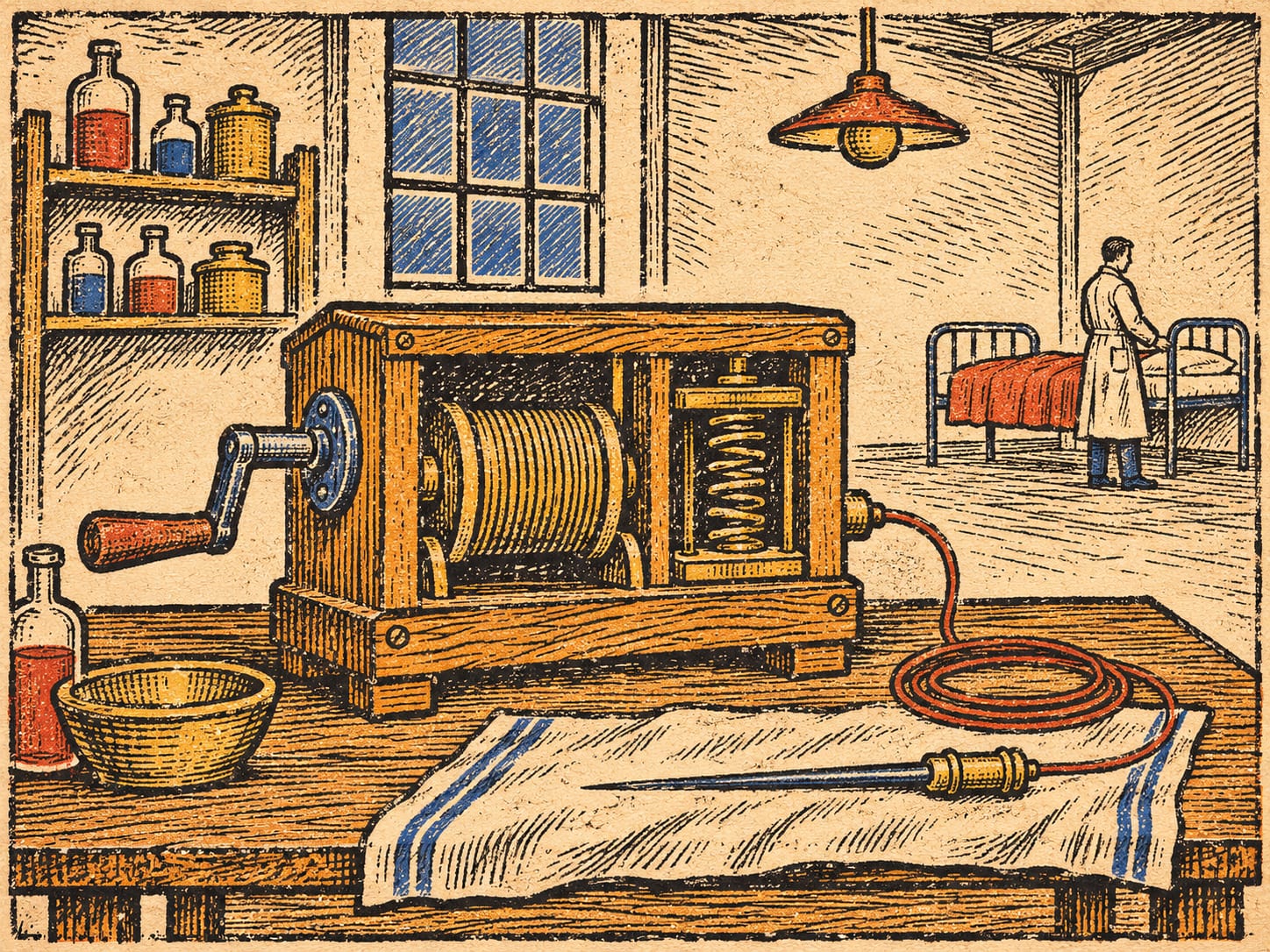
Hyman's design never caught on. Siemens-Halske and its American subsidiary Adlanco later sold a battery-powered version called the "Hymanotor," and later accounts call it ineffective. During the Second World War, Hyman urged the U.S. Navy to use his device for resuscitation, without success. No original working device survives. A 2005 reconstruction study found several models through patents, photographs and written descriptions. Hyman died in New York in 1972.
A table-radio machine in Canada, 1950
John A. Hopps, an electrical engineer at Canada's National Research Council, built a pacemaker in 1950. He was working with cardiac surgeon Wilfred Bigelow and researcher John Callaghan on hypothermia for open-heart surgery.
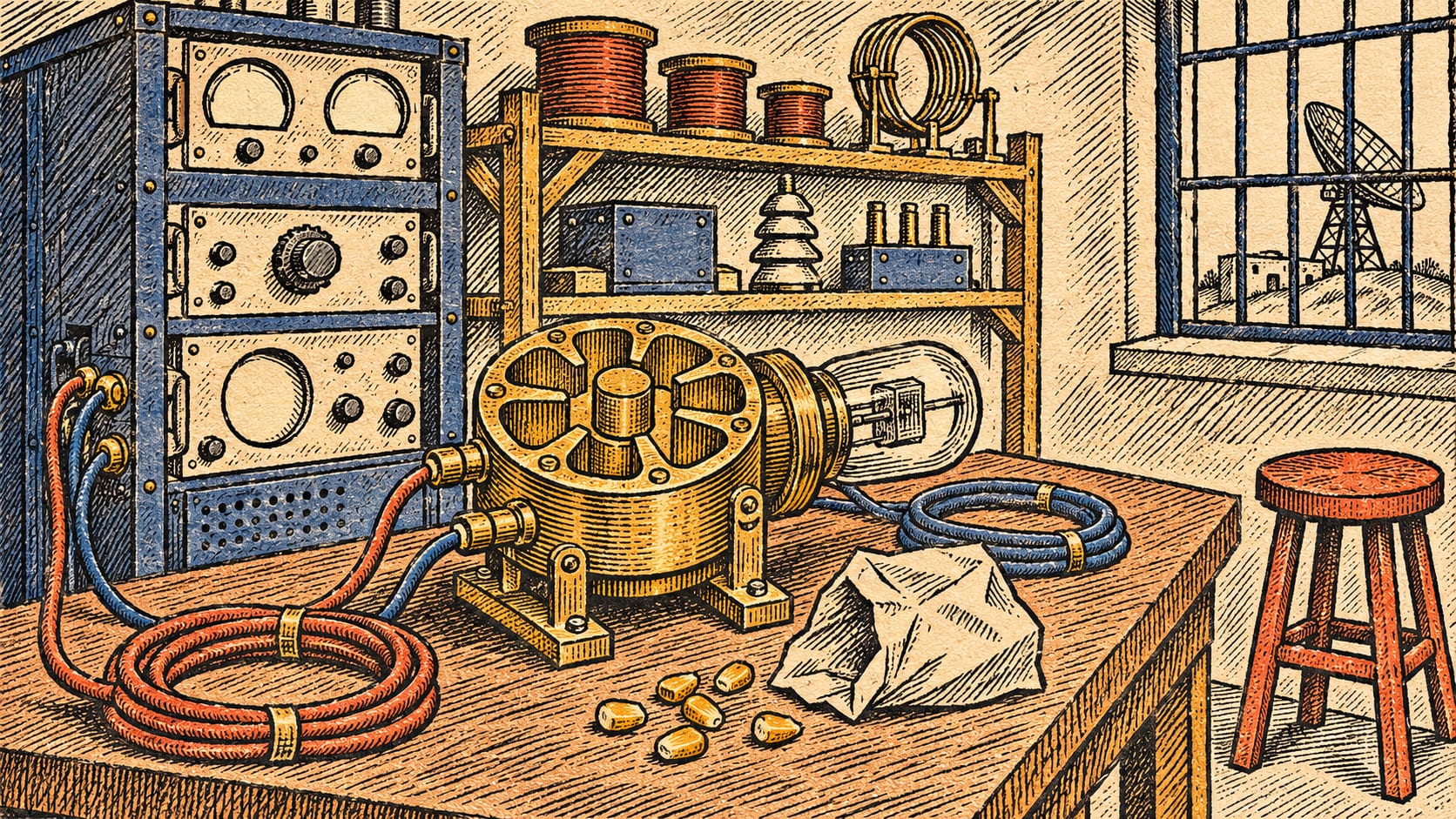
The device was roughly the size of a small table radio or a thick cereal box. Vacuum tubes made the pulses, and an insulated wire passed through a large vein in the neck carried the stimulation to the heart. It was an external prototype, not an implanted pacemaker.
Zoll's chest electrodes, 1952
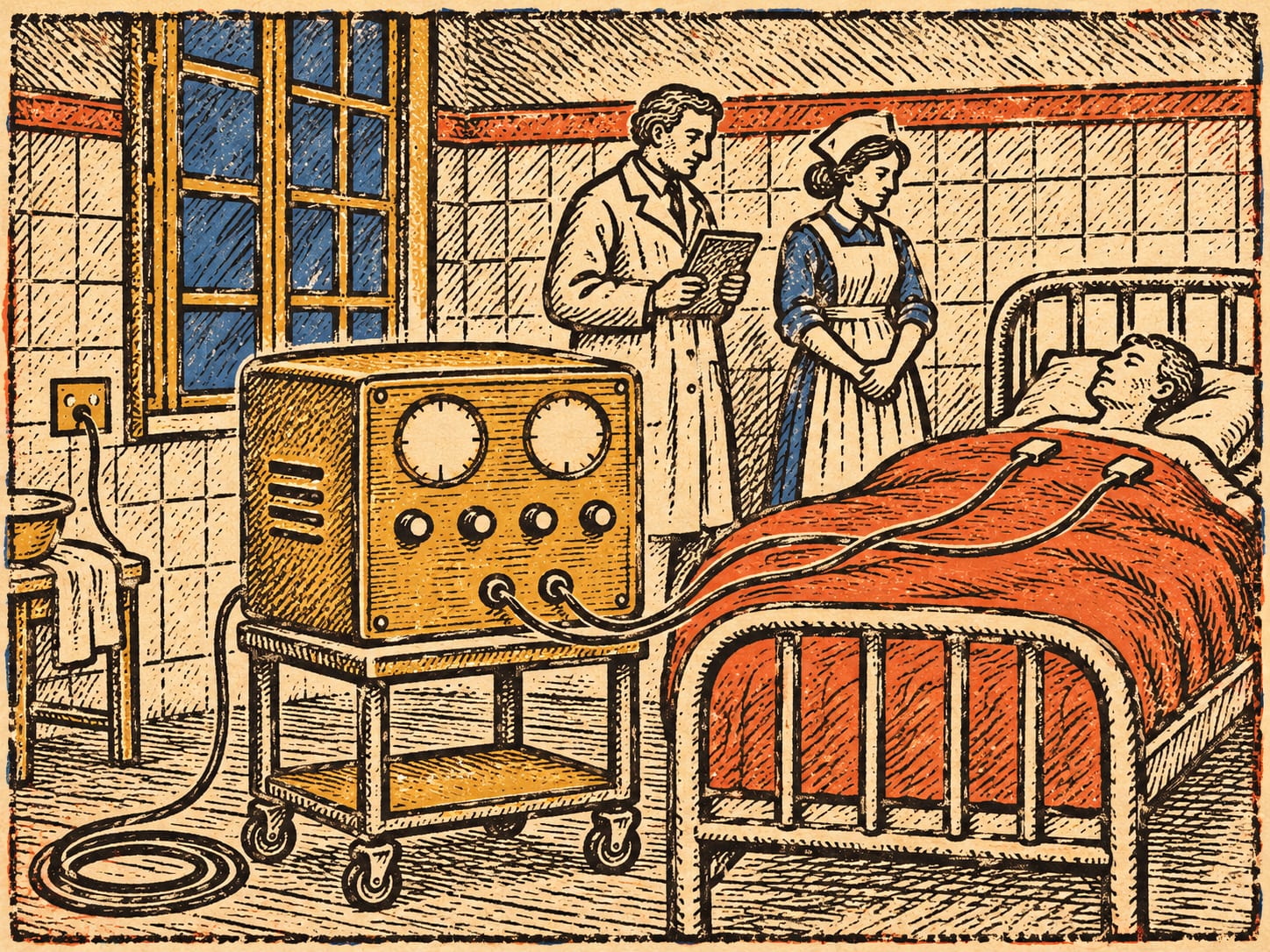
Paul M. Zoll reported successful clinical use of an external pacemaker in 1952, in the New England Journal of Medicine. His machine delivered 2-millisecond electrical pulses of roughly 75 to 150 volts through electrodes placed on the chest.
Zoll used it on patients in ventricular standstill. Two of them stayed alive through episodes that ran from hours to days.
The machine was large and stood beside the bed, tied to a wall outlet. Each pulse also made the chest muscles contract, and later histories describe the treatment as painful. Patients often needed sedation, and long use could burn the skin. A power cut could stop the pacing, and the live connection carried a risk of shock or of ventricular fibrillation. It could not be implanted.
A blackout in Minneapolis, 31 October 1957
On 31 October 1957, a power failure in Minneapolis threatened patients at the University of Minnesota Hospital who depended on large, mains-powered pacemakers. Surgeon C. Walton Lillehei asked Earl Bakken, an electrical engineer and co-founder of Medtronic, to build a portable alternative.
Bakken adapted a transistorized metronome circuit described in Popular Electronics. Within about four weeks he had built an external, wearable, battery-powered, transistorized pacemaker. It ran on batteries instead of a wall outlet and was small enough for a patient to wear.
Bakken described the build in a 1995 recorded interview held by the Minnesota Historical Society: "I just plagiarized that circuit, put it in a box and brought it over to the university." The metronome's adjustable pulse rate was what made it fit for sending impulses to a heart.
The blackout came in 1957, but the University of Minnesota dates the first clinical use of Bakken's wearable pacemaker to 1958. Medtronic later made the device and sold it internationally.
From a hand crank to a leadless pacemaker
- 1932
Albert Hyman develops a spring-wound, hand-cranked device that sends impulses through a needle into the heart
- 1950
John Hopps builds a vacuum-tube pacemaker at Canada's National Research Council
- 1952
Paul Zoll reports external pacing through chest electrodes
- 31 October 1957
A Minneapolis power failure leads Earl Bakken to build a battery-powered wearable pacemaker
- 8 October 1958
Åke Senning implants Rune Elmqvist's generator in Arne Larsson at Karolinska Hospital
- 1960
William Chardack implants the Greatbatch design in a human patient at the Buffalo VA Hospital
- 1973
Cardiac Pacemakers, Inc., introduces a clinically reliable lithium-powered implantable pacemaker
- 28 May 1976
The Medical Device Amendments become law in the United States
- 6 April 2016
The FDA approves Medtronic's Micra, a leadless pacemaker
Stockholm, 8 October 1958
Rune Elmqvist was born in Lund, Sweden, in 1906. He earned a medical degree in 1939 but never practised. He worked as an engineer and instrument builder, and at Elema-Schönander in Stockholm he became development chief. He also built recording equipment, including the Mingograf ink-jet recorder. Åke Senning, born in 1915, was a cardiac surgeon who had trained under Clarence Crafoord at Karolinska Hospital and helped carry out early European open-heart operations with the heart-lung machine.
Arne Larsson was 43. He had complete heart block and repeated fainting attacks, known as Stokes-Adams attacks. His wife, Else-Marie, pressed the team to build a device for him. Senning later recalled that she came to his laboratory on 6 October 1958 and demanded, "So make one!" That wording is Senning's memory, and the 2003 clinical history of Larsson, based on interviews with both Larssons, also records her persistence.
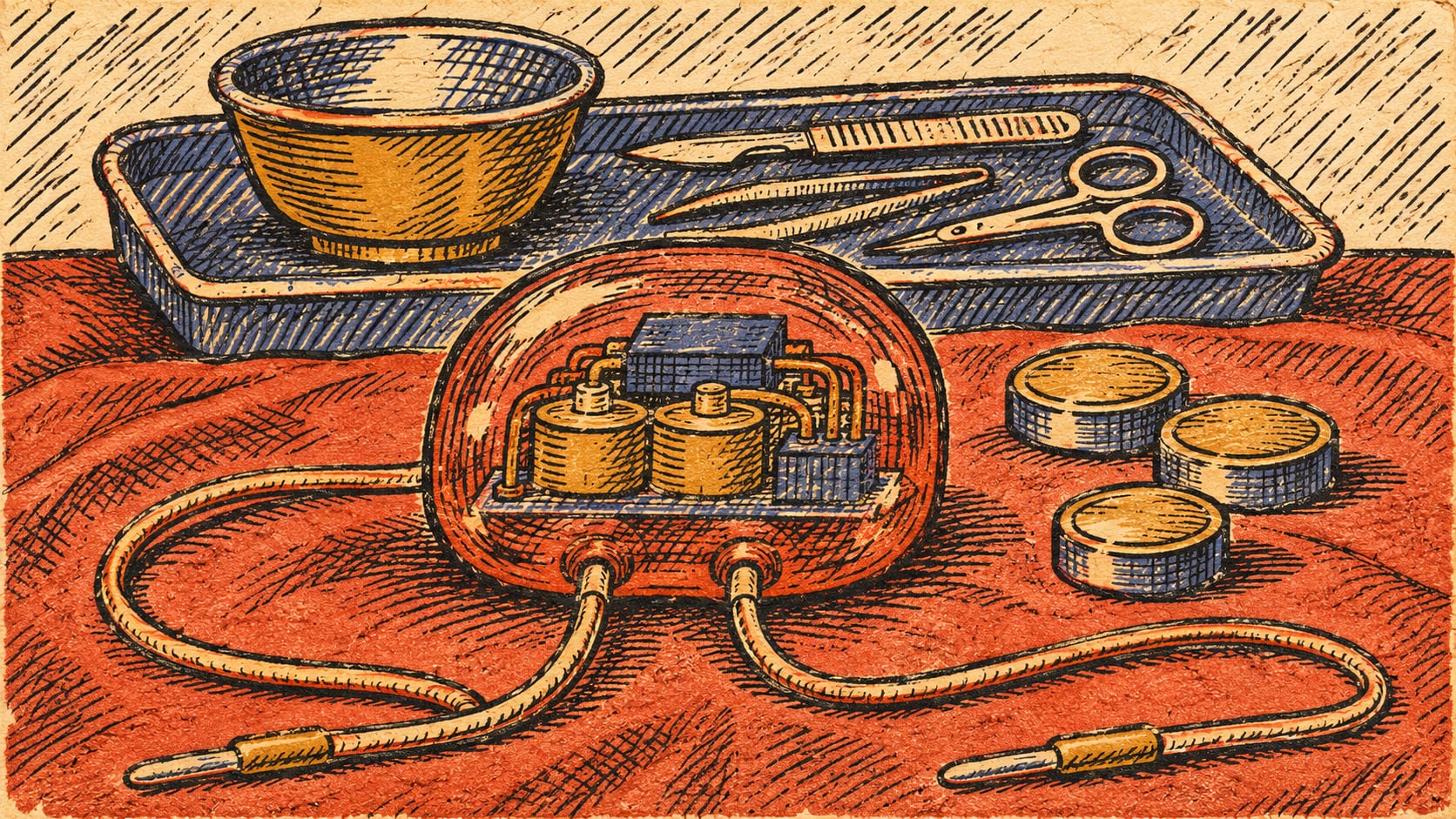
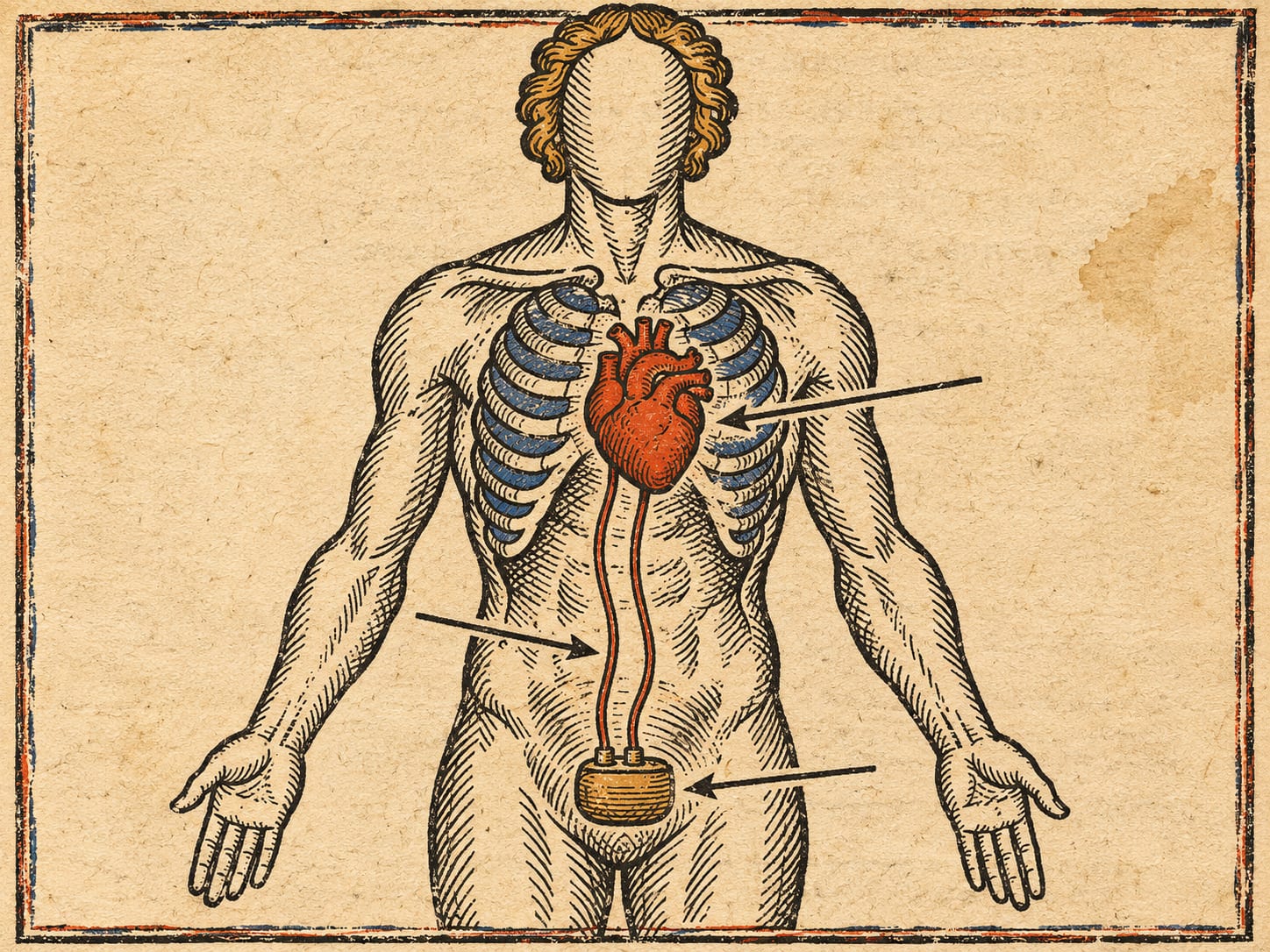
On 8 October 1958, in the evening, Senning operated at Karolinska Hospital. He later wrote that the team chose the evening to avoid publicity. He opened the chest and attached electrodes directly to the heart, then placed Elmqvist's generator under the skin of the abdominal wall. It held a transistorized pulse generator and rechargeable nickel-cadmium cells. It was the first fully implanted pacemaker.
The device worked for only hours. Most accounts say about three, while Senning himself wrote in a 1983 retrospective, "On the 8th October 1958, in the evening, when there were no extra people in the theatre, I implanted the first pacemaker, but it lasted only 8 hours." He blamed probable damage to the output transistor or capacitor while the catheter was being handled. A replacement went in the next morning, and that second device ran for several days to about a week.
Elema-Schönander took the Elmqvist-Senning design to market after the 1958 implant. Siemens acquired the company in 1959, and it kept building pacemakers as Siemens-Elema. Senning later became director of the Surgical University Clinic in Zurich, and he died there in 2000. Elmqvist died in 1996.
Forty-three more years
Larsson needed many more devices over the years. He received more than 22 replacements, and counts of 25 replacements or 26 devices in total are common. He lived an active life.
At a pacing symposium in Rome in December 2000, he said, "What was done 1958 in Stockholm, with help of doctors Senning and Elmqvist, and in a small way, by myself, was a sensation." Then he added, "It is still a sensation, for the patient!"
He died on 28 December 2001, at 86, about 43 years after the operation, of cancer unrelated to his heart or the pacemaker. Else-Marie told the Associated Press, "He knew that without the pacemaker, he would have died when he was 43 years old."
Greatbatch in Buffalo, and the resistor story
Wilson Greatbatch built a small, battery-powered implantable prototype in Buffalo in 1958. On 7 May 1958 it controlled a dog's heartbeat at the Buffalo Veterans Administration Hospital. He worked with surgeon William Chardack and physician Andrew Gage. In his 2000 oral history for the IEEE, Greatbatch said of that animal test, "It worked about four hours." He also said, "In two years I made fifty pacemakers."
In 1960, Chardack implanted the design in a person at the Buffalo VA Hospital. The patient was a 77-year-old man with complete heart block. The University at Buffalo names him as Harry Hennafeld and dates the operation to 15 April 1960. Other accounts give other names and dates, including 18 April and 6 June 1960. He lived about 18 months by one account and two years by another, and died of causes unrelated to the pacemaker.
The design used mercury-zinc batteries, transistor circuitry, epoxy sealing and electrodes connected to the heart. Chardack, Gage and Greatbatch reported a series of 15 patients in 1961, and one of them, a younger man who had collapsed at a rubber factory, later retrained as a hairdresser and lived for about 30 years. Medtronic licensed the design in 1961 and put it into production.
Greatbatch told a famous story about how it began. In his later accounts, he was building a heart-rhythm recorder when he reached for a 1-megohm resistor instead of a 10-kilohm one. The circuit gave off pulses that looked like a heartbeat, and he saw what it could do. The Heart Rhythm Society and the National Academy of Engineering repeat his version. It is the inventor's own telling, from years afterward.
Batteries and a lithium cell
Early implanted pacemakers commonly used mercury-zinc batteries, which often ran for about two years. Lithium-iodine batteries, developed in the late 1960s and introduced in clinics in the early 1970s, stretched that service life, cut the number of replacement operations and allowed smaller sealed generators.
Cardiac Pacemakers, Inc., founded in the early 1970s by former Medtronic employees, brought out a clinically reliable lithium-powered implantable pacemaker in 1973. That began the industry's move away from mercury-zinc.
When failures became law
The new devices failed in ways patients could not see coming. A 1975 Government Accountability Office report looked at the 1972 recall of General Electric pacemakers. It found that the FDA had not fully inspected the factory, had not collected and examined the recalled units, and had no safety standards or good-manufacturing criteria for devices this complex.
A Senate committee later reported that manufacturers recalled more than 24,000 pacemakers between 1972 and 1975, about one-fifth of those made in that time. The main defect was called "pacemaker runaway," often caused by body fluids getting into the device. The report tied the defects to 31 deaths and about 1,300 emergency removals. In 1976 and 1977, nearly 35,000 more were recalled, most of them Medtronic's.
Before 1976, U.S. device regulation was weak next to drug regulation, and the FDA generally could not demand proof of safety and effectiveness before a device went on sale. On 28 May 1976, the Medical Device Amendments, Public Law 94-295, became law. They sorted devices into three classes by risk, required premarket approval for high-risk devices, and added registration, manufacturing controls and recall powers. Pacemakers were treated as high-risk implants. FDA history says the pacemaker failures of 1972 and 1973 helped build support for the law.
Sensing, and a pacemaker with no wire
The devices got smarter too. Early ones fired at a fixed rate. A demand pacemaker senses the heart's own electrical activity and sends an impulse only when the natural rhythm falls below a programmed threshold. Later devices added programmable settings, telemetry, dual-chamber pacing and rate response.
On 6 April 2016, the U.S. Food and Drug Administration approved Medtronic's Micra Transcatheter Pacing System, the first FDA-approved leadless pacemaker. It is a self-contained device implanted directly in the right ventricle, with no wired lead running from a chest generator.
A 2014 European Heart Rhythm Association survey put the number of pacemakers implanted worldwide at more than 1.25 million a year. That figure rests on estimates from many countries, not a single registry.
Where the early devices sit today
The Smithsonian's National Museum of American History holds a Chardack-Greatbatch pacemaker, and also a Medtronic 5800 wearable pacemaker, the battery-powered external device from Bakken's 1958 work for Lillehei's surgical program. In Stockholm, the Tekniska museet shows Rune Elmqvist's 1958 implantable pacemaker and tells of Senning's operation on Arne Larsson.
So, who gets the credit?
It depends on the question. For the machine and its name, the credit goes to Albert Hyman in 1932. For a pacemaker a patient could wear, it goes to Earl Bakken, who built it within about four weeks of the Minneapolis blackout.
For the first fully implanted pacemaker, it goes to Rune Elmqvist, who built the generator, and Åke Senning, who put it in Arne Larsson on 8 October 1958. For a battery-powered implantable design that Medtronic put into production in 1961, it goes to Wilson Greatbatch and William Chardack. For a clinically reliable lithium-powered one, it goes to Cardiac Pacemakers, Inc., in 1973.
Larsson's first device failed within hours. He lived until 28 December 2001.
Sources
- "A brief history of cardiac pacing," PubMed Central
- "8 October 1958, D Day for the implantable pacemaker," PubMed Central
- Albert S. Hyman, "Resuscitation of the Stopped Heart by Intracardial Therapy," Archives of Internal Medicine, 1932
- "Reconstruction of Hyman's Second Pacemaker," Pacing and Clinical Electrophysiology, 2005
- Paul M. Zoll, New England Journal of Medicine, 13 November 1952
- Paul Zoll, MD, Heart Rhythm Society
- Wilson Greatbatch, Heart Rhythm Society
- Wilson Greatbatch, National Academy of Engineering
- Wilson Greatbatch oral history, IEEE History Center
- Earl Bakken interview, Minnesota Historical Society oral history project
- National Research Council Canada, history 1946 to 1964
- University of Minnesota cardiovascular history, 1957 to 1958
- Medtronic company history
- The ELEMA Club, Sundbyberg City Museum, and Tekniska museet, "Pacemaker"
- "Lessons from the First Patient with an Implanted Pacemaker: 1958 to 2001," Pacing and Clinical Electrophysiology, 2003
- Associated Press obituary of Arne Larsson, Los Angeles Times, 16 January 2002
- Lars Rydén, "European Perspectives," Circulation
- "The invention of the cardiac pacemaker," U.S. Department of Veterans Affairs
- University at Buffalo, Wilson Greatbatch exhibit
- Smithsonian National Museum of American History, Chardack-Greatbatch and Medtronic 5800 pacemaker records
- "Cardiac Pacing, 1960 to 1985," Circulation
- U.S. Senate Special Committee on Aging report on the pacemaker industry; Government Accountability Office report on defective General Electric pacemakers; Medical Device Amendments of 1976, Public Law 94-295; FDA history of device regulation
- European Heart Rhythm Association survey, Europace, 2014
- FDA approval of the first leadless pacemaker
Watch the full story on the Flashback Fables YouTube channel, and send it to someone who would love it.