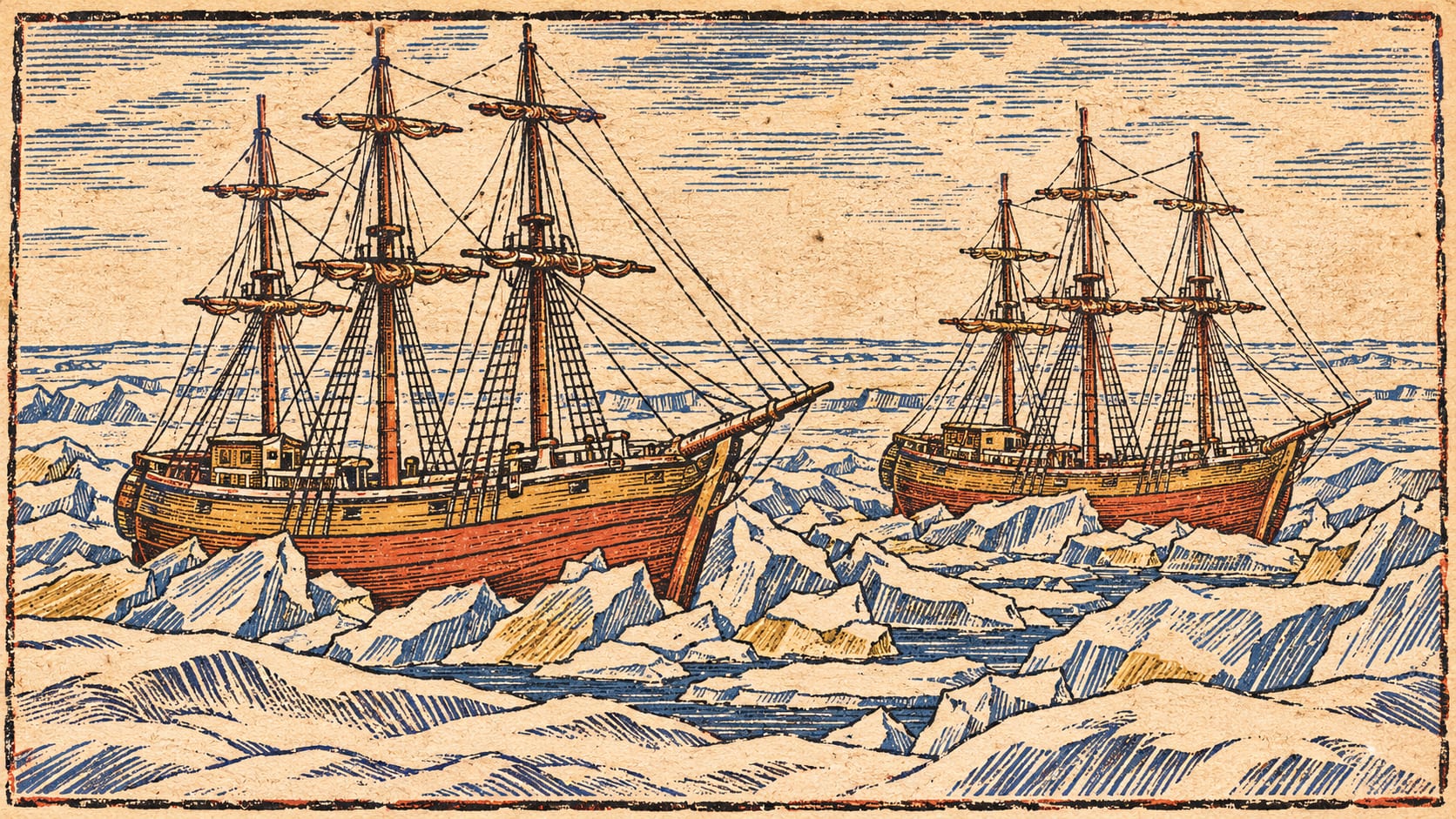

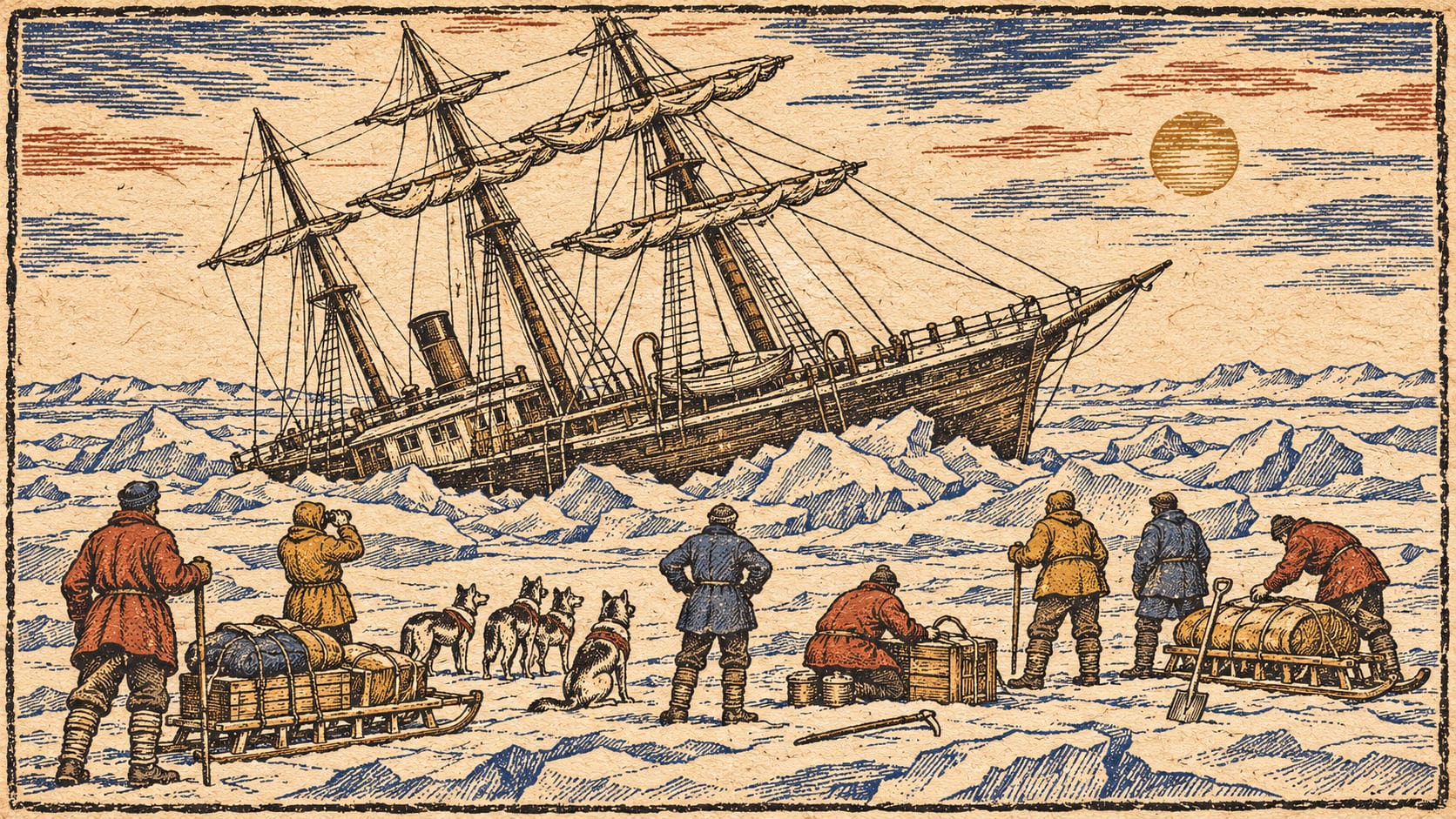
On 27 October 1915, Ernest Shackleton ordered his men to leave the ship. Pressure from the Weddell Sea pack ice had been crushing Endurance for months, and it was past saving. It sank on 21 November.
Every man in the ship's company of 28 lived. They crossed the ice, reached Elephant Island by lifeboat, and were taken off by a Chilean Navy tug on 30 August 1916. Three men died on the same expedition, but they belonged to a separate party on the far side of the continent.
The story also carries a famous advertisement that nobody can produce, and a wreck found in 2022 more than 3,000 metres down.
The plan that went wrong
The Imperial Trans-Antarctic Expedition, led by Shackleton from 1914 to 1917, aimed to cross the Antarctic continent by land, from the Weddell Sea to the Ross Sea by way of the South Pole. A second group, the Ross Sea Party, was to lay supply depots on the opposite side of the continent.
Endurance left Grytviken on South Georgia on 5 December 1914. On 18 January 1915 she became beset in the Weddell Sea, held fast by the ice.
Twenty-eight men
The Weddell Sea party held 28 men, and their ages at the start of the expedition ran from 19 to 47. Shackleton was 40. Frank Wild, his second-in-command, was 41, and Frank Worsley, the captain, was 42. Alfred Cheetham, the third officer, was 47, and the able seaman Thomas McLeod was 45.
The youngest was Perce Blackborow, 19, who joined as a stowaway and became a steward. The carpenter, Harry McNish, 40, went by the nickname "Chippy," which is what a ship's carpenter is often called. Mrs Chippy, the ship's cat, travelled with them but was not one of the 28.
How Endurance was lost
Through the months of 1915 the pack ice pressed on the ship, damaged her and crushed her bit by bit. On 27 October the pressure tore away the rudder, the sternpost and part of the keel, and Shackleton ordered the abandonment.
Three men wrote it down that day. James Wordie, the geologist: "The rudder and propeller were buried in a maze of pressure blocks." McNish: "the keel was ripped off." Worsley described the beams and timbers "groaning & cracking all round us like pistol shots."
The ship stayed trapped in the ice until she sank on 21 November 1915, at about 5 p.m. local time. Frank Hurley wrote in his diary: "The funnel collapsed & the stern after rearing high in the air disappeared below the ice ... From the time the ice opened she sank in 10 minutes." Thomas Orde-Lees wrote the same day: "there was our poor ship a mile and a half away breathing her last."
Hurley photographed her at the end, listing, partly under and then gone beneath the ice. His pictures show the ship's final condition.
Life on the ice
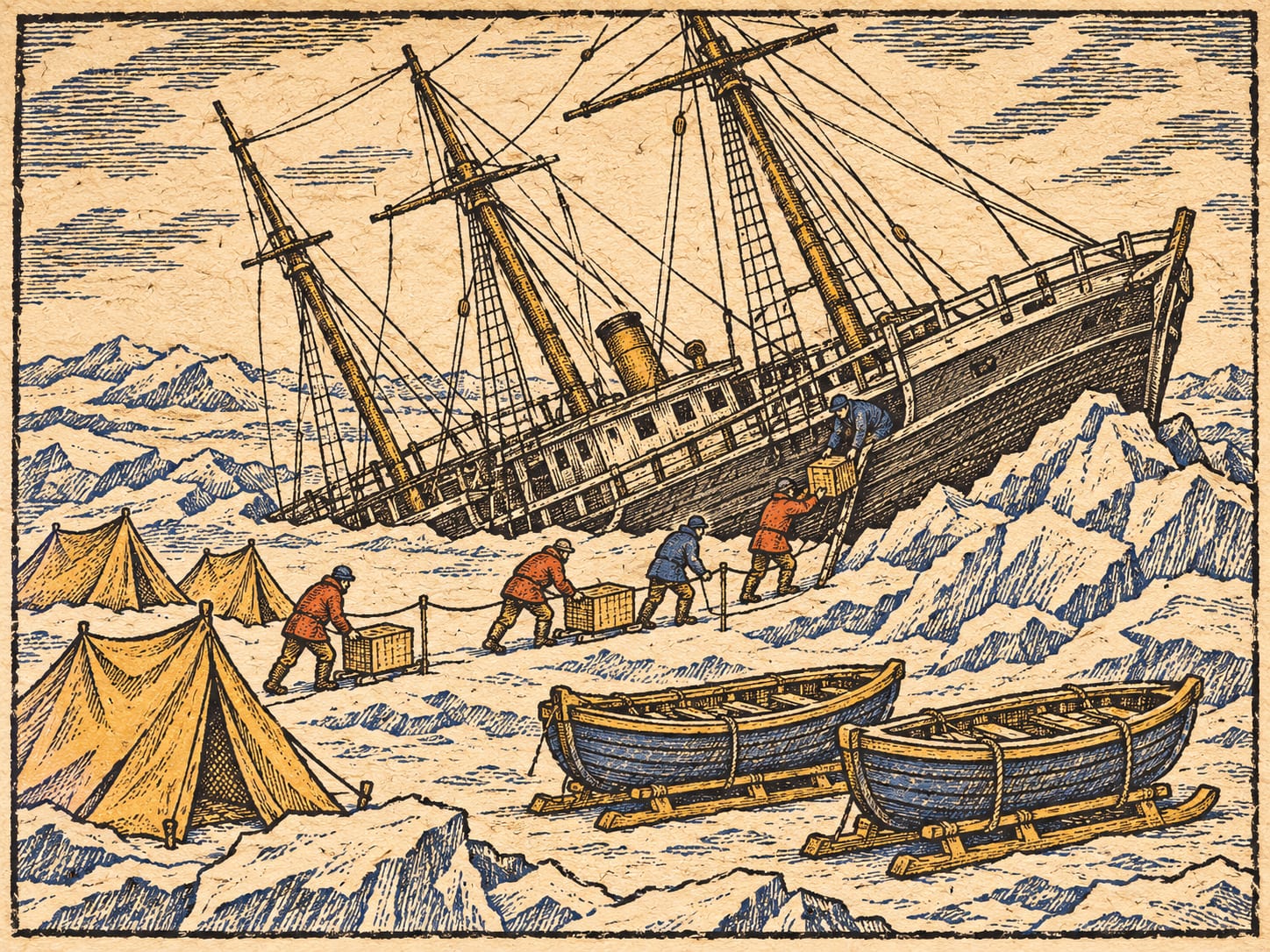
After the ship was lost, the 28 men of the Weddell Sea Party lived on drifting sea ice. They had tents, sledging equipment, provisions, the expedition's three lifeboats and the surviving dogs. At Ocean Camp they salvaged food, fuel, timber, clothing and instruments, and they waited for the ice to carry them north.
Small things filled the days. On 10 November 1915 Orde-Lees wrote: "Today the members of one tent expressed their indifference as to whether they had to share one bottle of Heinz's mustard dressing ... I found none of my tent-mates willing to forego the solid satisfaction of the bannock in favour of the somewhat ethereal condiment."
Food ran short. On 30 December Orde-Lees noted, "Food is short, the men weak." After the men gave up a march across the ice, they set up Patience Camp, and he wrote on 2 January 1916: "We have called our new camp Patience Camp. Little is happening, it is hot in the sun and we sink in the snow, we have enough seals for now."
The dogs paid for it. An entry for 14 January 1916 reads: "The dogs have been consuming a seal each day, this amount lasts the men 3 days so today we shot 4 of the teams, 30 magnificent sledgers." The next day the remaining dogs recovered about 900 pounds of provisions from Ocean Camp. On 16 January seven more dogs were shot.
The men kept up their spirits with reading, games, songs and concerts.
Elephant Island
When the ice broke up, the men launched the lifeboats. They reached Elephant Island on 15 April 1916. The island was uninhabited and offered almost no hope of rescue.
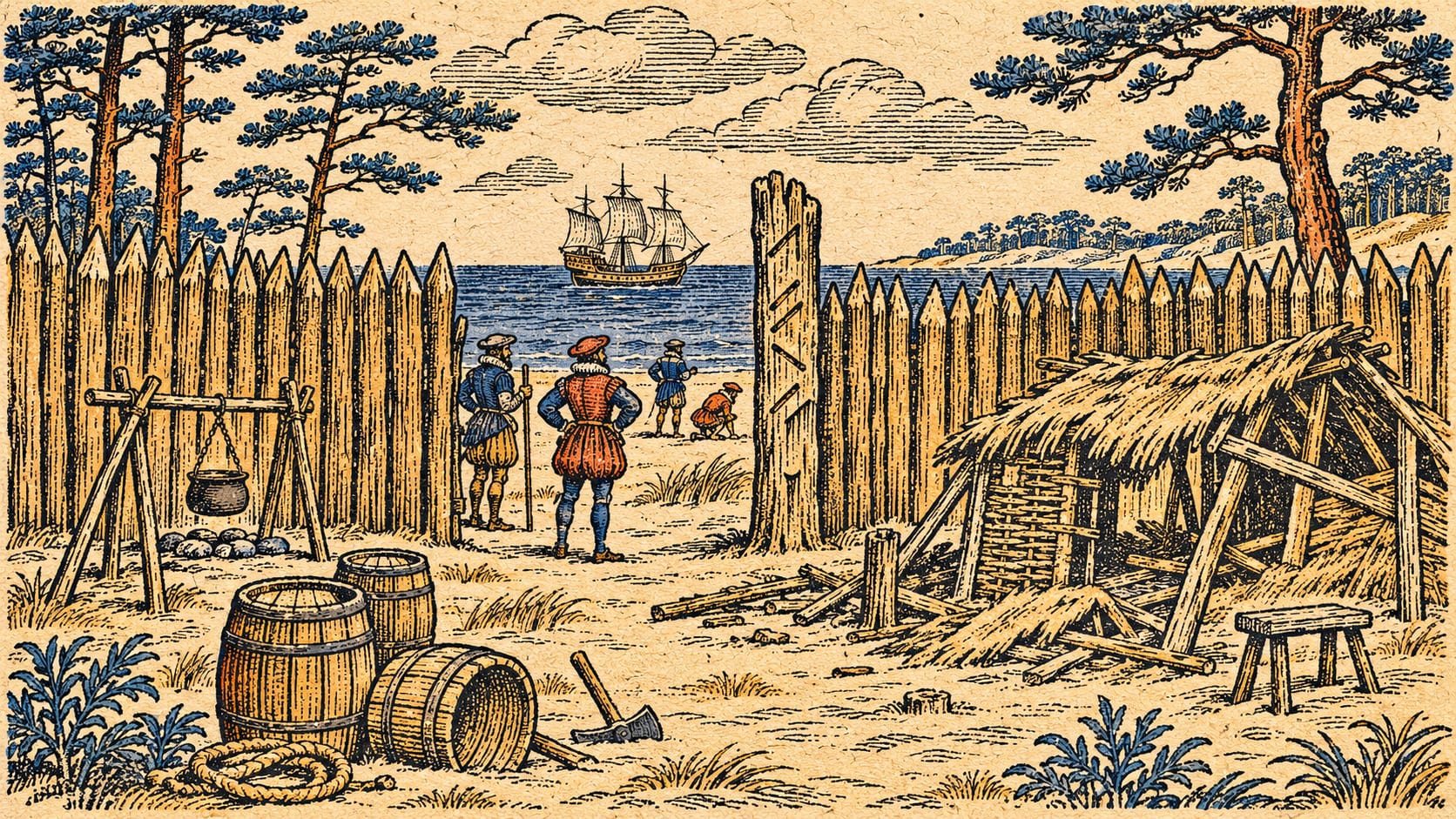
Frank Wild took charge of 22 men there after the James Caird left. They sheltered under the two remaining lifeboats, turned upside down and propped with stones, snow and scraps of tent fabric. The hut was cramped, damp and smoky, and they burned seal blubber for fuel. They lived on seal, penguin, limpets, seaweed, penguin eggs when they could get them, and what was left of the expedition's rations, all under strict routines. Hurley photographed Ocean Camp, the boats, the men and the camp on Elephant Island.
Wild kept the men busy and told them again and again to be ready for Shackleton's return. The Saturday-night concerts carried on, Leonard Hussey played the banjo, and the men made up topical songs.
The James Caird voyage
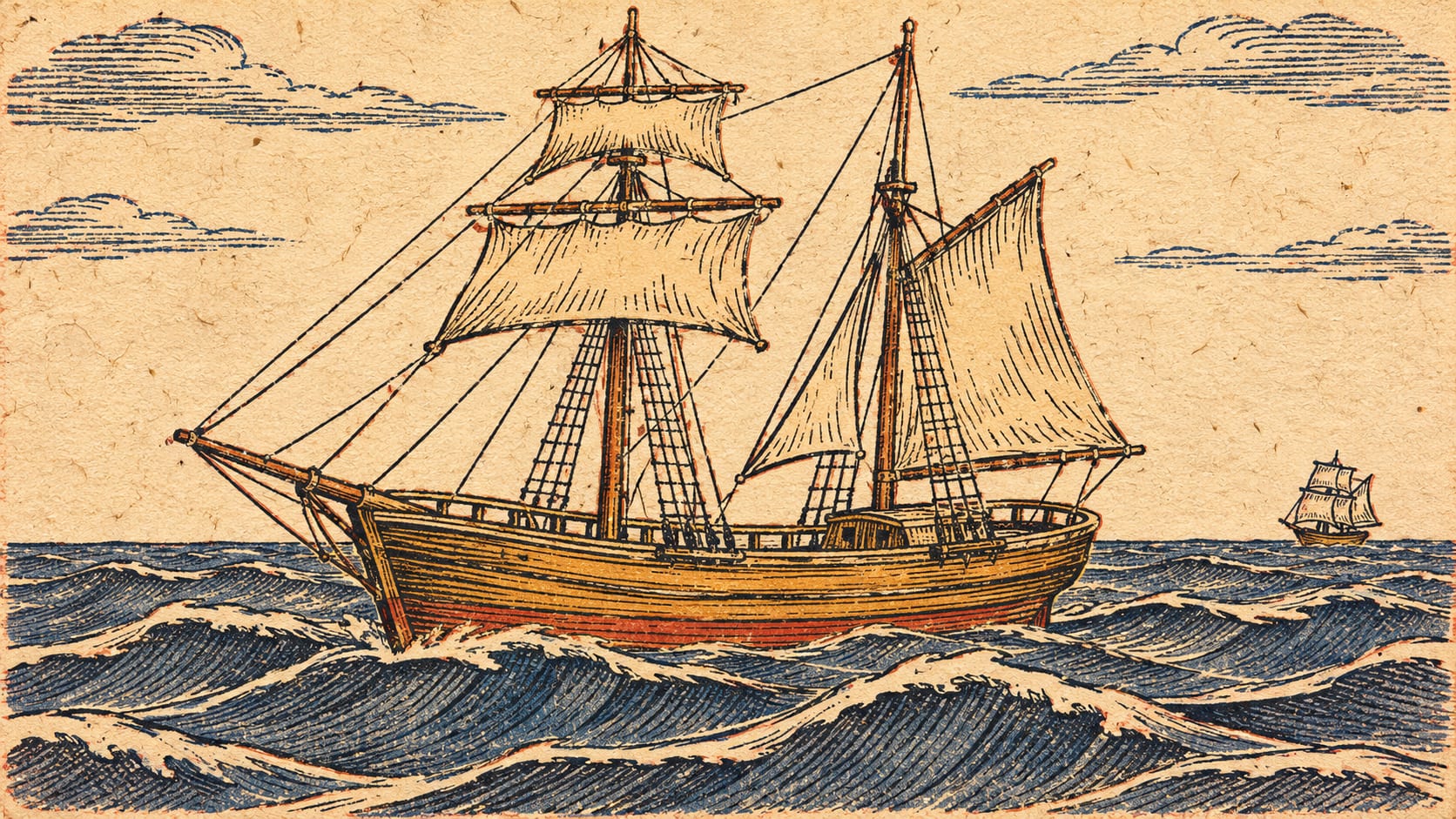
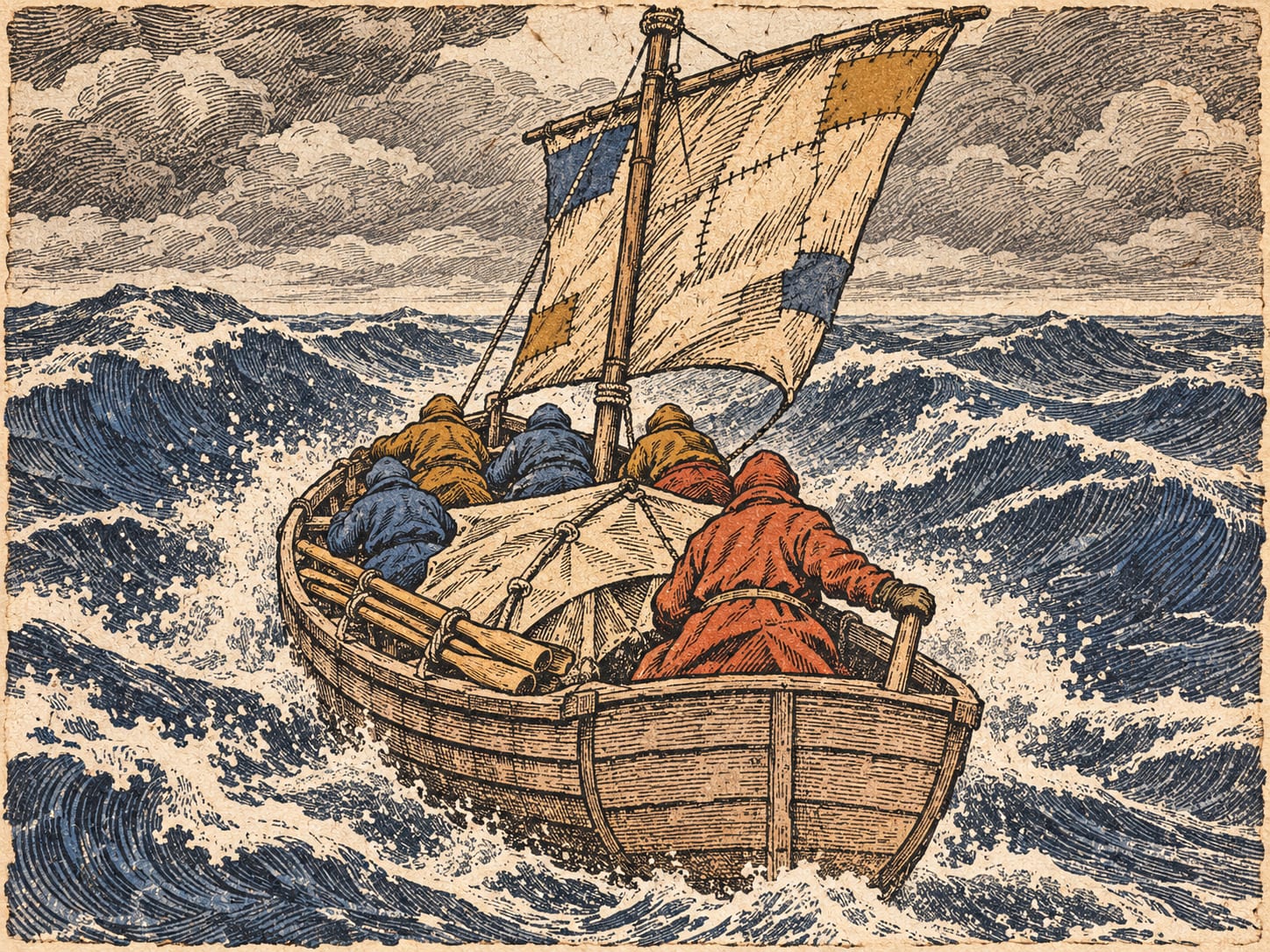
The island offered little prospect of rescue, so Shackleton went for help. On 24 April 1916, he, Frank Worsley, Tom Crean, Harry McNish, Tim McCarthy and John Vincent launched the James Caird from Elephant Island. The boat was a modified 22.5-foot lifeboat, and their target was South Georgia, about 800 nautical miles away.
That distance, about 1,300 kilometres, is an estimate drawn from the planned route. Worsley had to find the way across open ocean with a sextant, and the sky rarely helped. His journal for 24 April reads: "The first sunny day with a clear enough horizon to get a sight for rating my chronometer." In sixteen days he got only four usable sun sights, on 26 April, 3 May, 4 May and 7 May. The rest was dead reckoning, worked out from estimated course, speed and drift.
The six men sighted South Georgia on 8 May and reached King Haakon Bay on 10 May 1916.
The whaling station at Stromness lay across the island's mountainous interior. Shackleton, Worsley and Crean crossed the interior of South Georgia on 19 and 20 May 1916, with no maps, no tents and no sleeping bags, and only limited climbing equipment. They reached Stromness.
Four tries to reach Elephant Island
Reaching the whaling station did not end it. Twenty-two men were still on Elephant Island, and Shackleton made four attempts to reach them.
The British whaler Southern Sky made the attempt from 23 to 31 May 1916, and ice blocked the route. The Uruguayan vessel Instituto de Pesca No. 1 tried in June 1916. The sealer Emma tried from July into August 1916.
The fourth ship was the Chilean Navy tug Yelcho, commanded by Luis Pardo Villalón. She reached Elephant Island on 30 August 1916 and took off all 22 men. They had been on the island since 15 April, more than four months. The Chilean Navy presents the rescue as a major national maritime achievement.
The day the Yelcho came
The Yelcho reached Elephant Island through fog and loose bergs, and Chilean Navy records put her arrival at about 12:30 p.m. on 30 August. The large boat was lowered with four men, and Shackleton and Tom Crean went ashore in it.
Shackleton told the story of the sighting himself. Marston saw the ship and yelled "Ship O!" The men in the hut, Shackleton wrote, "mistook it for a call of 'Lunch O!'" By then only about two days of seal and penguin meat remained.
The men came aboard in two groups, carrying their personal belongings, scientific materials, photographs and films. Shackleton's report, printed in the Western Daily Press on 5 September 1916, said: "On August 30, after steering in a fog through numerous stranded bergs, I reached Wild's Camp, all well, at one p.m. At two p.m. we were homeward bound." The party left to beat the new pack ice that was forming.
Wild later wrote that the men meant to keep 30 August as a festival for the rest of their lives, and Hurley's diary called it "day of wonders." Wild also said: "It was the luckiest thing in the world that the YELCHO came when she did."
What happened to the Ross Sea Party
The Ross Sea Party sailed in Aurora to the Ross Sea side of Antarctica to set up depots for the planned crossing. In May 1915, Aurora broke free from her moorings and drifted away, leaving ten men ashore without enough equipment.
The party laid the depots anyway. Three of the men died: Aeneas Mackintosh, Victor Hayward and Arnold Spencer-Smith. Aurora rescued the seven survivors on 10 January 1917.
Two parties, then, and two outcomes. All 28 men of the Weddell Sea Party, the men of Endurance, survived. In the separate Ross Sea Party, three men died.
The "Men wanted" advertisement
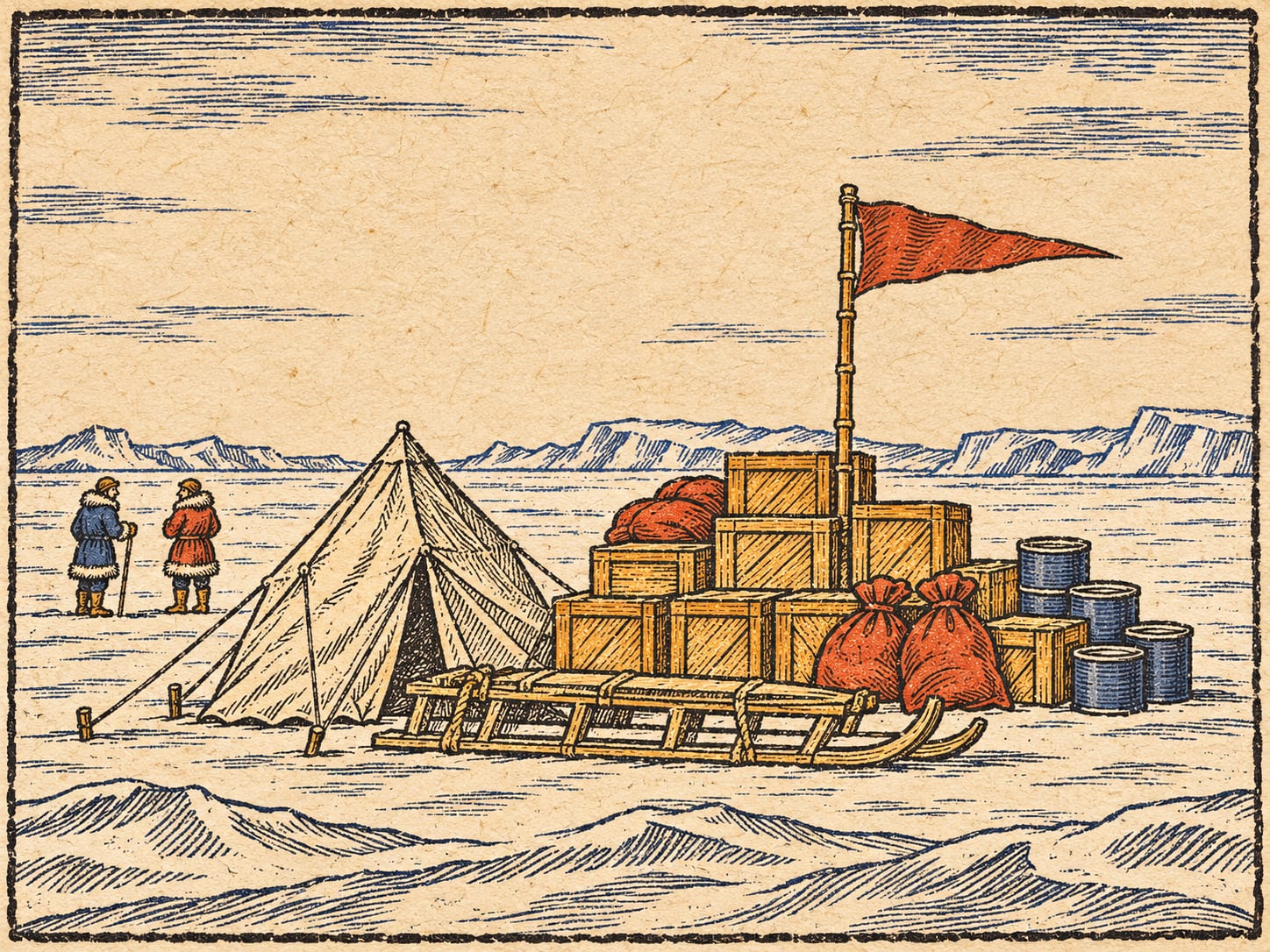
The most famous line attached to the expedition reads: "Men wanted for hazardous journey. Small wages, bitter cold, long months of complete darkness, constant danger, safe return doubtful. Honour and recognition in case of success."
It is a legend. Later tellers attached the words to Shackleton, and the wording became closely linked to him through retelling. No original newspaper advertisement and no authenticated copy from the time survives.
The words may sum up the dangers fairly. They are not a document that Shackleton is known to have placed in a newspaper. The claims that thousands of men answered it, or that women applied, rest on no authenticated original either.
What became of the 28
All 28 survived the expedition, and then the First World War caught up with some of them. Tim McCarthy, one of the six in the James Caird, served aboard the tanker SS Narragansett. A German submarine sank her off the south coast of Ireland on 16 March 1917. McCarthy was 28.
Alfred Cheetham went back to the Merchant Navy as second officer of the SS Prunelle. The submarine UB-112 torpedoed her two miles south-east of Blyth, in the North Sea, on 22 August 1918. Cheetham was 51.
Others lived long. Tom Crean retired to County Kerry and ran the South Pole Inn at Annascaul. Frank Wild went back to polar work and joined the Quest expedition, as did Worsley. Alexander Macklin and James McIlroy carried on as doctors. Hussey served in the Royal Air Force in the Second World War. Hurley became a major Australian war photographer. James Wordie became a leading British geologist and later master of St John's College, Cambridge. Charles Green lectured about the expedition, and Perce Blackborow stayed at sea in the Merchant Navy.
Shackleton died of a heart attack aboard Quest at Grytviken, South Georgia, on 5 January 1922, aged 47. At his wife's request he was buried at Grytviken on 5 March 1922.
What survives
The original James Caird belongs to Dulwich College in London. John Quiller Rowett gave it to the college in 1922, and it stands in the James Caird Hall in The Laboratory at Dulwich.
Hurley's negatives, prints, diaries and papers are held mainly in Australia. The National Library of Australia has more than 10,000 black-and-white negatives and colour transparencies, about 1,000 exhibition prints, albums, maps, diaries and papers, and the State Library of New South Wales holds his diaries, including the entry on the sinking. The Scott Polar Research Institute in Cambridge has most of Shackleton's personal collection. It also displays a spar from Endurance that served as the distress-signal flagpole on Elephant Island.
Finding the wreck in 2022
The ship lay lost for more than a century. The Endurance22 expedition, organized by the Falklands Maritime Heritage Trust, with John Shears leading it in the field and Mensun Bound as Director of Exploration, found her on 5 March 2022.
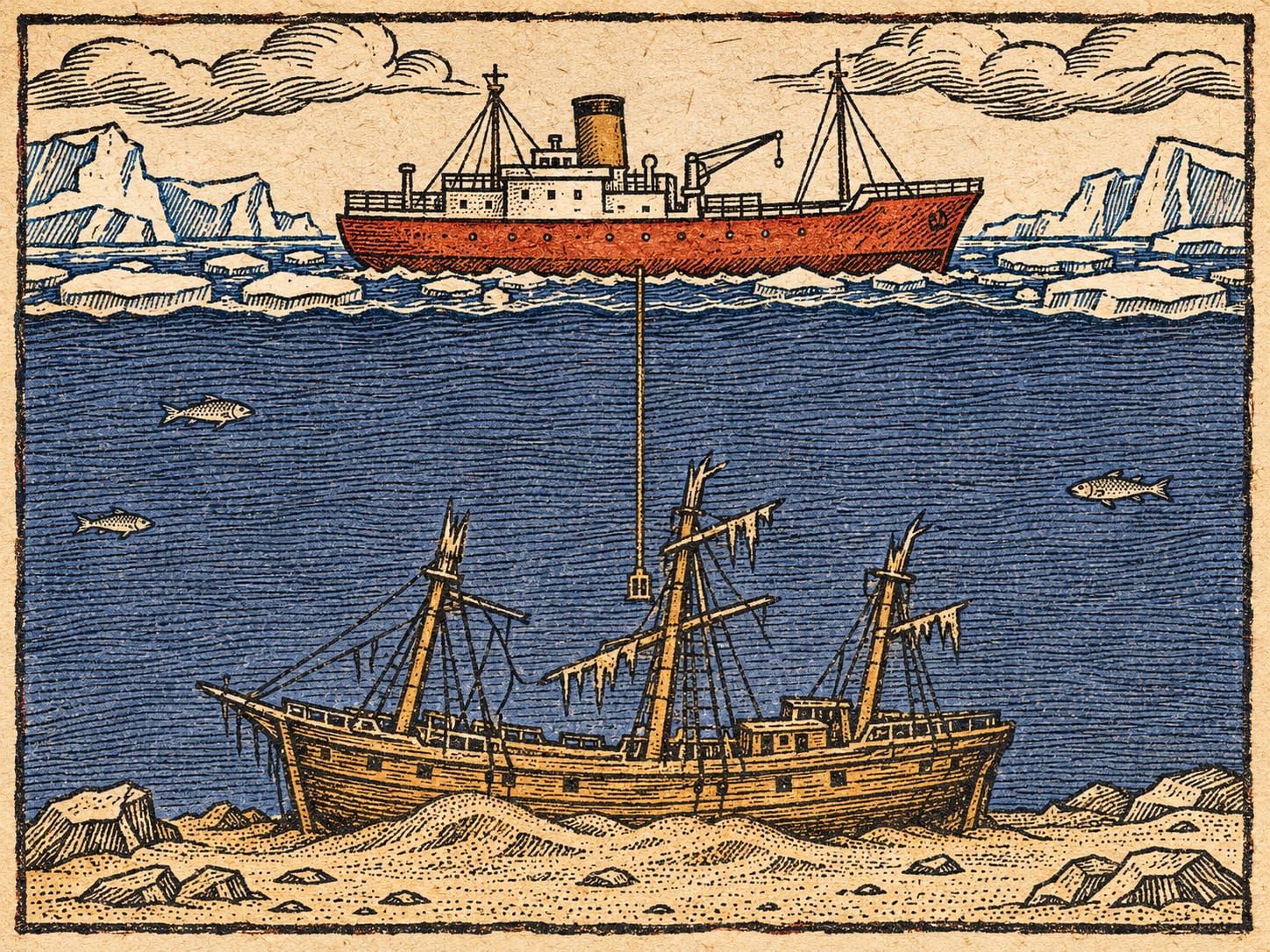
The team worked from the South African polar research vessel S.A. Agulhas II. Saab Sabertooth underwater vehicles searched for the wreck and then surveyed it with high-definition cameras, side-scan sonar and laser scanning. The survey gave the team extensive photographs, a three-dimensional model and photogrammetric data without touching the ship.
Endurance lies in the Weddell Sea at a depth of 3,008 metres, about four miles south of the position Frank Worsley recorded in 1915. She sits upright, intact and remarkably well preserved. The name "Endurance" shows in an arch across the stern beneath the taffrail, with the ship's polestar emblem.
The site is a Historic Site and Monument under the Antarctic Treaty system, so the wreck stays undisturbed while it is documented and studied. The expedition's environmental evaluation called for underwater vehicles to search and survey, and rated the impact as minor or transitory.
The date carries a coincidence. The survey team found Endurance on 5 March 2022, exactly a hundred years after Shackleton was buried at Grytviken on 5 March 1922.
Endurance, from South Georgia to the seabed
- 5 December 1914
Endurance leaves Grytviken, South Georgia
- 18 January 1915
The ship is beset in the Weddell Sea ice
- May 1915
Aurora breaks free from her moorings on the Ross Sea side, leaving ten men ashore
- 27 October 1915
Shackleton orders the men to abandon the ship
- 21 November 1915
Endurance sinks
- 14 January 1916
Four dog teams are shot as food runs short at Ocean Camp
- 15 April 1916
The men reach Elephant Island by lifeboat
- 24 April 1916
The James Caird leaves Elephant Island with six men
- 10 May 1916
The James Caird reaches King Haakon Bay, South Georgia
- 19 to 20 May 1916
Shackleton, Worsley and Crean cross South Georgia to Stromness
- 30 August 1916
The Yelcho rescues all 22 men from Elephant Island
- 10 January 1917
Aurora rescues the seven survivors of the Ross Sea Party
- 5 January 1922
Shackleton dies aboard Quest at Grytviken
- 5 March 1922
Shackleton is buried at Grytviken
- 5 March 2022
Endurance22 finds the wreck
Sources
- "Shackleton timeline and historical overview," Royal Geographical Society
- "The Imperial Trans-Antarctic Expedition," Scott Polar Research Institute
- Shackleton's own book South, Library of Congress
- Frank Hurley photographs, Library of Congress
- "Marooned on Elephant Island," State Library of New South Wales, and the Frank Hurley diaries, State Library of New South Wales
- "Why did Endurance sink?" Polar Record, Cambridge University Press
- Thomas Orde-Lees diary excerpts and expedition diary extracts, Cool Antarctica
- Endurance crew list, Royal Geographical Society
- James Caird lifeboat record, National Library of New Zealand, and "Navigation of the James Caird," Canterbury Museum
- "Voyage of the James Caird," James Caird Society
- Elephant Island rescue timeline, South Georgia Heritage Trust
- "A 110 años de un rescate imposible," Armada de Chile, and the Yelcho article in Revista de Marina, Chilean Navy
- "HMS Protector marks centenary of the rescue of the crew of Endurance," UK Government, reproducing the Western Daily Press report of 5 September 1916
- James Caird Society memorial account of Tim McCarthy, and the Hull War Memorial record for Alfred Cheetham
- "The James Caird today," James Caird Society, and "The James Caird," Dulwich College
- Hurley Collection, National Library of Australia
- Endurance22 interactive timeline, Royal Geographical Society
- "Endurance found on 5 March 2022," Falklands Maritime Heritage Trust, and Endurance22 survey methods
- Endurance22 initial environmental evaluation, Antarctic Treaty System
- "Safe Return Doubtful," Gonville and Caius College, University of Cambridge
Watch the full story on the Flashback Fables YouTube channel, and send it to someone who would love it.