
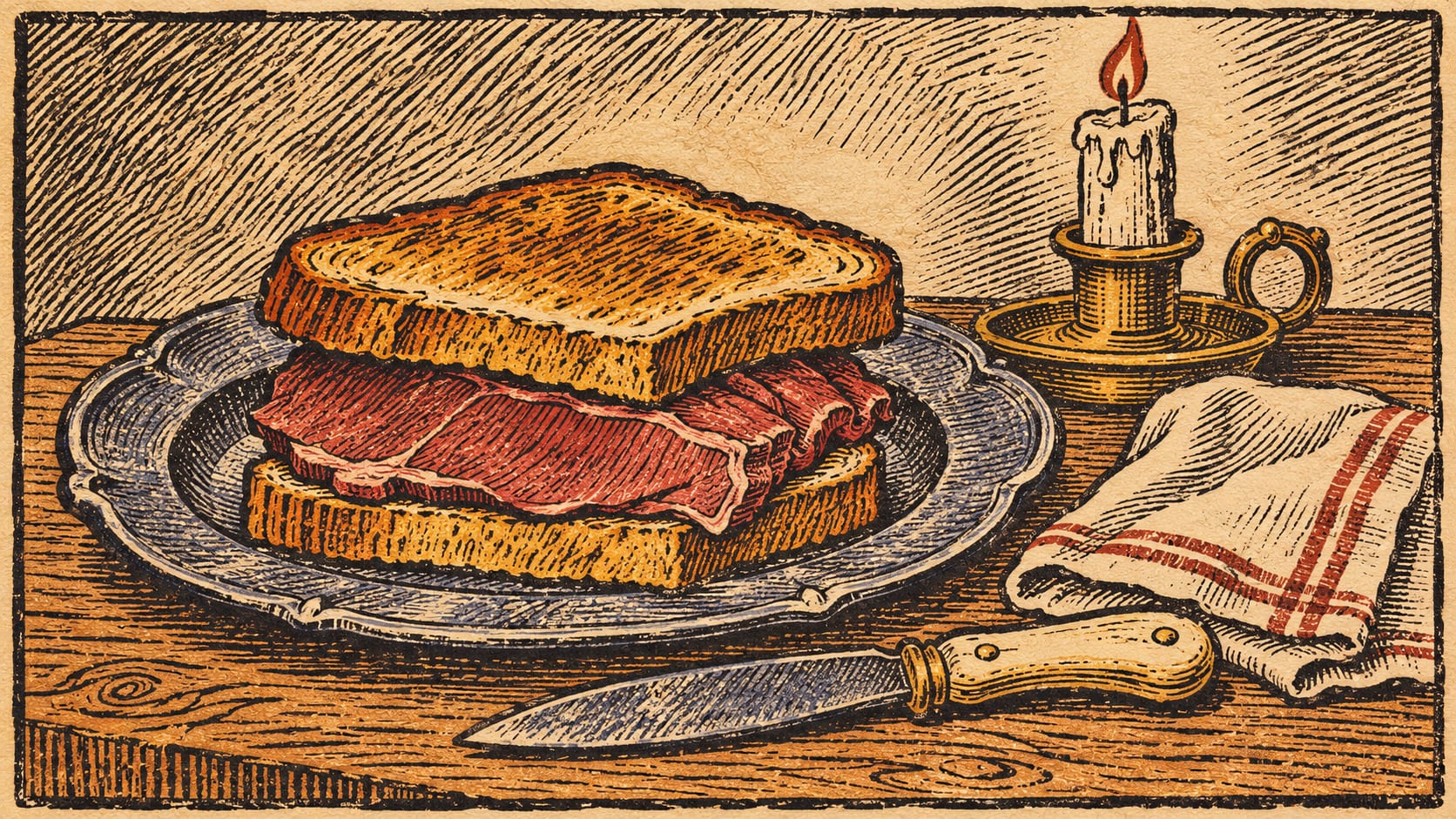
On 24 November 1762, Edward Gibbon wrote in his London journal that twenty or thirty socially prominent men at a club were eating "a bit of cold meat, or a Sandwich." The name was already in use, and it is credited to the title of John Montagu, 4th Earl of Sandwich.
The famous story of how the food began, a gambler who would not leave his table, comes from a French book published eight years after Gibbon's entry. It never names Montagu.
A biographer offers a plainer reason, and the word itself has an older home, a sandy harbour in Kent. The route runs from that harbour, to an earldom, to a dinner table, and then around the world.
Who John Montagu was
John Montagu was born in London on 13 November 1718, by the Julian calendar then used in Britain, before the 1752 calendar switch. He became the 4th Earl of Sandwich in 1729, aged ten, when his grandfather died. He went to Eton and Trinity College, Cambridge, travelled through the Ottoman Empire, and became a statesman, a naval administrator, a diplomat and a patron of music.
His public career ran through some of the biggest posts in government.
- Lord of the Admiralty, 1744 to 1746.
- First Lord of the Admiralty in 1749 to 1751, in 1763, and from 1771 to 1782.
- Minister plenipotentiary at the Treaty of Aix-la-Chapelle, 1748.
- Secretary of State, 1763 to 1765 and 1770 to 1771.
- Postmaster General, 1768 to 1771.
He died on 30 April 1792. His career makes him a prominent politician and naval administrator. It does not make him the inventor of putting meat between bread.
A sandy harbour in Kent
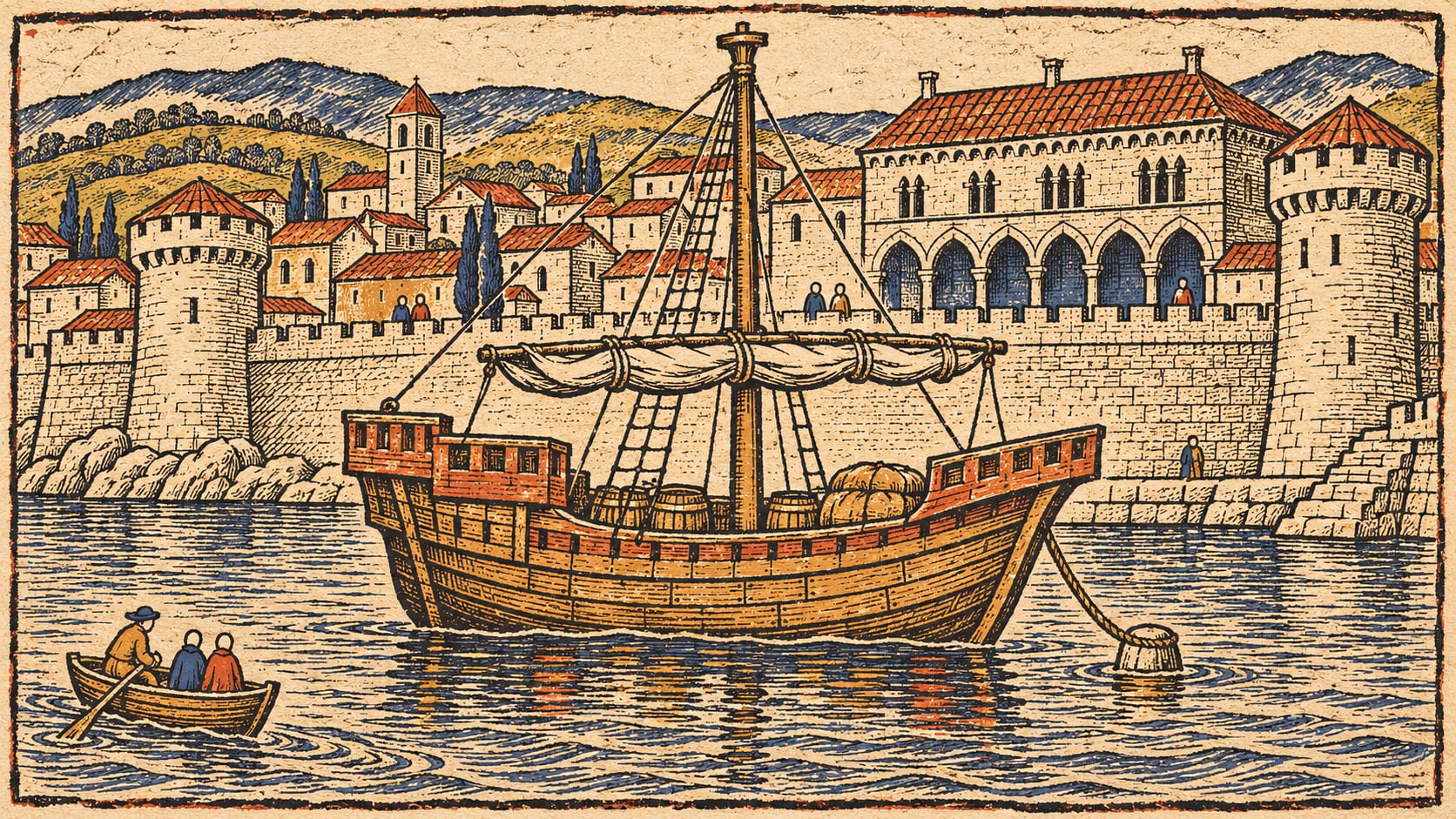
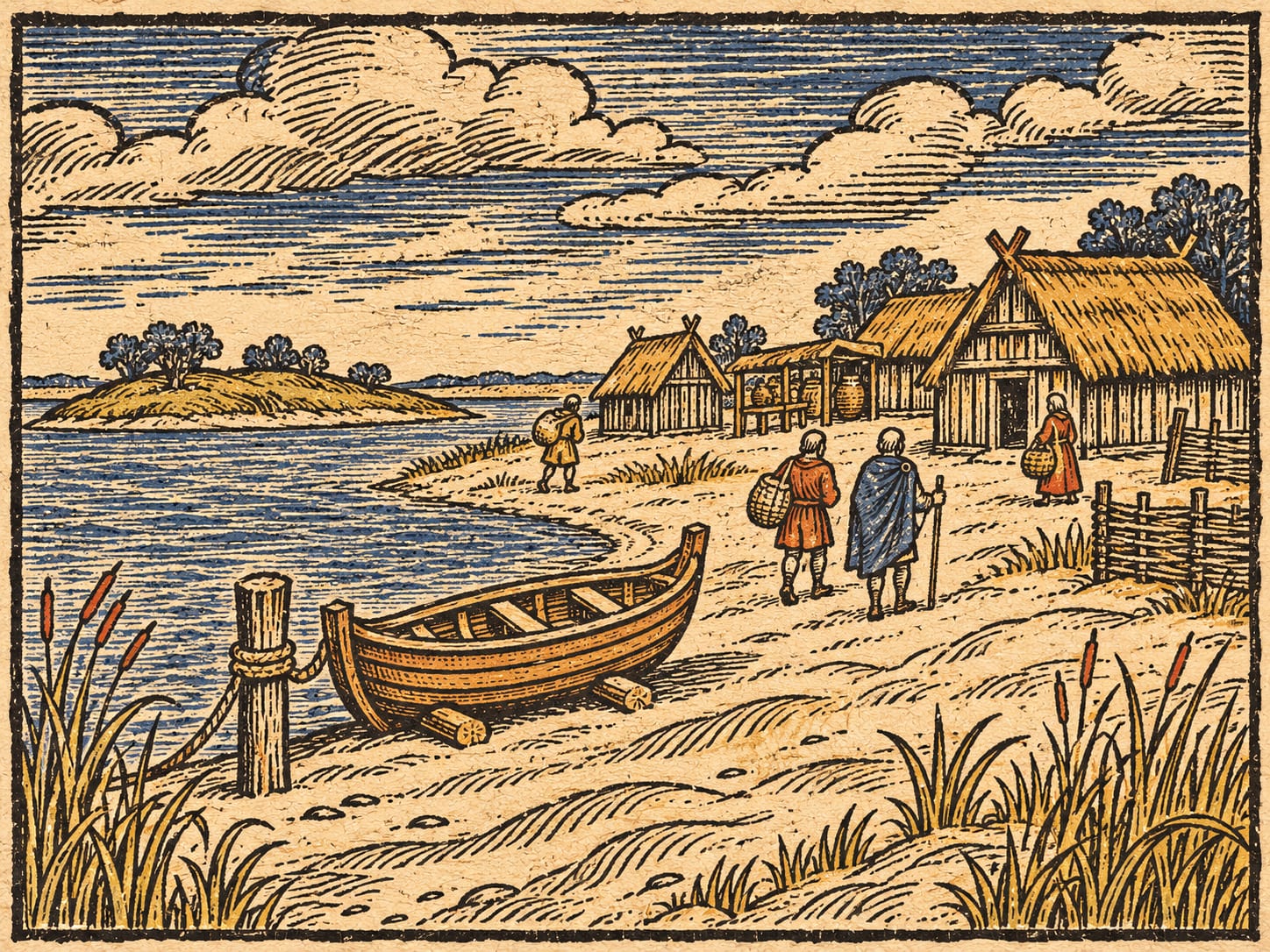
The town of Sandwich in Kent has a much older name than the food. It was written Sandwic by the seventh century, and the name is generally explained from Old English words for a settlement, trading place or harbour on sand. The town grew beside a sandbank and a sheltered waterway between Thanet and mainland Kent.
That name became the title of the Montagu family's earldom. The food took its name from the title of John Montagu, the 4th Earl. The food did not give the town its name.
Gibbon at the Cocoa Tree
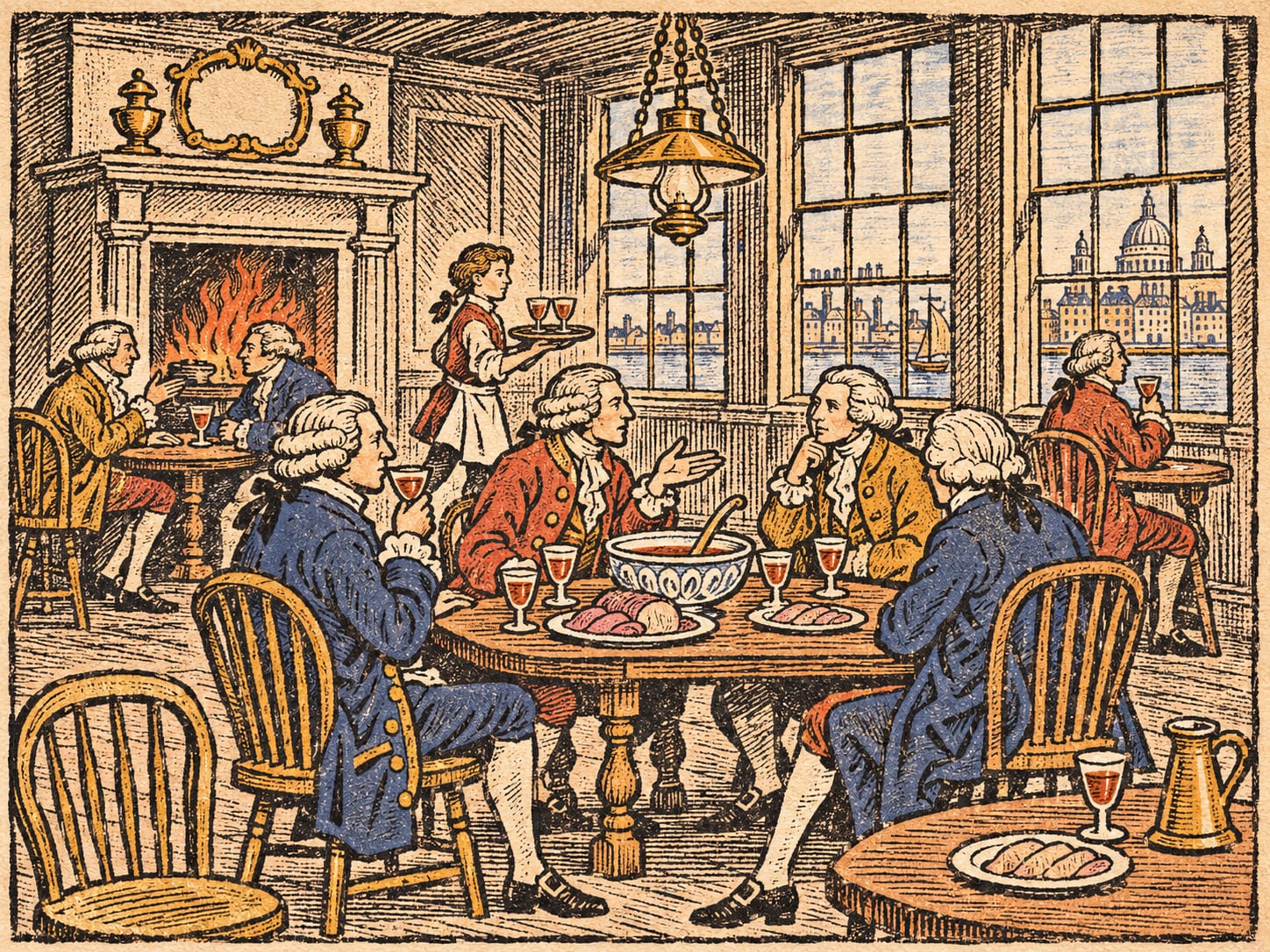
The Cocoa Tree was a London coffee house and political club tied to Tory and ministerial circles. Edward Gibbon belonged to it. On 24 November 1762 he wrote: "I dined at the Cocoa Tree. That respectable body affords every evening a sight truly English." He described twenty or thirty socially prominent men supping at little tables on "a bit of cold meat, or a Sandwich," drinking punch and talking politics.
The Oxford English Dictionary gives that entry as its earliest citation for the food. Its note says the word is "said to be named after" John Montagu. Gibbon did not say Montagu was in the room, did not name him as the source of the word, did not mention gambling and described no invention. He simply wrote down a dish with a name, being eaten.
The Cocoa Tree also had a name for gambling, and later accounts describe high stakes there. The link between Montagu and one particular twenty-four-hour sitting comes from a later book, not from Gibbon.
The card-table story
Pierre-Jean Grosley, a Frenchman, visited London in 1765. His book Londres came out in 1770, and an English translation, A Tour to London, followed in 1772.
He told of a minister of state who spent a day and a night at a public gaming table. In the English translation: "A minister of state passed four and twenty hours at a public gaming-table, so absorbed in play, that, during the whole time, he had no substance but a bit of beef, between two slices of toasted bread, which he eat without ever quitting the game."
The next line ties it to the food: "This new dish grew highly in vogue, during my residence in London: it was called by the name of the minister who invented it." The French original adds that the dish was named for the minister "pour économiser le temps," to save time.
Grosley does not name John Montagu, and he does not name the gaming house. The identification comes from the fact that the food was called a sandwich. The gambling tale reaches us as Grosley's telling, in print eight years after Gibbon had already used the word, and not as anything Montagu said.
A sandwich at the desk
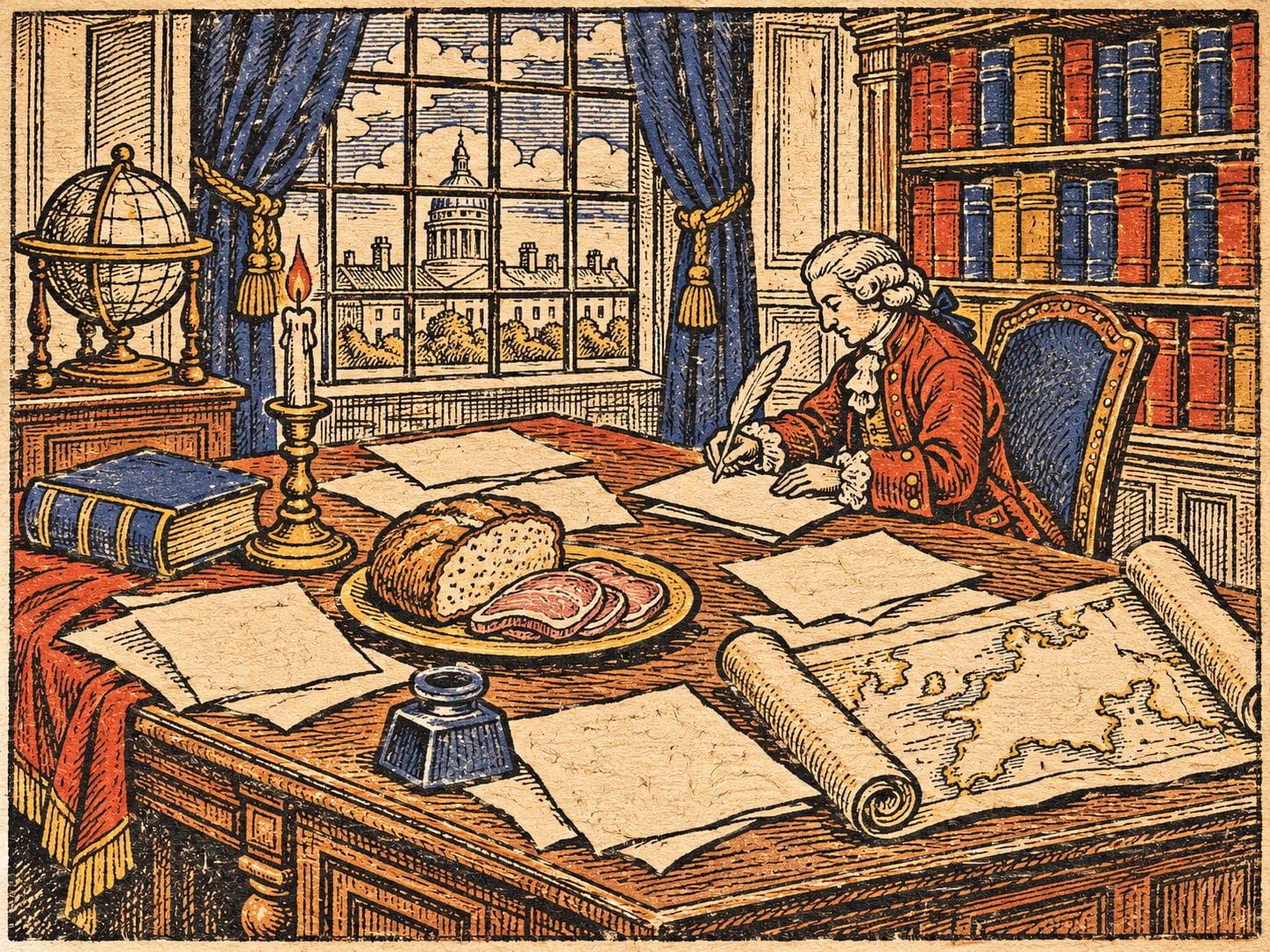
The biographer N. A. M. Rodger, in The Insatiable Earl, treats the gambling story as gossip. He argues that Montagu was not the obsessive gambler the tale needs, and he proposes a quieter explanation: Montagu may have had bread and meat brought to his desk while he worked long hours as a cabinet minister.
Rodger wrote that this was plausible because dinner was the main meal of the day and the fashionable hour for it was around four o'clock. A man who worked through the afternoon might well have wanted something in his hand.
The Dictionary of National Biography calls Montagu "assiduous and punctual in the despatch of business," drawing on his own letters, including one to George Jackson. The same entry adds that his industry was "frittered away over details" while important matters went to subordinates. That is a later verdict, not a diary entry, and nobody left an eyewitness account of the moment, the place or the person who put the food together.
Bread and meat before the name
People ate food with bread for centuries before the word existed. Medieval European diners used trenchers, pieces of stale or specially baked bread that served as edible plates. Food went on the bread, was cut with a knife and was eaten. A trencher is not quite a modern sandwich with a filling between two slices, but bread and food were already companions at the table.
An older named example comes from the Passover tradition. The Haggadah describes Hillel, a Jewish sage of the 1st century BCE, combining the Passover offering, matzah and bitter herbs and eating them together. The modern ritual called korech, or the Hillel sandwich, remembers it, usually with matzah and bitter herbs, since the Temple sacrifice is no longer offered.
Montagu did not invent the idea of eating food with or between bread. His link to the story is the later English name and the way it caught on.
The Earl at the Admiralty
Montagu was First Lord of the Admiralty from 1771 until the fall of the North ministry in March 1782, which put him at the head of the Royal Navy through the American Revolutionary War. The job was harder than the title. By 1782 the navy ran through thirteen separate departments on thirteen sites, among them the Navy Board, the Victualling Board, the Sick and Hurt Board and the dockyard commissioners. The Board of Admiralty was supreme on paper and held only a loose grip in practice.
The published Sandwich Papers show him handling fleet deployment, supplies, dockyard readiness, convoys and the garrisons at Gibraltar and Minorca. In 1781 Admiral George Darby was ordered to relieve Gibraltar and Minorca, and he sailed with twenty-eight ships of the line against thirty-two Spanish ships at Cádiz, while the Channel, the West Indies and the East Indies all called for ships too.
His administration drew fierce criticism for the condition of the fleet, for the appointment of Admiral Augustus Keppel in 1778 and for his handling of Keppel's court-martial. After Keppel was acquitted, a crowd attacked Montagu's official residence at the Admiralty. Samuel Barrington, Richard Harland and Richard Howe were reported unwilling to accept commands while he stayed in office.
Horace Walpole mocked the Admiralty's exploring voyages in a letter to William Mason on 28 June 1773: "The Admiralty have dragged the whole ocean, and caught nothing but the fry of ungrown islands." Walpole was being satirical, and nobody should read it as a neutral verdict.
A killing at Covent Garden
Montagu's private life was as public as his career. He was estranged from his wife, Dorothy Fane, and for about sixteen years he lived with the singer Martha Ray. They had nine children, though accounts differ on how many reached adulthood.
On 7 April 1779 Ray went to Covent Garden Theatre to see the opera Love in a Village, with the singer Caterina Galli. James Hackman, a former army officer who had become a clergyman, followed her. As Ray left the theatre he shot her, then tried to kill himself. He was tried at the Old Bailey on 16 April, convicted of murder and executed at Tyburn on 19 April.
The Dictionary of National Biography says Montagu "seems to have been much attached to the woman" and "to have sincerely mourned her death." The public airing of Ray's place in his household sharpened the hostility toward him, and after the North ministry fell in March 1782 he largely withdrew from public life.
Islands named for the Earl
Montagu's title travelled far beyond Kent. In July 1774, during his second voyage, Captain James Cook named islands in what is now Vanuatu: "I named the one Montagu and the other Hinchinbrook, and the large island Sandwich, in honour of my noble patron the Earl of Sandwich." The large island is now called Efate, and the names Montagu and Hinchinbrook did not stick to the main modern island. Hinchingbrooke was Montagu's family seat.
In January and February 1775 Cook came upon the southern Atlantic group now called the South Sandwich Islands, recorded at the time as Sandwich Land. On his third voyage, in January 1778, he reached the Hawaiian archipelago and wrote: "I named the whole group the Sandwich Islands, in honour of the Earl of Sandwich."
The people of those islands already had their own names for them, among them Woahoo, Atooi, Oneeheow, Oreehoua and Tahoora. "Sandwich Islands" was the European name, and it was later replaced in common official use by "Hawaiian Islands." Even the former HMS Endeavour carried the title for a time. During the Revolutionary War she was renamed Lord Sandwich and served as a troop transport.
The same title was attached to a cold-meat supper in London and to an ocean archipelago, within sixteen years of each other.
The word in print
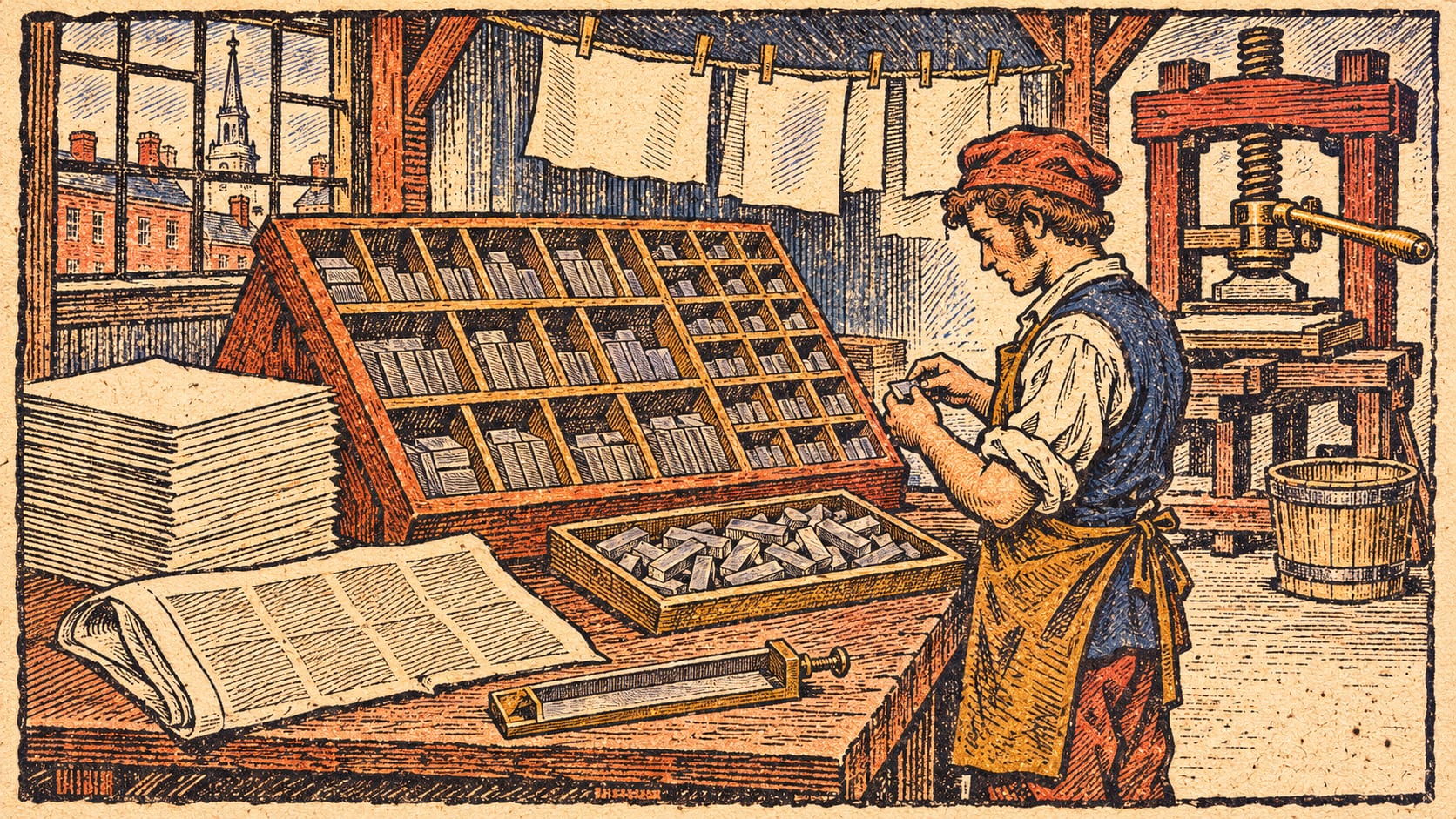
Gibbon's journal was private. The newspapers carried the word to everyone else. The Morning Post and Daily Advertiser wrote on 13 December 1776: "The court set in the gambling-houses of eminence, have agreed to eat nothing on the fast-day but Sandwiches." The line is satirical, and it uses the food as a marker of fashionable gambling.
On 6 September 1788 a grocer named John Burgess advertised Gorgona anchovies in the same paper as suitable for "making sandwiches." The advertisement ran repeatedly through 1788 and 1789. A word that sells anchovies has stopped being a story about one aristocrat, and by the 1790s sandwich turned up in advertisements, social reports, cookery writing and descriptions of fashionable gatherings.
From gossip to the cookbook
Cookbooks show the food moving into ordinary kitchens. Charlotte Mason's The Lady's Assistant, in editions from the 1770s, told cooks: "Put some very thin slices of beef between thin slices of bread and butter; veal and ham may be served in the same manner."
In 1824 Mary Randolph's The Virginia House-Wife gave a recipe for oyster loaves: cut the top off a small round loaf, scoop out the crumb, stew oysters with the crumbs, butter and cream, refill the loaf, replace the lid and crisp it in the oven. It is sandwich-like food that does not use the word. Mrs. N. K. M. Lee's The Cook's Own Book, published in Boston in 1832, included "Sandwiches for Travelers," and Eliza Leslie's Directions for Cookery, published in Philadelphia in 1837, gave American cooks a "Ham Sandwich" of thin bread, butter and sliced ham in a later edition.
Mrs. A. L. Webster's The Improved Housewife, in its 1844 Hartford edition, wrote: "Cut, and spread neatly with butter, slices of biscuit, placing between every two pieces, a very thin slice of tongue." Isabella Beeton took the word somewhere new in 1861. Her Book of Household Management put "Toast Sandwiches" in the section on cooking for invalids: "Place a very thin piece of cold toast between 2 slices of thin bread-and-butter in the form of a sandwich, adding a seasoning of pepper and salt." By then a sandwich could be a plain, easily digested dish as well as meat between bread.
The loaf that came sliced
The everyday sandwich needed bread that was soft, even and easy to wrap. Otto Frederick Rohwedder, an Iowa-born inventor and former jeweller, worked for years on an automatic bread slicer. A fire destroyed an earlier prototype and his plans in 1917. His practical machine went into Frank Bench's Chillicothe Baking Company in Chillicothe, Missouri, in 1928.
Sliced loaves went on sale there on 7 July 1928, sold as Kleen Maid bread and advertised as "the greatest forward step in the baking industry since bread was wrapped." The machine cut the whole loaf in one pass, and the loaf was held together and wrapped so it would not fall apart. The Smithsonian holds his second machine; the one at Bench's bakery fell apart after about six months of heavy use.
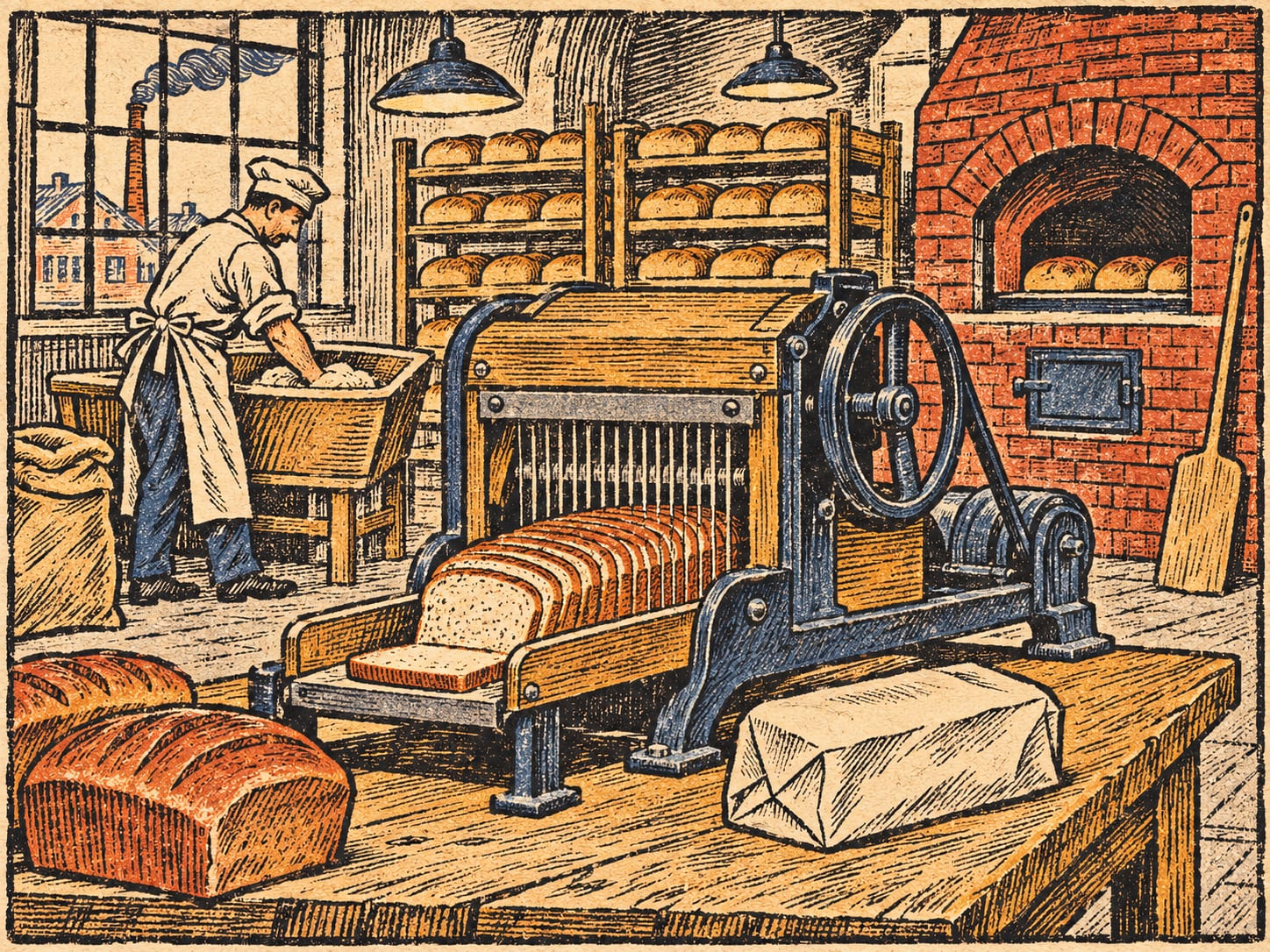
Uniform slices made sandwiches quicker to assemble and easier to pack for school lunches, workers and restaurants. By 1930 Wonder Bread was selling pre-sliced loaves, and other national bakeries followed. In January 1943 the United States banned sliced bread for about two months as a wartime conservation measure, mainly because of wrapping materials. The ban showed how far pre-sliced bread had entered household routines, sandwich-making included.
How the word travelled
French took the word from English. The Centre National de Ressources Textuelles et Lexicales records sandwich in French from 1802, citing the Gazette nationale ou le Moniteur universel.
In Spanish, a food use turns up in La Ilustración, periódico universal on 10 December 1853, in a passage about "diez pequeños sandwiches" served to guests. A Spanish linguistic study dates the word's entry in the Diccionario Nacional to the same year.
The spelling the Royal Spanish Academy now uses is sándwich, with an accent, and the plural is sándwiches. A 1579 form, Sanduche, in a letter by Bernardino de Mendoza refers to the English town, not clearly to the food.
From a sandy harbour to a sliced loaf
- Seventh century
The Kent town is recorded as Sandwic
- 13 November 1718 (Julian calendar, Britain)
John Montagu is born
- 1729
He becomes the 4th Earl of Sandwich at ten
- 24 November 1762
Edward Gibbon writes of men at the Cocoa Tree eating "a bit of cold meat, or a Sandwich"
- 1765
Pierre-Jean Grosley visits London
- 1770
Grosley's Londres tells the gaming-table story
- 1772
The English translation, A Tour to London, appears
- 13 December 1776
The Morning Post and Daily Advertiser prints "Sandwiches" as a mark of fashionable gambling
- January 1778
Captain Cook names the Hawaiian group the Sandwich Islands
- 7 April 1779
Martha Ray is shot outside Covent Garden Theatre
- 30 April 1792
Montagu dies
- 1802
French records sandwich from this year
- 10 December 1853
La Ilustración, periódico universal uses "sandwiches" for food
- 7 July 1928
Sliced loaves go on sale in Chillicothe, Missouri
The route of the name
The food was named for a title, the title came from a town, and the town's name came from a patch of sand. Gibbon saw the word in use at a club in 1762. Who assembled the dish, and at what table, is not shown by any document.
Sources
- Edward Gibbon's journal, Miscellaneous Works of Edward Gibbon
- Oxford English Dictionary entry for sandwich, as summarised by Oxford University Press
- Pierre-Jean Grosley, Londres (1770) and A Tour to London (1772)
- N. A. M. Rodger, The Insatiable Earl, and his entry in the Oxford Dictionary of National Biography
- Dictionary of National Biography, entry for John Montagu; The Private Papers of John, Earl of Sandwich
- National Portrait Gallery and Royal Museums Greenwich, biographies of John Montagu
- The correspondence of Horace Walpole and William Mason
- James Cook's published accounts of his second and third voyages
- The genuine life, trial, and dying words of James Hackman (1779), Wellcome Collection
- The Food Timeline, sandwich history; Eighteenth-Century Literature, "Sandwiches"
- Cookbooks by Charlotte Mason, Mary Randolph, Eliza Leslie, Mrs. A. L. Webster and Isabella Beeton
- Smithsonian National Museum of American History, bread-slicing machine record
- Noah J. A. Morritt, "A Legendary Sandwich for an Infamous Earl," Digest
- Kent History & Archaeology, "The ancient Cinque Port of Sandwich"
- Cadw, "Cutlery and Crockery"
- Chabad, "Hillel's Passover Sandwich," and the Open Siddur Haggadah
- Royal Spanish Academy and ASALE, Diccionario del estudiante; Centre National de Ressources Textuelles et Lexicales
Watch the full story on the Flashback Fables YouTube channel, and send it to someone who would love it.